



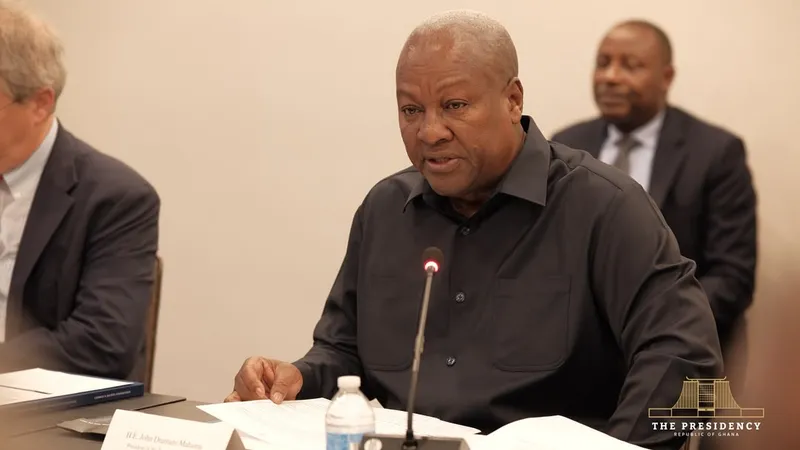
Renowned road contractor Kofi Gyebi Job has commended President John Dramani Mahama for the swift payment of contractors working under the government’s flagship Big Push infrastructure programme, crediting the timely settlement of payment certificates with enabling firms to stay on site and accelerate work without financial strain.
Mr Job, founder of Kumasi-based Kofi Job Construction Limited, made the remarks on Wednesday, September 30, 2026, when the Minister of Roads and Highways, Governs Kwame Agbodza, paid an unannounced inspection visit to his site on the Konongo bypass section of the Accra–Kumasi Bypass project.
Speaking on site, Mr Job said the government, through the Ministry of Roads and Highways, had been honest with contractors by promptly paying certificates raised for work done. “The timely payment has enabled contractors to stay on site and accelerate work without financial constraints,” he said.
He observed that delayed payments had in the past crippled many contractors and stalled major road projects across the country, but the current arrangement has brought significant relief to the construction industry.
A Troubled Legacy of Delayed Payments
Mr Job’s praise stands in stark contrast to the sector’s recent history. As of 2025, the government owed road contractors approximately GH₵25 billion, with outstanding commitments exceeding GH₵100 billion. Some Interim Payment Certificates dated as far back as 2018—over seven years ago—remained unpaid, according to the Ghana Chamber of Construction Industry.
An audit report revealed that the government paid interest charges totalling over GH₵89.6 million to road contractors due to delays in settling approved payment certificates for 2023 and 2024. Another audit found that between January 2017 and July 2019, 12 Interim Payment Certificates amounting to over GH₵122.6 million were certified but left unpaid, prompting a contractor to raise claims for interest on delayed payment totalling more than GH₵38.1 million.
The Mahama administration moved to address the backlog after assuming office. In October 2025, the Roads Ministry confirmed the disbursement of GH₵5 billion to contractors following an audit and validation exercise, out of an outstanding debt exceeding GH₵21 billion. The Minister explained that the thorough review was necessary to prevent financial losses, noting that the amounts claimed did not always match what was actually owed.
At the height of the crisis, the Ghana Chamber of Construction Industry had written to the Roads Minister expressing disappointment over the government’s failure to fulfil President Mahama’s promise to clear all outstanding payments by the end of July 2025, warning that the delays imposed severe financial pressure on contractors, consultants, and suppliers.
A Contractor of National Standing
Mr Job, officially known as Jacob Agyenim Boateng, has built a reputation as one of Ghana’s most prominent road contractors. Widely respected for the many major road projects completed across the country, he announced in July 2026 that he had handed over his construction empire to his wife to focus on serving God. His firm, Kofi Job Construction Limited, operates a substantial fleet of heavy-duty trucks, including sand trucks, excavators, concrete mixers, and trailers. In 2024, the company reportedly purchased 300 new tipper trucks.
Beyond his construction work, Mr Job has been active in humanitarian causes through the Kofi Job Foundation, which released $20,000 in September 2026 to support a five-year-old boy with a hole-in-heart condition for surgery in India. In November 2024, he paid GH₵1 million to settle the bills of patients at Komfo Anokye Teaching Hospital in Kumasi.
Big Push: A $10 Billion Infrastructure Drive
The Big Push programme, valued at approximately $10 billion, is the Mahama administration’s flagship infrastructure initiative aimed at addressing road infrastructure constraints across the country. President Mahama has committed over GH₵40 billion to the programme, with construction currently underway on approximately 2,500 kilometres of roads nationwide.
The programme covers projects across all regions, including the 117-kilometre stretch from Atimpoku through Ho to Aflao, the 47-kilometre Ho–UHAS Bypass, and the Accra–Kumasi Bypass with its four bypasses at Osino, Anyinam, Enyiresi, and Konongo. The Dambai bridge was identified as one of the first projects to kick-start the programme when it was announced in Parliament in July 2025. The government has allocated GH₵14 billion in 2025, with GH₵30 billion earmarked for 2026.
President Mahama has emphasised that the programme will be rolled out in phases due to budget constraints, stating in September 2026 that “We are already scoping Big Push Phase Two, and there will also be Big Push Phase Three”. To sustain contractor confidence, the President has assured that payment certificates submitted by contractors will be honoured within 30 days of certification.
Konongo Bypass: A Critical Link
The Konongo bypass is a 15.4-kilometre stretch spanning from Yawkwei to Ohene Nkwanta, awarded to Kofi Job Construction and Joshop Construction. It forms part of the broader Accra–Kumasi Bypass project, which is expected to provide an alternative route for motorists and ease pressure on the existing carriageway.
The project had faced significant challenges. In July 2026, residents of Konongo, Odumase and surrounding communities issued a one-month ultimatum to the government over the prolonged abandonment of the bypass, threatening a major demonstration if work did not resume. The contractor had been off site for years, worsening traffic conditions in the area.
The Roads Minister later confirmed that he personally contacted Mr Job to remobilise to the site. “I remember getting in touch with Kofi Job to remobilise to the site. And indeed, they mobilised to the site even ahead of what we were expecting,” Mr Agbodza said during a separate inspection.
Current progress on the Konongo section stands at 74 per cent on the southbound carriageway and 60 per cent on the northbound section, while the Enyiresi sections have reached 65 per cent and 64 per cent respectively. The Minister has set a target of completing key structures on the Konongo section before Christmas to provide an alternative route for motorists.
Minister Pledges Quality Assurance
During the same site visit, Mr Job also praised the Roads Minister for his hands-on approach, saying his unannounced visits would keep contractors on their toes to deliver quality work. “What you are doing is very good; you have done nothing wrong, and I will personally thank you for ensuring the works are being done. So continue doing that, I wouldn’t mind receiving you every week, because we all want the best for Ghana,” he said.
Mr Agbodza has separately signalled his intention to reform the sector’s accountability framework, proposing to extend the one-year defect liability period for road contracts to hold contractors responsible for defects that emerge after a road is completed and put into use. “If you build a road that should last 30 years, why is the liability of a contractor only ending after one year; it should go a bit more than that,” he said. He noted that he was in discussions with the Ministers of Finance and Works and Housing to effect the change.
The Minister has also warned contractors against abandoning projects or executing shoddy works, stating that errant firms would be forced to take insurance taxed to correct shortfalls.
Looking Ahead
Mr Job pledged that contractors would reciprocate the government’s gesture by delivering durable and quality roads for the benefit of all Ghanaians. With the Accra–Kumasi Bypass targeted for completion by the end of 2027 and the wider Big Push programme progressing across all regions, the timely flow of payments to contractors will remain central to whether the government meets its infrastructure ambitions—and to whether the construction industry, long hobbled by arrears, can sustain its current momentum.


