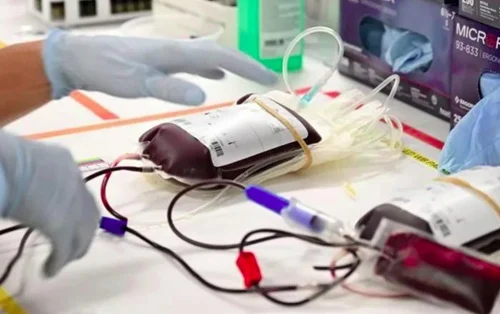
In a significant policy shift, the religious organization now permits the use of autologous blood transfusions while maintaining its prohibition on receiving donated blood.
Jehovah’s Witnesses have announced a notable update to their long-standing policy on blood transfusions, now permitting members to have their own blood stored and reinfused during medical procedures.
The change, revealed by leadership representative Gerrit Losch, allows for autologous transfusions—commonly used in planned surgeries—while upholding the group’s core prohibition against accepting the blood of another individual. “Each Christian must decide for himself how his blood will be used in medical and surgical care,” Mr. Losch stated.
The organization, a Christian-based movement known globally for its door-to-door evangelism, has historically forbidden members from accepting blood transfusions. According to the group’s official doctrine, this stance is rooted in biblical texts from both the Old and New Testaments that “command us to abstain from blood.”
A spokesperson emphasized that the fundamental belief regarding the sanctity of blood remains unchanged.
The decision has drawn a mixed response. Some former members argue the adjustment does not adequately address critical medical scenarios. Mitch Melon told the LA Times that the policy fails to provide relief in emergencies involving significant blood loss or for children requiring multiple transfusions for conditions like cancer. “This policy change does not grant them complete freedom of conscience to accept potentially life-saving interventions involving donated blood,” Mr. Melon said.
The updated policy follows a recent legal case in Scotland. In December, an Edinburgh court ruled that doctors could administer a blood transfusion to a 14-year-old Jehovah’s Witness if deemed necessary during an operation, overriding the teenager’s refusal based on her religious beliefs. The judge granted the order after determining it was in the child’s best interests.
With approximately 144,000 active members in the UK and nine million worldwide, the policy shift marks a significant development in how adherents may approach surgical care while adhering to their faith’s teachings.