

Ghana now handles approximately 40 per cent of Burkina Faso’s petroleum product transit, up sharply from 15 per cent two years ago, Energy and Green Transition Minister John Jinapor has disclosed, underscoring the country’s expanding role as a strategic energy corridor for its landlocked northern neighbour.
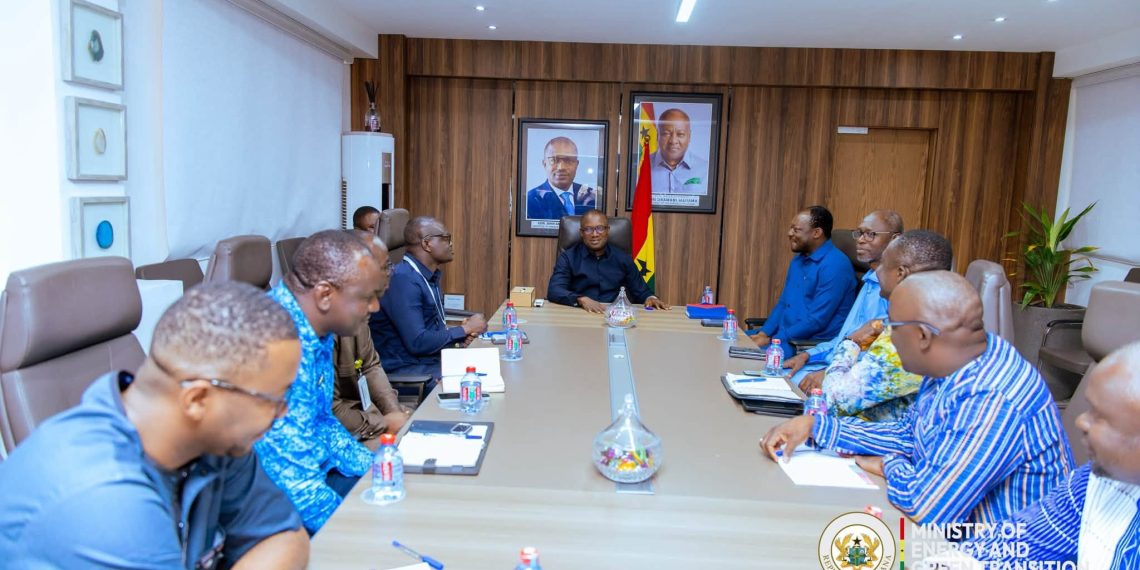
The revelation came after a courtesy call on the Minister by a delegation from Burkina Faso’s national hydrocarbon company, Société Nationale Burkinabè d’Hydrocarbures (SONABHY), led by its newly appointed Chief Executive Officer, Forogo Patrice .
According to Mr Jinapor, who announced the development in a Facebook post, the delegation expressed appreciation to the Government of Ghana for its continued support in facilitating the procurement and transit of petroleum products through the country, and called for deeper collaboration to strengthen the partnership .
The discussions focused on improving cooperation in petroleum transportation and supply, deepening regional energy ties and advancing shared priorities between the two countries .
The surge from 15 per cent to 40 per cent in two years signals Burkina Faso’s increasing reliance on Ghana as a transit route for petroleum products. For a landlocked country that imports virtually all its fuel, reliable access to coastal storage and transport corridors is critical to maintaining supply and supporting economic activity .
The development has also been linked to strengthened institutional collaboration between the Tema Oil Refinery (TOR) and SONABHY. TOR Managing Director Edmond Kombat noted during a related engagement that the growing partnership had contributed significantly to the increase in the proportion of Burkina Faso’s national petroleum consumption supplied through Ghana since President John Dramani Mahama returned to office in 2024 .
SONABHY holds a state monopoly on the import and storage of hydrocarbons in Burkina Faso, with transit storage arrangements at facilities including SONACOP in Tema and Bolgatanga in Ghana . The company has also acquired a terminal at Tema, further anchoring its logistics chain to Ghanaian infrastructure .
The growing transit share reinforces Ghana’s position in regional energy logistics and could create opportunities for transport, logistics and related service providers. However, the scale of the economic benefits will depend on transit volumes, revenue generated from related services and the capacity of the country’s logistics infrastructure to handle increased flows .
The meeting forms part of broader efforts to strengthen energy ties between Ghana and its neighbours, as both countries seek deeper regional energy collaboration .