



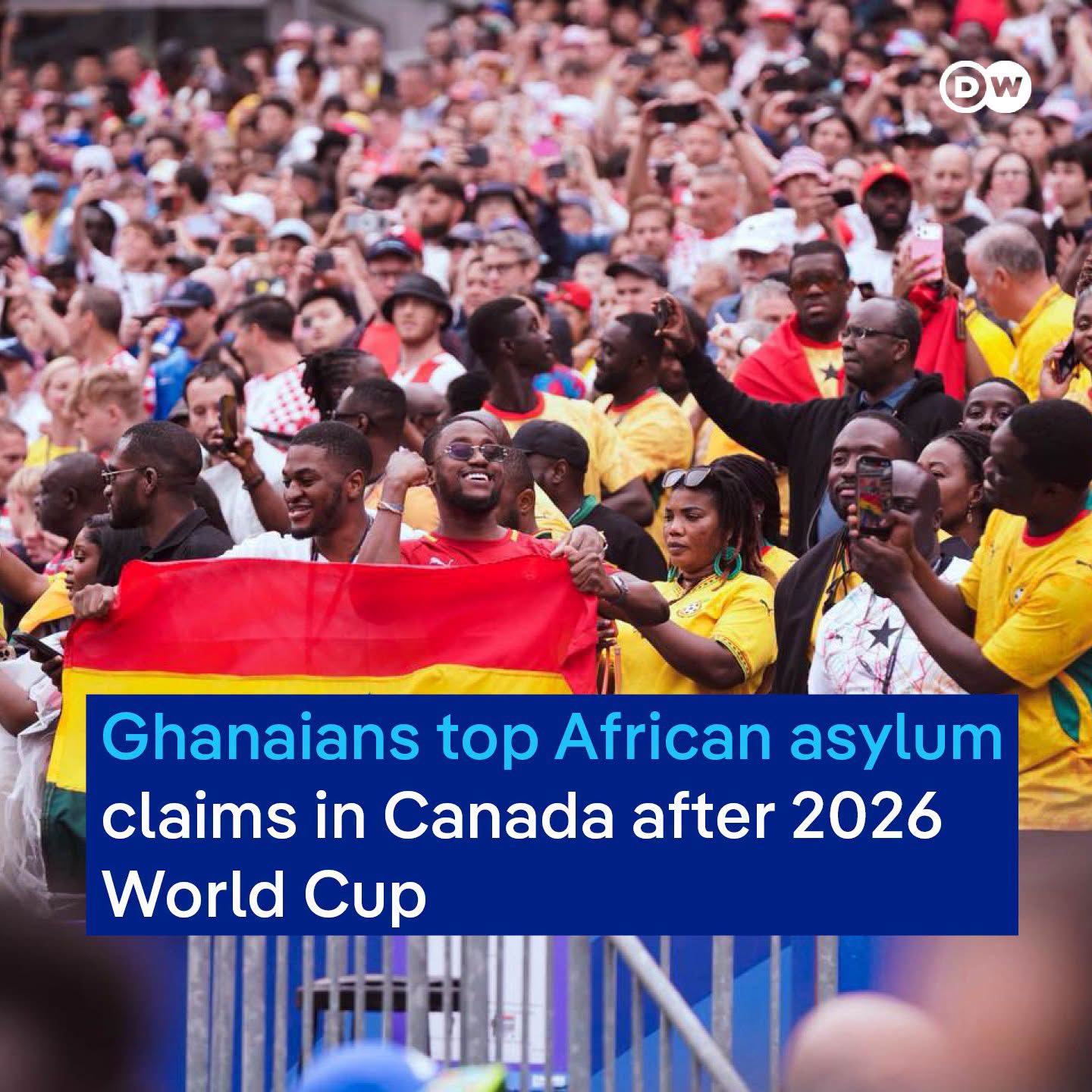
Fresh data from Immigration, Refugees and Citizenship Canada (IRCC) has revealed that Ghana ranks highest among African nations whose citizens sought asylum in Canada after travelling for the 2026 FIFA World Cup, reigniting concerns about the use of major sporting events as a springboard for migration.
According to figures obtained by JoyNews, out of more than 26,000 temporary visas approved by Canadian authorities specifically for the tournament, 175 individuals have since lodged refugee claims in the country.
Ghana recorded the highest number of African claims, with 25 applications. Egypt followed with 15 claims, while Senegal and Nigeria each accounted for 10 claims. Burundi rounded out the African contingent with five claims. Other asylum seekers came from China, Colombia, Bangladesh, Nepal, Pakistan, and Ecuador, though the bulk of the claimants originated from outside the African continent.
Canadian authorities have not disclosed whether the applicants were players, team officials, support staff, or ordinary spectators who travelled on fan visas.
A Familiar Pattern: Echoes of 2014
This is not the first time Ghana has featured prominently in such statistics. During the 2014 World Cup in Brazil, approximately 200 Ghanaians reportedly sought asylum in the South American nation, citing religious persecution at home. At the time, the government in Accra dismissed those claims as baseless, accusing the applicants of exploiting the tournament to seek better economic prospects abroad.
The current figures are notably lower than the 2014 numbers but still significant given the scrutiny around visa integrity for mega-events.
World Cup Visas and the Canadian Connection
The 2026 edition of the World Cup is a tri-national event co-hosted by the United States, Mexico, and Canada, with matches held in Toronto and Vancouver. To facilitate the influx of fans, Canada implemented a streamlined temporary resident visa (TRV) process, which expedited approvals but still required basic security and biographical checks.
The 175 asylum claims represent a mere 0.67% of the total 26,000+ visas issued, suggesting that the overwhelming majority of visitors adhered to the terms of their stay and returned home as required. However, even this small fraction has sparked debate about the socio-economic push factors driving the claims.
Economic Pressures Behind the Claims
Immigration analysts suggest the applications are not coincidental. Ghana is currently navigating a painful fiscal consolidation programme under an International Monetary Fund (IMF) bailout, with stringent spending targets—including the 1.5% primary surplus recently defended by Finance Minister Dr. Cassiel Ato Forson. Rising living costs, high unemployment, and a depreciating currency continue to fuel the desire for relocation among young Ghanaians.
Similarly, Nigeria is grappling with record inflation and a cost-of-living crisis, while Senegal’s economy faces post-pandemic headwinds. Burundi, meanwhile, remains a source of political instability and human rights concerns, providing a more conventional basis for asylum claims.
Canadian Authorities Remain Tight-Lipped
IRCC has not issued a formal statement regarding the specific circumstances of the 175 applicants. Under Canadian law, all asylum claims are subject to a rigorous assessment by the Immigration and Refugee Board (IRB), which evaluates each case against the 1951 UN Refugee Convention and its 1967 Protocol. Claimants must demonstrate a well-founded fear of persecution based on race, religion, nationality, political opinion, or membership in a particular social group.
The Ghanaian government has yet to officially respond to the latest figures. A source close to the Ministry of Foreign Affairs told JoyNews that officials are awaiting detailed briefings from Canadian diplomatic missions before issuing a public position.
While the numbers are small in absolute terms, observers say the recurring trend highlights a stark reality: for many citizens across Africa, the World Cup represents not just a sporting pilgrimage, but a fleeting window of opportunity—one they are increasingly reluctant to let close without seeking a new life elsewhere.


