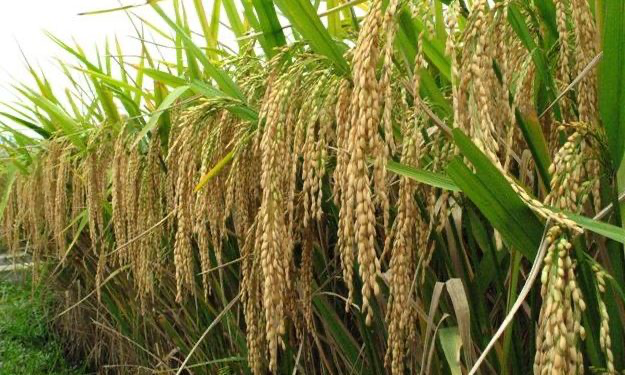
The Ministry of Food and Agriculture will formally unveil the $18.8 million Regional West African Resilient Rice Value Chains Project (REWARD) in November 2026, ahead of the 2027 rice production season, as government intensifies efforts to reduce Ghana’s heavy dependence on imported rice.
Agriculture Minister Eric Opoku said the African Development Bank-funded project is designed to address key bottlenecks in Ghana’s rice value chain and help reduce the country’s reliance on imports.
“The ministry, in consultation with the bank, plans to formally launch the REWARD project in the first week of November 2026 so that the project is in place for the 2027 production season in the project areas,” Mr. Opoku said at a press briefing in Accra on Wednesday, October 7, 2026.
The REWARD project was approved by the African Development Bank’s Board of Directors on August 3, 2026, as part of a broader regional initiative to strengthen rice value chains across West Africa . The project aligns with Ghana’s national development priorities under the Feed Ghana Programme and supports the AfDB’s strategic priorities of climate-resilient agriculture, private sector development, and inclusive growth .
Boosting Rice Production
The project will develop 3,200 hectares of land for rice production in Ghana’s Northern Savannah Ecological Zone, an area with significant agricultural potential where productivity remains constrained by climate risks, inadequate infrastructure, and weak market integration .
The beneficiary areas include Tamale Metropolitan, Mion, Savelugu, East Mamprusi, West Gonja, Bawku West, Wa Municipal, Sissala East and Nandom .
The project will provide farmers with improved seeds, mechanisation and other inputs to boost productivity. Yields are expected to increase from 3.5 tonnes to 4.5 tonnes per hectare, while improving the quality of paddy produced .
It is expected to benefit more than 20,000 smallholder farmers across selected districts, while supporting rice processors, aggregators and other value-chain actors. The project will directly benefit 10,000 households, including 3,200 farmers supported across seven districts, trained processors and millers, and youth- and women-led cooperatives and SMEs, with indirect benefits expected to reach 30,000 more .
The intervention forms part of government’s broader target of achieving rice self-sufficiency by 2028, with a national target of 3.31 million metric tonnes of paddy production . The government’s Feed Ghana Programme, launched in April 2025, prioritises key agricultural commodities including maize, rice and cocoa, and has already contributed to rice sufficiency rising from 42 per cent to 56 per cent over the past 17 months .
Mr. Opoku said milled rice production increased from about 650,000 tonnes in 2024 to 960,000 tonnes in 2025 . However, local production currently meets only about 56 per cent of national demand, leaving a 44 per cent gap that is filled through imports .
Reducing Import Dependence
According to Mr. Opoku, Ghana spends between $320 million and $500 million annually on rice imports, representing significant foreign exchange outflows that could instead support local farmers and businesses .
“That is money that could be earned by Ghanaian farmers, millers, and traders,” he said.
Rice has become Ghana’s second most important cereal after maize, with rising population, urbanisation and changing consumer preferences pushing demand ahead of domestic production. Per capita rice consumption has exploded from 12.4 kilograms in 1980 to over 61 kilograms in 2022, according to the Institute for Fiscal Studies . The United States Department of Agriculture forecasts Ghana’s rice consumption for the 2025/2026 marketing year at 1.80 million metric tonnes, up three per cent from the previous year .
The government is also preparing to link rice import quotas to local investment, with importers expected to establish verifiable partnerships with domestic producers before receiving import permits. The policy, announced at the West Africa Rice Investment Roundtable in Accra in June 2026, will require importers to demonstrate progressive procurement from, and partnerships with, Ghanaian rice producers before import licences are granted .
Mr. Opoku stressed that the policy is not intended to ban rice imports but to encourage greater investment in domestic production.
“We are not banning imports, which will only hurt consumers. Instead, we are channelling the value of imports into local production and empowering our farmers,” he said .
Vice President Professor Jane Naana Opoku-Agyemang, speaking at the same roundtable, noted that Africa continues to spend more than $50 billion annually on food imports, with rice accounting for a significant share of that expenditure. “Countries that import too much food also import vulnerability,” she said, stressing that food security extends beyond agriculture and is closely linked to macroeconomic stability, social protection, national security and geopolitical independence .
Expanding Processing Capacity
The REWARD project will also support the establishment and upgrading of 10 strategically located rice processing centres, improve storage facilities and strengthen links between farmers and markets .
The government will identify and equip these centres with complementary equipment, including mini GEM rice parboiling vessels. Hermetic storage cocoons will be provided to reduce post-harvest losses, while farmers will be linked to markets and private-sector players to create jobs and improve incomes .
The project has four main components: production and productivity, processing and marketing, policy and governance, and project coordination and management. The overall rationale is to reduce importation of rice by increasing competitive local rice production, processing, and the development of processing and storage infrastructure to minimise post-harvest losses and enhance value addition .
Mr. Opoku further disclosed that rice produced under the REWARD Project would help supply schools, prisons and other public institutions with quality, locally produced rice .
Japan’s Support for Rice Value Chain
Separately, Japan has provided a ¥394 million, approximately $2.49 million, grant to support the rice value chain with equipment, including eight combined harvesters and 11 seed-cleaning machines .
The equipment is expected to arrive in November 2026 as government intensifies efforts to narrow the gap between domestic rice production and demand. Under the Japanese CARD Grant Aid Project on the Enhancement of Rice Seeds Production Capacity, Ghana is also expected to receive trucks for transporting harvesters and seeds .
Japan has been a long-standing partner in Ghana’s rice sector through the Coalition for African Rice Development (CARD), a framework launched in 2008 that targets doubling rice production in Sub-Saharan Africa . The Japan International Cooperation Agency (JICA) has also pledged GH¢35 million to establish a rice seed production plant in Northern Ghana, as part of efforts to strengthen the country’s seed system .
Challenges Persist Despite Progress
Despite these interventions, significant challenges remain in Ghana’s rice value chain. The Chamber of Agribusiness Ghana has warned that over 1.2 million metric tonnes of rice, maize and soya beans were stuck in warehouses and on farms due to market distortions and pricing challenges, partly attributed to cheaper imports and alleged inflows of substandard rice through unapproved routes .
The Ministry of Food and Agriculture has acknowledged that insufficient storage infrastructure, limited availability of dryers and threshers, and high post-harvest losses of about 13 per cent continue to constrain the sector. Low yields experienced by smallholder farmers have also forced local rice processors to purchase paddy at high prices .
Ghana has had the National Rice Development Strategy (NRDS I) and NRDS II, revised in 2019 but only validated in 2024, five years later. The NRDS II sets out seven thematic areas including seed systems, fertiliser marketing, and distribution and usage . Critics have pointed to a pattern of successive programmes and donor funding that have failed to deliver lasting results .
The REWARD project’s focus on climate-resilient rice production systems, improved access to quality inputs and mechanisation, and enhanced irrigation and land development in key production areas is designed to address these structural weaknesses .
Path to Self-Sufficiency
Speaking at the West Africa Rice Investment Roundtable, Mr. Opoku expressed confidence that Ghana could achieve 100 per cent rice self-sufficiency within 10 years, save an estimated $2.1 billion in foreign exchange, attract more than $400 million in private investment and create over 200,000 jobs .
The ECOWAS Commission President, Dr. Omar Alieu Touray, placed the discussions within the broader regional agenda, noting that ECOWAS Heads of State endorsed the Regional Rice Roadmap (2025–2035) in 2024 to provide a common framework for investments and interventions aimed at achieving rice self-sufficiency across West Africa . While regional rice production increased by 44 per cent between 2008 and 2024, demand continues to outstrip supply, forcing the region to rely heavily on imports .
With the REWARD project set for launch in November 2026 and the 2027 production season on the horizon, Ghana’s ambitions for rice self-sufficiency by 2028 will depend on the effective implementation of these interventions and the ability of the country’s agricultural institutions to translate investment into sustained productivity gains.