



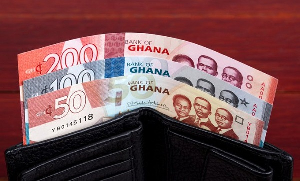
The Bank of Ghana has issued a strong warning to the public against the practice of repairing, taping, or re-joining torn and soiled Ghana cedi banknotes for the purpose of putting them back into circulation, describing the act as unlawful and a threat to the integrity of the national currency.
The warning, contained in a press release issued on Wednesday, October 7, 2026, follows the circulation of a video on social media showing individuals repairing torn and soiled banknotes with adhesive tape as a business activity.
“The Ghana Cedi banknote is legal tender and an important national symbol,” the central bank stated, stressing that “no individual should engage in the repair, rejoining or alteration of mutilated banknotes for re-issuance or recirculation”.
Taped Notes Damage ATMs and Cost the Public
The Bank of Ghana explained that notes which have been taped, glued, stapled or otherwise improperly repaired are not fit for circulation and could damage Automated Teller Machines (ATMs) and currency-processing machines. “Such notes may be rejected when presented for payment or exchange, potentially resulting in financial loss to members of the public,” the statement added.
The central bank urged members of the public who have torn or damaged notes not to attempt to repair them themselves. “Do not tape, glue, staple, re-join or otherwise attempt to repair damaged banknotes for re-issuance or recirculation,” it advised.
Instead, mutilated or damaged banknotes should be taken to a commercial bank for examination and replacement in line with the Bank of Ghana’s laid-down procedures. The central bank noted that when a mutilated banknote is presented for examination, more than half of the original note should be available.
The Bank of Ghana further reminded the public that it has the sole mandate for the management of Ghana’s currency and encouraged the public to report persons involved in the improper repair, rejoining or mutilation of banknotes to the central bank or appropriate law enforcement authorities.
“RESPECT THE CEDI. IT IS OUR NATIONAL PRIDE,” the statement concluded.
The Law Is Clear: Tampering With Currency Is a Criminal Offence
The warning is grounded in the Currency Act, 1964 (Act 242), which explicitly prohibits acts that tend to depreciate or impair the national currency. Under the Act, tearing, crumpling, staining, soiling, defacing, melting or otherwise mutilating currency notes and coins constitutes unlawful damage.
Writing on notes, cutting them, or otherwise altering them is also prohibited under the offences relating to notes and coins. The law prescribes penalties including fines and imprisonment. Under Section 1 of the Act, a person convicted of an offence related to discounting or depreciating the currency is liable to a term of imprisonment not exceeding ten years, or to a fine not exceeding five hundred Ghanaian pounds, or to both.
The Bank of Ghana’s Notice No. BG/GOV/SEC/2026/17, issued in July 2026, further clarified the range of prohibited acts, including spraying money at events, using currency as decorations, stepping on money during celebrations, and creating money bouquets for weddings and other occasions.
A Broader Crackdown on Currency Abuse
The latest warning forms part of a sustained campaign by the Bank of Ghana to protect the integrity of the cedi. In recent weeks, the central bank has intensified enforcement against the misuse of currency.
On October 5, 2026, the Bank of Ghana, in collaboration with the Ghana Police Service, arrested seven women in Accra for allegedly using cedi banknotes to make “money bouquets” and decorate cakes for sale. The suspects were detained and faced potential prosecution under the Currency Act.
The arrests sparked public debate, with Dr. Hassan Ayariga, Founder and Leader of the All People’s Congress, challenging the Bank of Ghana to state the exact law that criminalises arranging cedi notes into gift bouquets. The central bank maintained that the practice constitutes improper use of the national currency and is punishable under Act 242.
Earlier, in September 2026, the Bank of Ghana issued a separate warning against the spraying of money at events, a practice deeply embedded in Ghanaian social culture, particularly at weddings, funerals, and concerts. The central bank said such conduct amounts to tampering, alteration, defacement, and improper use of currency.
The Clean Note Policy and the New Heritage Series
The warning against repairing torn notes is also rooted in the Bank of Ghana’s longstanding Clean Note Policy, which was first implemented in 2010. The policy seeks to ensure that only good-quality banknotes remain in circulation, thereby maintaining confidence, integrity, and trust in the Ghanaian currency.
The central bank has consistently encouraged the public to keep banknotes in good condition, warning that dirty and damaged banknotes pose both economic and public health concerns. Research has shown that banknotes can harbour bacteria, and the Bank of Ghana has urged traders and market operators to handle the cedi with greater care.
The warning comes just weeks before the launch of the new Heritage Series banknotes, scheduled for November 3, 2026. The upgraded notes will be more durable, featuring added reinforcement to a cotton-based substrate, enhanced security features, and imagery celebrating Ghana’s culture, heritage, and national identity.
Dominic Owusu, the Bank’s Head of Currency, acknowledged that the Heritage Series notes would outlast existing ones but cautioned that this should not give the public licence to handle them carelessly. “Even though these banknotes are going to be more durable, I would always encourage Ghanaians to mind their handling,” he said.
He added that keeping notes clean would directly benefit the wider economy by reducing the frequency with which the central bank needs to print replacements. “Once we keep the banknotes clean, it will also reduce the printing cost so that we are able to ensure that we have fair, clean banknotes in circulation,” he stated.
The Bank of Ghana confirmed that the current and new banknotes will circulate side by side, with both remaining legal tender. The central bank advised the public not to rush to swap their existing notes when the new series goes live.
A Call for Collective Responsibility
Bank of Ghana Governor Dr. Johnson Asiama has described responsible currency handling as a collective duty for all Ghanaians. He specifically called out practices such as crumpling, writing on, or stapling banknotes, as well as using them in money bouquets, spraying at events, and other forms of currency abuse.
“Proper handling will help preserve the quality of our banknotes. It will reduce replacement cost for the central bank, and it will support efficient currency management,” Dr. Asiama said.
The Bank of Ghana has reminded the public that currency notes and coins are to exclusively serve their purpose as legal tender. “Under no circumstances should the currency be tampered with or defaced (e.g. by stamping, engraving, or piercing), mutilated, crumpled or torn, as these constitute unlawful damage which is punishable under the laws of Ghana”.
With the arrest of seven individuals over money bouquets and the ongoing public debate over the boundaries of cultural practices involving cash, the central bank’s latest warning signals an increasingly firm stance on currency abuse. For ordinary Ghanaians, the message is clear: if you have a torn cedi note, do not attempt to repair it yourself. Take it to a bank and let the proper procedures determine whether it qualifies for replacement.


