



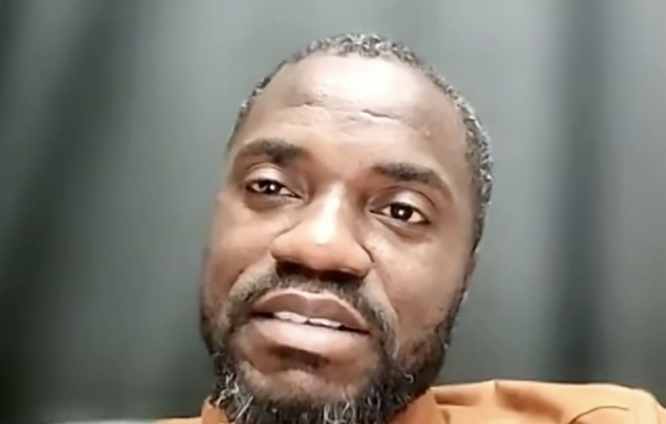
The Chief Executive Officer of the Chamber of Oil Marketing Companies (COMAC), Dr Riverson Oppong, has launched a sharp critique of government intervention in Ghana’s fuel pricing regime, arguing that the downstream petroleum sector must be allowed to operate under full price deregulation if private operators are to survive.
His comments, made in an interview with Asaase Radio on Thursday, October 2, 2026, come as government extends a GH¢2-per-litre subsidy on diesel for another two months amid sustained pressure from elevated international oil prices.
“This is an industry where we have pushed for a full price deregulation policy,” Dr Oppong said. “If I’m a private business, I borrow money to run the business. Who is going to determine what I charge for my goods — a ceiling, a cap and all those things — because we are a free market economy?”
A Long March to Deregulation
Ghana’s journey toward petroleum price deregulation has been decades in the making, punctuated by policy reversals and political sensitivities. The process began as far back as September 1996, but it was not until 2005 that the government, facing mounting losses at the state-owned Tema Oil Refinery (TOR), implemented a deregulation policy accompanied by strategic measures to build popular support.
The administration of the publicly released price-adjustment formula was transferred to the then newly established National Petroleum Authority (NPA) — a deliberate move to insulate price decisions from political intervention. However, automatic adjustment was suspended during the 2007–08 global fuel and food crisis and again in the run-up to the 2008 elections.
The full Price Liberalisation policy was finally implemented in July 2015, removing subsidies from petroleum products and allowing Petroleum Service Providers (PSPs) to independently set their margins in the price build-up. Under the deregulated framework, ex-pump prices are reviewed every two weeks based on three components: ex-refinery prices set by Bulk Import, Distribution and Export Companies (BIDECs); statutory taxes and levies; and operational margins for full cost recovery.
Yet Dr Oppong insists the deregulation remains incomplete.
“There are aspects of the pricing price builder today that are not fully deregulated,” he said. “For sure, I can say that the margins of some components of the SREF are kind of deregulated, but we still have government interventions. That’s why the government can say it’s giving subsidy.”
Diesel Subsidy Extended to November
The government’s latest intervention, announced on October 1, 2026, extends the GH¢2-per-litre subsidy on diesel through October and November. Under a revised mechanism, GH¢1 of the subsidy will be financed through a suspension of the Energy Sector Shortfall and Debt Repayment Levy (D-Levy) on diesel, while the remaining GH¢1 will be absorbed through a reduction in industry margins.
The subsidy was first introduced on April 16, 2026, when the state announced it would absorb GH¢2.00 per litre on diesel and GH¢0.36 per litre on petrol following a sustained surge in global petroleum prices driven by geopolitical tensions in the Middle East. Estimates at the time suggested the intervention could cost Ghana over GH¢500 million per month.
The International Monetary Fund has warned that fuel subsidies must remain temporary and well-targeted to avoid fiscal damage, a caution that has been echoed by some local economists who describe the price reductions as “mere optics” rather than real relief.
“Too Much Government Interference”
For Dr Oppong, government intervention has become the single biggest challenge of his tenure.
“I’m also tempted to say that we do have too much government interference, and for me, ever since I took this position, it’s been one of the biggest challenges to deal with. That is government intervention,” he said.
He also questioned the continued licensing of new oil marketing companies, describing the existing number of players as already excessive.
“If anybody today has applied for an oil marketing company’s license, then the person, indeed, for two reasons — and I’ll say it, unapologetically — that the person either does not understand the business, or is up to something,” he said. “Because what is it that you want to do that the 245 players cannot do?”
A Sector Under Strain
The debate over deregulation comes amid broader turbulence in Ghana’s downstream petroleum sector. In January 2026, Star Oil Limited suspended its membership of COMAC over disagreements on the fuel price floor policy, a dispute that was only resolved in October 2026 when the company rejoined while calling for governance reforms to ensure fairer representation.
COMAC has itself defended the NPA’s price floor policy as a necessary stabiliser to prevent unhealthy price competition that could undermine the ability of PSPs to recover costs. But the Chamber has also been at odds with government over Section 136 of the Customs Act, 2026, which seeks to shift tax accounting responsibilities from OMCs to BIDECs — a provision COMAC warns could delay revenue collection and create wider fuel supply risks.
Dr Oppong has separately called on government to temporarily freeze some fuel taxes to ease pressure on consumers, arguing that the real fiscal burden comes from taxes and levies rather than industry margins.
With the subsidy now extended through November and international oil prices showing little sign of sustained decline, the tension between government intervention and the private sector’s push for full market freedom appears set to intensify in the months ahead.


