



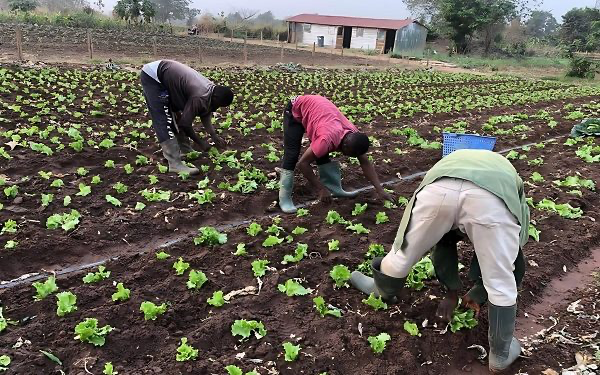
The Peasant Farmers Association of Ghana (PFAG) is calling for an urgent resolution to the reported impasse between the Ministry of Finance and the Ministry of Food and Agriculture, warning that farmers could ultimately bear the cost of delays to critical agricultural interventions.
The Association says the two ministries must return to the negotiating table and agree on a clear roadmap to protect ongoing programmes and prevent farmers from suffering further setbacks.
Executive Director of the Peasant Farmers Association of Ghana, Bismark Nortey, said the disagreement between the ministries should not be allowed to undermine interventions intended to improve agricultural productivity.
“When two elephants fight, it is the ground that suffers, and in this case, it is the farmers who are bearing the brunt of the impasse between the two ministries,” he said.
A Sector That Cannot Afford Delays
The PFAG is one of Ghana’s leading advocacy groups for smallholder farmers, representing producers across the country’s farming regions. Agriculture remains a cornerstone of Ghana’s economy, employing a significant share of the workforce, contributing substantially to GDP, and providing raw materials for industry.
Most Ghanaian farmers are smallholders, cultivating less than two hectares and relying heavily on rain-fed production. With climate change bringing increasingly erratic rainfall, prolonged dry spells and occasional floods, irrigation is seen as critical to stabilising yields, supporting all-year farming and protecting rural livelihoods.
Yet only a small fraction of Ghana’s arable land is under formal irrigation, leaving most farmers exposed to the weather. The rehabilitation of dams and irrigation schemes has therefore been a long-standing demand of farmer groups.
Withdrawal From World Bank Programme Raises Alarm
Mr. Nortey’s comments come amid concerns over Ghana’s withdrawal from the World Bank-backed West Africa Food System Resilience Programme (FSRP), which was expected to support several agricultural interventions, including the rehabilitation of major irrigation facilities.
The FSRP is a multi-country initiative designed to strengthen the resilience of food systems in West Africa, improve agricultural productivity, promote climate-smart farming and deepen regional food trade. For Ghana, participation in the programme was expected to unlock financing for irrigation infrastructure and other interventions aimed at boosting food security.
The reported cancellation of the project has alarmed farmer groups, who fear it could reverse gains and leave key commitments unfulfilled.
Irrigation Projects at Risk
Mr. Nortey expressed particular concern about plans to rehabilitate four major irrigation sites, saying farmers have waited for years for the infrastructure to be restored.
He said commitments to rehabilitate the dams date back to 2005, but farmers have yet to see significant progress.
“Since 2005, promises were made to the farmers to have these dams rehabilitated. We’ve not seen any progress,” he said.
According to him, the reported cancellation of the project would represent another major setback for smallholder farmers who depend on irrigation infrastructure to sustain production, particularly where rainfall patterns are unreliable.
“It’s unfortunate that the next time we are hearing of something like that, it’s a cancellation of the entire project that was supposed to put up, reconstruct these dams. And that’s very unfair to the smallholder farmer,” he added.
Call for a Clear Roadmap
The Peasant Farmers Association is therefore urging the two ministries to resolve their differences and establish a clear implementation plan for the irrigation projects and other agricultural interventions.
Mr. Nortey said the priority should be to ensure that disagreements at the policy level do not translate into delays or losses for farmers.
“I urge the two ministries to please consider the interests of the farmers, sit on the negotiating table and agree on a roadmap that considers the current challenges that farmers are facing,” he said.
He warned that continued delays could deepen frustration among farmers who have already waited years for promised infrastructure.
“It’s a big disappointment to the farmers and the farmers cannot always take this lying,” he said.
The Association says resolving the impasse is critical to protecting agricultural investments and ensuring that smallholder farmers do not lose out on interventions designed to improve productivity and food security.
At the time of filing this report, neither the Ministry of Finance nor the Ministry of Food and Agriculture had issued a public statement on the matter. Farmer groups say transparency and timely communication are essential to maintaining confidence in government’s agricultural agenda.
As Ghana pursues food security, reduced import dependence and rural job creation, the standoff between the two ministries risks undermining progress at a time when farmers can least afford it.


