



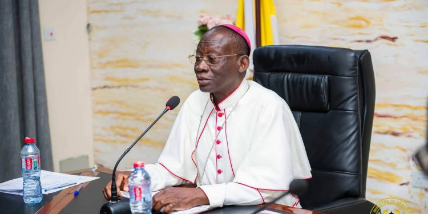
The Ghana Catholic Bishops’ Conference has called for stronger measures to address the widespread use and abuse of tramadol, marijuana and other readily accessible drugs in the country, warning that the devastation caused by these substances demands far greater national attention.
The Bishops say the abuse of these substances is having a devastating impact on the country’s youth and requires greater attention as part of the national response to drug trafficking and abuse.
They argue that the fight against drugs should not focus solely on cocaine and other high-profile narcotics, but must also address substances that are easily accessible in communities across Ghana.
“Destroying Many, Many Young Men and Women”
Speaking to Citi News, President of the Ghana Catholic Bishops’ Conference, Most Rev. Matthew Gyamfi, said the increasing use of tramadol, marijuana and other drugs among young people requires urgent action.
“In our villages and towns, we know the young men and women have taken to drugs—tramadol, ‘Red’, marijuana—and this is destroying many, many young men and women,” he said.
He said the national response must recognise the scale of abuse of substances that are readily available to young people.
“You should not concentrate only on drugs like cocaine, which is used, but not as massively as marijuana, tramadol, ‘Red’ and other similar drugs that are readily available on the shelves, and young people just go for it,” he stated.
The Drugs in Question
Tramadol is a prescription opioid painkiller that has become one of the most abused drugs in Ghana and across West Africa. When taken in excessive doses or without medical supervision, it can cause seizures, respiratory depression, organ damage and dependence. It is widely sold in markets, pharmacies, kiosks and by hawkers, often without any prescription.
Marijuana, locally known as “wee,” remains the most widely used illicit drug in Ghana, according to successive reports by the Narcotics Control Commission and international drug monitoring bodies. It is cultivated in several parts of the country and trafficked both domestically and internationally.
“Red” is a street cocktail typically made by mixing tramadol with alcohol and sometimes other substances, and has become increasingly popular among young people seeking a cheap, powerful high. Health officials have linked it to emergencies, mental health crises and deaths.
Cocaine, while high-profile and frequently the subject of major seizures and international enforcement operations, is significantly less prevalent in everyday community use compared to these accessible substances.
Call for Stronger Laws and Enforcement
Most Rev. Gyamfi called for stronger laws and enforcement measures to restrict the importation and illegal sale of such substances.
“They should make laws to ban the importation of these drugs and ensure that they are cleared away from the shelves,” he said.
The Bishops’ call forms part of their broader concerns about the growing drug menace and its implications for young people and communities across the country. They are urging authorities to strengthen enforcement against the illegal supply of drugs while expanding efforts to prevent substance abuse among the youth.
Background: Ghana’s Drug Abuse Challenge
Ghana has long served as a transit point for narcotics trafficking between Latin America and Europe, but in recent years, domestic drug abuse has become an increasingly urgent public health and security concern.
The Narcotics Control Commission (NACOC), which replaced the former Narcotics Control Board, has repeatedly raised alarm over the growing abuse of tramadol and other pharmaceuticals. In various reports and seizures, authorities have intercepted large consignments of tramadol at the country’s ports and borders, underscoring the scale of the supply chain.
Mental health professionals have warned that drug abuse is contributing to rising cases of psychosis, depression, school dropout, violent crime and family breakdown among young Ghanaians. Rehabilitation centres report being overwhelmed by demand for services.
In 2023, Parliament passed the Narcotics Control Commission (Amendment) Act, which among other things allowed for the cultivation and industrial use of cannabis with low THC content for medicinal and industrial purposes, while maintaining strict controls on recreational marijuana. The law sparked debate over enforcement and its implications for drug control efforts.
A Broader Moral and Social Appeal
The Catholic Bishops’ Conference has historically played an influential role in Ghana’s public policy debates, weighing in on issues ranging from education and healthcare to corruption, governance and social justice. The Bishops run schools, hospitals and social programmes across the country, giving them direct insight into the social challenges facing communities.
Their intervention adds a moral and pastoral dimension to the drug debate, framing it not only as a law enforcement issue but as a crisis threatening the nation’s future workforce, families and social fabric.
The Bishops are calling on the government, law enforcement agencies, parents, religious bodies and civil society to collaborate on prevention, education and rehabilitation, alongside stricter enforcement against suppliers.
As Ghana continues to grapple with drug trafficking and abuse, the Bishops’ message is clear: the fight must extend beyond headline-grabbing narcotics to confront the everyday substances quietly wreaking havoc in homes and communities nationwide.


