



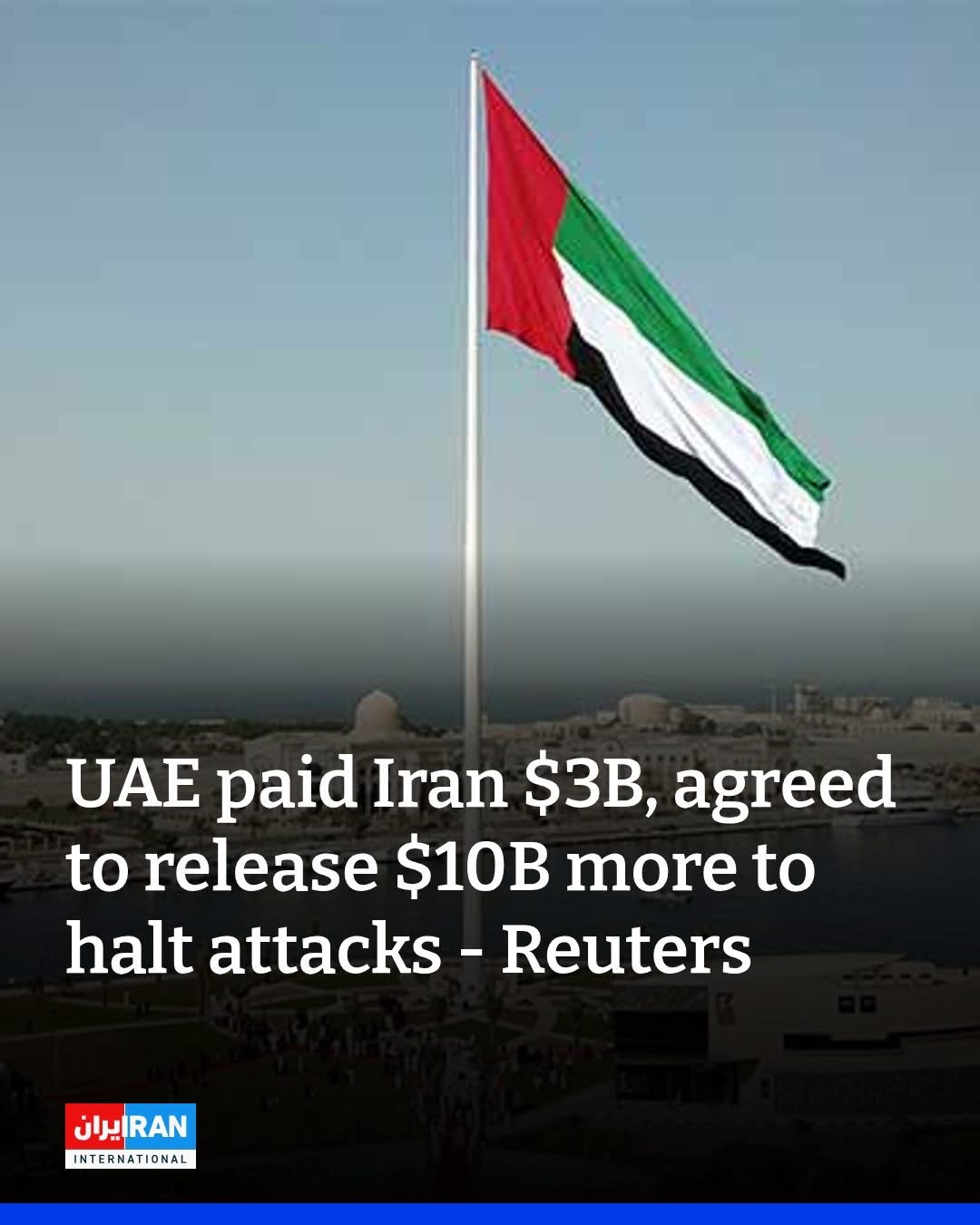
The United Arab Emirates has vehemently denied reports that it has transferred billions of dollars to Iran in exchange for a halt to Iranian missile and drone attacks on the Gulf state, following a Reuters report that cited multiple sources familiar with the arrangement.
What the Reuters report says
Citing four sources, Reuters reported Friday that the UAE has already delivered approximately $3 billion to Iran and agreed to unlock billions more as part of an arrangement aimed at stopping Iranian attacks on the Persian Gulf state. The report comes amid heightened regional tensions during the ongoing U.S.-Israeli war with Iran.
Two regional sources told Reuters the UAE agreed to release a total of $10 billion, with more than $3 billion already delivered. Two other sources with knowledge of the arrangement put the total funds at $20 billion, saying the move was agreed in return for Iran halting missile and drone attacks on the UAE.
Reuters said it could not determine whether the funds came from UAE money or long-blocked Iranian accounts in the UAE banking system, or elsewhere.
The arrangement represents a striking pivot from the open animosity that has characterized UAE-Iran relations throughout much of the war, when Iranian attacks emptied Dubai’s hotels, drove expatriates to flee and shook the Emirati reputation for safety that underpins its status as a premier business hub, according to the sources cited by Reuters.
UAE official response
The UAE foreign ministry issued a statement on Saturday categorically denying the reports. The ministry “affirmed that these allegations are entirely false and unfounded, stressing that no frozen Iranian funds have been released, transferred, or facilitated through the UAE.” The ministry also called on media outlets to exercise accuracy, rely on official sources, and refrain from publishing unverified information.
Earlier, when asked by Reuters to comment on the reported transfer, a UAE official said the country was trying to ease tensions and foster peace, without confirming or denying any financial arrangement.
“The UAE’s foreign policy is guided by promoting de-escalation and reducing tensions across the region, while advancing lasting peace and stability,” the official said. “The UAE supports efforts, including those undertaken by the United States, to protect the peoples of the region from the repercussions of conflict.”
Context of Iranian attacks
Iran last attacked the UAE directly on May 4, striking the Gulf state’s Fujairah port on the Gulf of Oman. According to earlier reports from Emirati authorities, the country’s air defenses intercepted 551 ballistic missiles, 29 cruise missiles and 2,263 drones since the beginning of Iranian attacks. The total number of injuries linked to the attacks has risen to 230, including Emirati nationals as well as Arab and foreign residents.
The attacks came amid a wider regional escalation following the U.S.-led military campaign against Iran, which has disrupted trade routes, affected energy markets and heightened fears of a wider regional war.
Broader diplomatic context
Word of the reported financial arrangement coincides with the final stages of broader negotiations between Tehran and Washington on ending the war. Diplomats say those talks could involve the release of tens of billions of dollars in Iranian oil revenues frozen in foreign banks under U.S. sanctions.
In Washington, Vice President JD Vance said Friday that funds would not be released to Iran simply for signing a deal or attending a meeting, adding that the potential agreement is structured to ensure that economic benefits would flow to Tehran only if it meets its obligations.
The White House did not immediately respond to a request for comment on the reported UAE-Iran arrangement. There was also no immediate response from Iranian authorities.
Terms of the reported arrangement
One source with knowledge of the arrangement told Reuters that in return for the financial disbursement, Iran would halt missile and drone attacks on the UAE, and the two countries would pursue a rebuilding of bilateral ties, including intelligence sharing and economic cooperation. The source added that Iran has approached at least two other Gulf Arab countries to make similar arrangements.
Another source said the arrangement offered a way to help resolve the conflict between the U.S. and Iran without either side crossing its red lines: Iran could claim it extracted compensation for war damages, Washington could insist it paid nothing, and Abu Dhabi could obtain security for itself and its business hub status while framing the move as an investment in rebuilding regional trust.
The first source with knowledge of the arrangement said talks began several weeks ago but accelerated when officials from Iran’s Islamic Revolutionary Guard Corps visited Abu Dhabi last week to meet Sheikh Tahnoun bin Zayed al Nahyan, the UAE’s national security adviser. That visit was followed by a trip by UAE officials to Iran, the source said.
Regional impact and outlook
Iranian media reported Foreign Ministry spokesperson Esmaeil Baghaei as saying that large parts of the text under negotiation have been finalized. U.S. President Donald Trump has said a deal with Iran could be reached in the very near future, possibly as early as this weekend. Pakistani Prime Minister Shehbaz Sharif announced that the text of a potential peace agreement has already been finalized.
The reported UAE move follows weeks of military escalation involving Iran, the United States and Israel, during which regional countries faced growing security threats and economic uncertainty. The conflict disrupted critical trade routes, including through the Strait of Hormuz, a key chokepoint for global oil shipments.
None of the sources cited in the Reuters report would agree to be identified due to the sensitivity of the matter. (Reporting by Andrew Mills, Marwa Rashad and Ahmad Ghaddar; additional reporting from Reuters bureaus; writing by [name]; editing by [name])


