



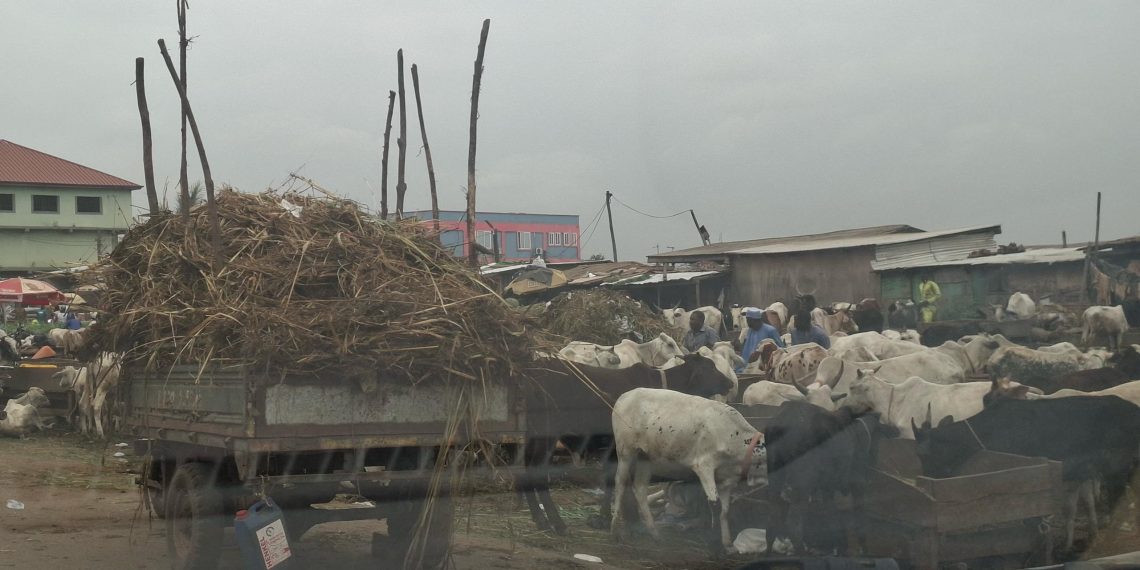
A resident of Afariwaa in Ashaiman, Victor Atsu, has called on authorities to relocate the Tulaku cattle market, citing mounting concerns over road safety, sanitation, and the movement of cattle through nearby communities — a demand that shines a spotlight on one of West Africa’s largest livestock trading hubs, which has operated largely without major infrastructure upgrades for decades.
In a written appeal to Citi News on Sunday, September 20, 2026, Mr. Atsu said residents and motorists in the area regularly encounter cattle roaming along roads, creating difficulties for commuters and raising concerns about public safety.
A Daily Hazard for Commuters
Mr. Atsu, who lives around Afariwaa, said he frequently comes across cattle on his way to work, particularly around the Tulaku area, where animals are moved along the roadside. According to him, the situation has also resulted in unpleasant driving experiences and contributed to environmental pollution in the area.
He recounted an incident in which a Fulani herder was chasing a cow that collided with his vehicle, adding that the herder fled the scene after the incident.
“He questioned why authorities had not taken stronger action to address the situation,” and called on the relevant authorities in Ashaiman to relocate the Tulaku cattle market away from the urban area. He said relocating the market would help reduce the risks posed by stray cattle to motorists and residents while improving sanitation and order in the community.
A Market of Regional Significance
The Tulaku cattle market — also known as the Ashaiman Livestock Market — is the largest livestock trading hub in West Africa, serving as a 24-hour operation that receives animals from Burkina Faso, Mali, Niger, and Nigeria. The market accommodates over 4,500 heads of cattle at any given time, alongside goats and sheep, with 30 to 40 trucks of cattle arriving daily. Weekly inflows are estimated at 8,400 cattle.
The market generates an estimated GH₵600 million monthly and employs more than 80,000 people, according to figures from the Ghana National Livestock Breeders and Traders Association (GLIBTA). Livestock imports from Burkina Faso, Niger, and Nigeria constituted 70 percent of the sector’s supply in 2023, and the livestock industry contributed GH₵4.9 billion to Ghana’s GDP in 2022, representing 13 percent of agriculture’s total GDP contribution.
The market was relocated to its present site at Tulaku in 1988, having existed in various forms since the 1960s. GLIBTA General Secretary Sheikh Issa Amartey has noted that despite its strategic importance, the market has seen no significant improvement since the relocation.
Longstanding Sanitation and Safety Challenges
Mr. Atsu’s concerns are not isolated. Residents near Tulaku on the Ashaiman-Auna road have previously reported that livestock trailers have moved from designated areas to the roadside, with animals and trading activities causing sanitation and road safety issues. Residents have accused the Kpone-Katamanso Municipal Assembly of inaction, noting that animal waste accumulation affects sanitation and the environment, and that the roadside livestock trading worsens environmental and security conditions.
The road in question is a major route leading to Togo and beyond, heightening the safety risks posed by stray cattle. The Environmental Protection Agency has previously indicated plans to investigate the situation and act accordingly.
GLIBTA has itself highlighted serious challenges confronting the facility, including animal and public health risks arising from poor environmental conditions, an inadequate mini slaughter slab, poorly located watering points, and security concerns for both humans and animals.
Government Redevelopment Plans
The government has announced plans to redevelop the market into a model cattle market of international standard. In February 2026, the Minister of Food and Agriculture, Eric Opoku, disclosed that the redeveloped market would feature a modern abattoir, designated watering and feeding areas, a security post, administrative offices, washrooms, canteens, and resting facilities for transit drivers and visitors.
Mr. Opoku noted that the market, which was constructed in 1974, had not undergone any major facelift and currently operates largely as an open space, where livestock are kept under unhygienic conditions. Feasibility studies for the redevelopment have been completed and a site plan prepared, with the only outstanding issue being the commencement date for the project.
The minister said the redevelopment was a promise President John Dramani Mahama made to the association during his 2024 campaign tour of the area.
As immediate interventions, Mr. Opoku directed the release of 50 streetlights to enhance security, GH₵30,000 to support the completion of the abattoir, and a tricycle for refuse collection to improve sanitation. The Ashaiman Municipal Assembly was also to receive a GHS30,000 support package to hire equipment for immediate desilting and cleaning of the market yard pending the acquisition of a payloader.
The ministry has also engaged fertiliser manufacturers to explore the use of cow dung generated at the market as raw material for fertiliser production — an initiative aimed at addressing sanitation challenges while creating additional economic value from livestock waste.
A Test of Implementation
In June 2026, the Municipal Chief Executives for Kpone-Katamanso and Ashaiman jointly ordered the immediate removal of cattle from the Tema–Akosombo Road, signalling growing official recognition of the safety hazards posed by livestock movement.
The Tulaku market’s strategic importance is not in question — it supplies Ghanaian cattle breeds to Nigeria, Togo, Benin, and Mali, and remains a critical node in the sub-regional livestock value chain. But as Mr. Atsu’s appeal demonstrates, the tension between the market’s economic significance and its impact on surrounding communities remains unresolved.
For residents of Afariwaa and the broader Ashaiman community, the question is not whether the Tulaku market matters — it clearly does — but whether the promised redevelopment will materialise in time to address the daily safety and sanitation hazards they face. Until then, the cattle will continue to roam.


