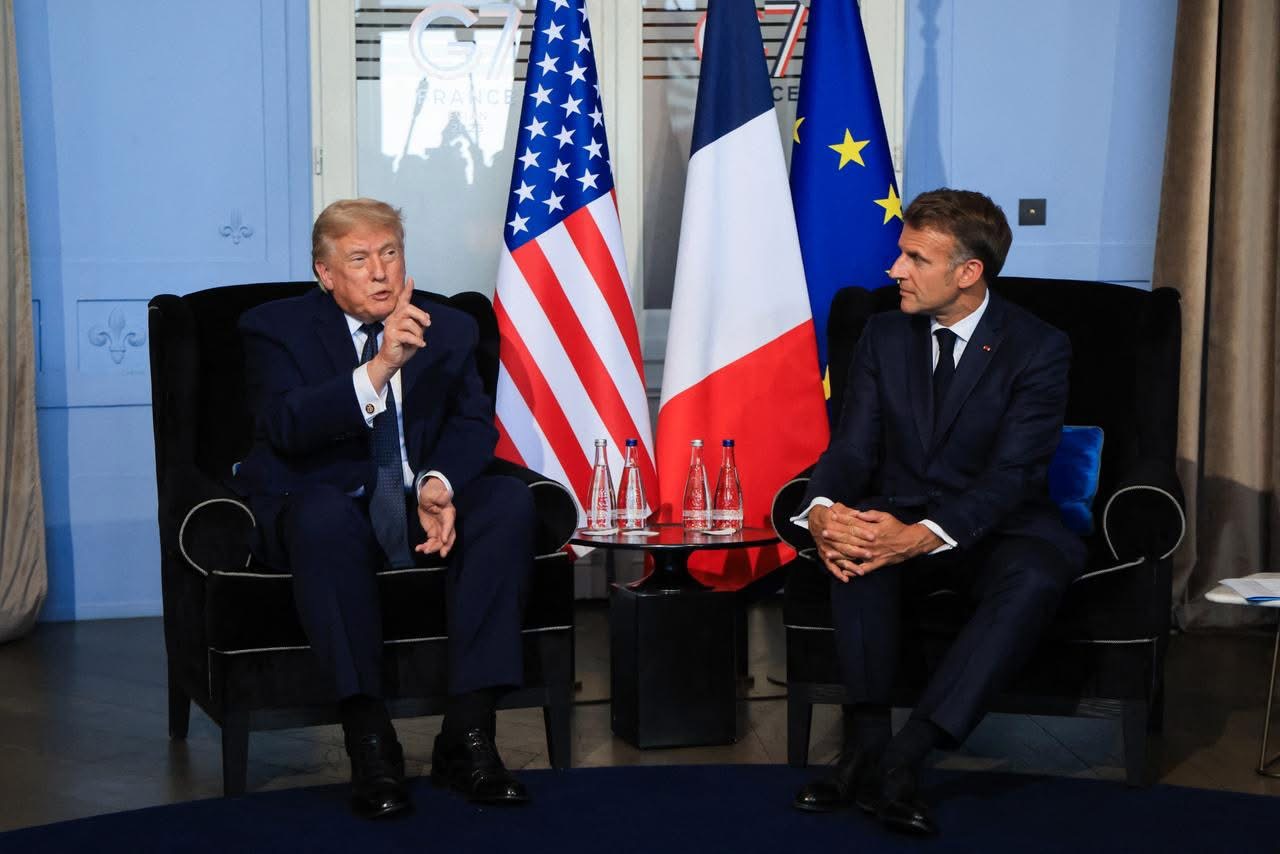
US President Donald Trump held a bilateral meeting with French President Emmanuel Macron on Monday as the G7 summit opened in the French Alpine town of Evian-les-Bains, with the leaders focusing on a fragile US-Iran peace deal while papering over lingering trade disputes.
The 52nd G7 summit, running through June 17 on the shores of Lake Geneva, brings together the world’s seven largest advanced economies: the United States, France, Canada, Germany, Italy, Japan, and the United Kingdom, plus the European Union. Host Macron also invited Ukrainian President Volodymyr Zelenskyy, Indian Prime Minister Narendra Modi, Brazilian President Luiz Inácio Lula da Silva, and leaders from South Korea, Kenya, Egypt, Qatar, and the United Arab Emirates.
The summit carries particular weight for Macron, who is due to leave office next spring and is constitutionally barred from a third consecutive term. It also marks a diplomatic test: after Trump left last year’s summit in Canada early amid a rapidly escalating Iran-Israel conflict, Macron worked to ensure the US president remained engaged this year. The French leader even postponed the summit’s start to accommodate Trump’s 80th birthday celebrations, which the US president marked with a UFC event at the White House.
Iran peace deal dominates discussions
The top item on the agenda is implementation of the preliminary US-Iran agreement to end months of military conflict. Mediator Pakistan announced Sunday that both sides had declared “the immediate and permanent termination of military operations on all fronts”. The pact, which Trump said was “all signed” on Monday, extends an existing ceasefire for another 60 days while both sides negotiate a final agreement. An official signing ceremony is scheduled for Friday, June 19, in Geneva, with US Vice President JD Vance expected to attend.
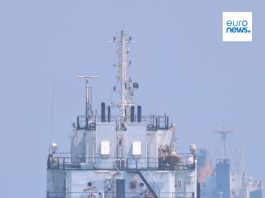
Under the memorandum of understanding, Iran has agreed to reopen the Strait of Hormuz — through which approximately 20% of the world’s oil and natural gas transits. In return, the United States will lift its naval blockade of Iranian ports. Trump wrote on Truth Social: “Ships of the World, start your engines. Let the oil flow!”
Trump says ships moving; Macron urges caution
Speaking alongside Macron, Trump claimed that vessels had already begun moving through the strait. “They’re doing a little hunting for a couple of mines that they’ve already found, but … ships are starting to go out now,” Trump said. Earlier on Truth Social, he wrote that tankers were “going along the Southern ‘Highway,’ which is totally safe, secure, and pristine”.
Macron struck a more cautious note, saying France could dispatch fighter aircraft as early as Tuesday for observation flights over the waterway, with frigates possibly deployed within 48 hours and France’s nuclear-powered aircraft carrier within two to three days. Trump responded that he did not think the US would “need much help” but acknowledged that it was “not a bad idea to have a ship or two up here from a few countries”.
The US military has already begun searching for Iranian mines in the Strait, and an extensive post-conflict demining operation may be needed before commercial shipping can fully resume. International businesses are likely to wait months before confidence is restored.
Trade tensions beneath the surface
Despite the cordial public appearance, trade disputes remain unresolved. In an interview with the New York Post hours before departing for France, Trump threatened to impose 100% tariffs on French wines unless Paris eliminates its digital services tax on American technology companies — a 3% levy on revenue from large digital services that has been in place since 2019.
Macron, speaking to French television channel TF1 before the summit, refused to bend. “No, because that is not how it works,” he said, adding that he expected a “respectful but firm” dialogue with Trump. “It is not up to the United States to decide what the legislation of the Europeans or the French should be. That won’t change as long as I’m here,” Macron said.
At their bilateral meeting on Monday, however, both leaders avoided any public mention of tariffs or trade disputes. “Emmanuel has been a special friend of mine,” Trump said. “We’ve had a fantastic relationship. We’ve worked on many deals together.” Macron commended Trump for the memorandum of understanding with Iran and for attending the summit.
Versailles dinner to mark US independence anniversary
Following the summit, Macron will host Trump for a private dinner at the Palace of Versailles, honoring the 250th anniversary of American independence. The dinner is seen as a symbolic gesture of the long-standing US-French alliance, despite current economic frictions.