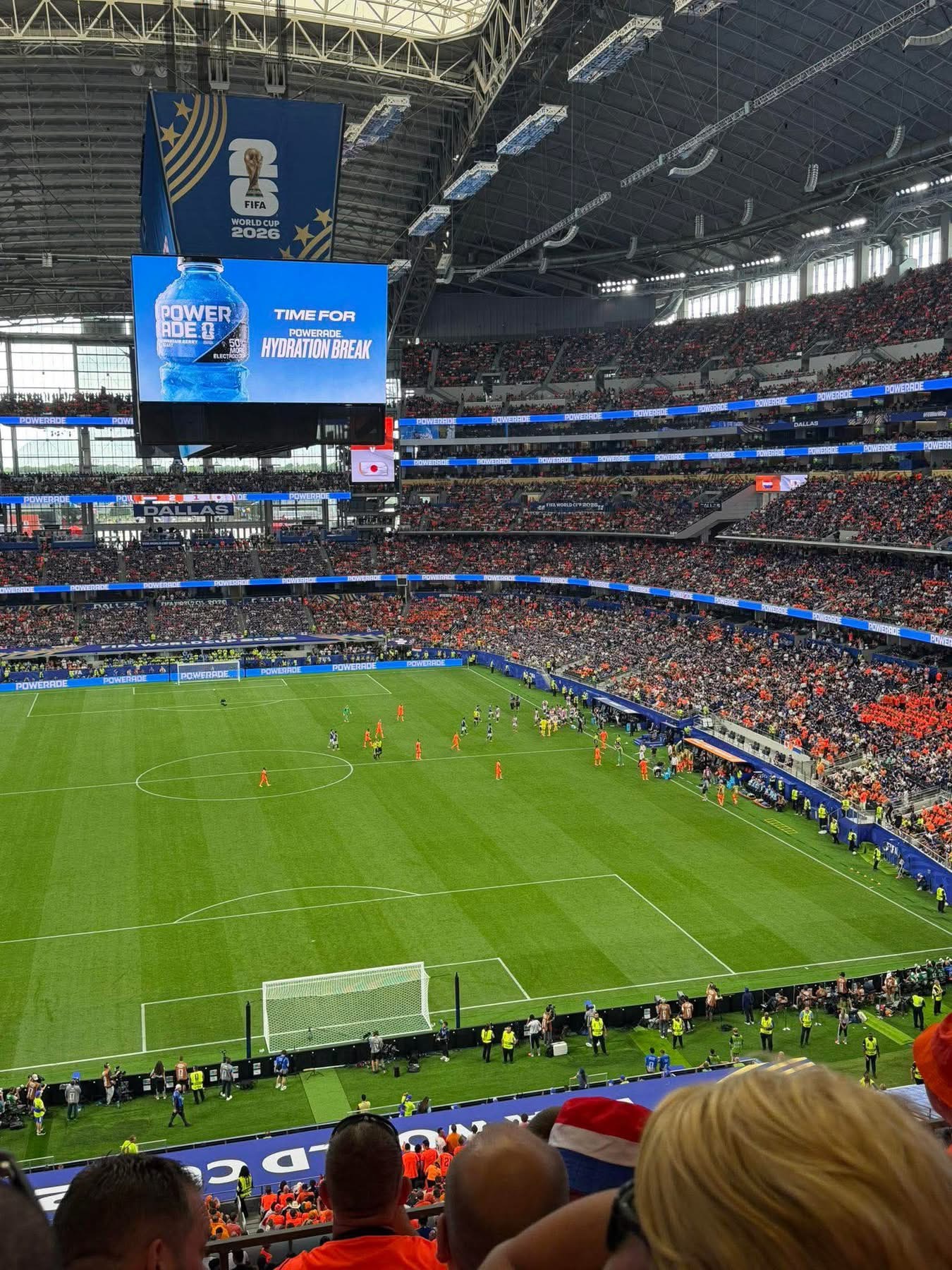
When FIFA announced mandatory hydration breaks for all 104 matches of the 2026 World Cup, it cited player welfare. But the timing and scope of the decision – applying even to air-conditioned domed stadiums – have raised questions about the commercial forces at play, with broadcaster Fox poised to reap hundreds of millions of dollars from a feature that did not exist in soccer until this tournament.
Fox paid 1 billion and $1.5 billion, meaning Fox secured what industry analysts call a significant bargain. The hydration break, critics and insiders say, is how the network closes that gap.
Mandatory pauses, even in domed stadiums
In a little-noticed announcement at a World Broadcaster Meeting in Washington, D.C., FIFA confirmed that all 104 matches would feature two mandatory three-minute pauses – one midway through each half. The decision was made, FIFA said, after consultation with coaches and broadcasters. Notably, the breaks apply to every game, including those played inside climate-controlled domed stadiums with retractable or fixed roofs, where temperatures pose no threat to player safety.
A few months later, FIFA gave broadcasters the green light to sell advertising during the pauses. Under the approved format, broadcasters receive 2 minutes and 10 seconds of ad time per break – starting 20 seconds after the whistle and ending 30 seconds before play resumes.
832 new ad slots never seen in soccer
Across 104 matches, that translates to 832 potential advertising slots – inventory that did not exist in any previous World Cup. Fox and its Spanish-language partner Telemundo project a combined $850 million in advertising revenue from the 2026 tournament, a figure that dwarfs their combined rights fee.
For Fox alone, the hydration break helps turn a money-losing rights deal into a profitable enterprise. Media analysts note that the network paid roughly half of what the package would command in an open market, but production and talent costs remain substantial. The ad breaks effectively create a new revenue stream out of thin air.
Player welfare argument is real – but selectively applied
The player welfare case is not without merit. During last summer’s Club World Cup in the United States, several matches were played in conditions approaching 100 degrees Fahrenheit (38°C) . Argentina midfielder Enzo Fernández, who competed in the tournament, told reporters he felt “dizzy” in “very dangerous” temperatures. FIFA had legitimate reason to act.
But the decision to apply the breaks to every match – regardless of weather, venue, or playing surface – has drawn skepticism. “If the concern is genuinely heat-related, why mandate a break in a 68-degree domed stadium?” asked one sports broadcasting executive, speaking on condition of anonymity. “The answer is obvious: the break is now a commercial asset.”
Fox misses return window on opening day
The commercial logic was tested – and briefly broken – on the tournament’s opening day. During the match between Mexico and South Africa, Fox failed to return from a hydration break within the 30-second window FIFA mandates before play resumes. By the time the network cut back from commercials, the ball was already in play, drawing swift criticism from soccer purists on social media.
FIFA has not publicly commented on the incident. However, sources familiar with broadcast operations said the governing body is likely to issue a formal reminder to all rights holders about the return-to-play protocol.
Coca-Cola: the quiet beneficiary
One company stands to gain from every angle. Coca-Cola, a top-tier global FIFA partner for decades, supplies and operates the hydration stations positioned along the touchlines during the breaks. The same three-minute pause serves three commercial interests simultaneously: on-field sponsor visibility for Coca-Cola, ad revenue for Fox, and subscription retention for Fox’s streaming platforms, which air uninterrupted coverage.
A Coca-Cola spokesperson declined to comment on the commercial arrangements, stating only that the company is “proud to support player hydration and safety at FIFA World Cup 2026.”
Will hydration breaks outlast the summer?
The 2030 World Cup will be co-hosted by Spain, Portugal, and Morocco – nations where summer temperatures regularly exceed 40°C (104°F). The 2034 tournament has already been awarded to Saudi Arabia, one of the world’s hottest countries, where summer matches would pose severe risks without cooling measures.
FIFA has not confirmed whether the hydration-break policy will outlast this summer’s tournament. But industry observers note that $850 million in new advertising inventory – a figure likely to grow as broadcasters renegotiate terms for future cycles – tends to make such features permanent.
“Once you introduce a commercial break into live sport, it never goes away,” said a veteran sports media consultant. “The toothpaste is out of the tube.”
Fox declined to comment for this story. FIFA did not respond to a request for comment on the future of hydration breaks beyond 2026.