



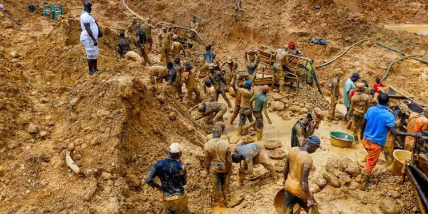
A makeshift mining pit caved in on Friday afternoon at Odumase-Santenso in the Asante Akyem Central Municipality, killing three young artisanal miners and reigniting urgent calls for stricter enforcement against illegal small-scale mining, commonly known as galamsey.
The victims—two women and a man, all aged between 21 and 25—were trapped beneath tonnes of earth when the unlicensed pit collapsed around 4:00 p.m. on August 7, 2026, according to Isaac Kyei Andoh, the Caretaker Assembly Member for the area and Assembly Member for the Bomeriso Electoral Area.
The deceased have been identified as residents of the nearby Bomeriso community, with the two women hailing from that locality. Their names have been withheld pending formal identification by families and the police.
Desperate Rescue Effort
Community members raised the alarm immediately after the pit caved in, Andoh said. He rushed to the scene and coordinated a rescue effort, but the initial plan to deploy a backhoe from the Municipal Assembly hit a snag—the equipment was faulty and could not be mobilised.
“We tried to get a backhoe from the assembly, but it was not working. We had to arrange a private backhoe, but by the time it arrived, the community members had already dug through the collapsed earth with their bare hands and retrieved the bodies,” Andoh recounted.
The bodies were recovered between 6:30 p.m. and 7:00 p.m. that evening. Traditional chiefs performed necessary rites at the scene before the remains were conveyed to the local mortuary for preservation and autopsy.
The Perils of ‘One-Man’ Mining
The victims were engaged in what is locally known as “one-man” mining—a rudimentary and highly dangerous form of illegal small-scale mining in which individuals dig deep vertical shafts using shovels, pickaxes, and occasionally crude winches, without any safety reinforcements, geotechnical assessments, or protective gear.
Such pits are often dug on abandoned concessions or forest reserves, with no oversight from the Minerals Commission or the Environmental Protection Agency. Collapses are frequent because the soil structures are unstable, especially during the rainy season when the ground becomes saturated and heavy.
According to the Ghana Chamber of Mines, over 60 percent of small-scale mining in the country is unregulated, and the sector claims more than 100 lives annually through pit collapses, flooding, and makeshift explosions. The Odumase-Santenso incident is the latest in a grim toll that has climbed steadily despite government promises to clamp down.
A Community in Mourning
The tragedy has plunged the Bomeriso and Odumase-Santenso communities into deep grief. Local elders described the victims as energetic young people who had turned to mining due to a lack of formal employment opportunities.
“These were young people trying to survive. We have no factories here, no large farms—just gold beneath our feet. But the price they paid is too high,” said Nana Kwasi Adu, a community elder who assisted in the recovery.
The Municipal Chief Executive, who was informed promptly, has promised to investigate the circumstances surrounding the illegal operation and ensure that any landowners or sponsors of the site are held accountable. However, enforcement remains a challenge, as such pits are often dug and abandoned within days, making it difficult to trace operators.
Broader Context: Galamsey’s Wicked Grip
The Odumase-Santenso collapse is the latest in a series of deadly incidents across Ghana’s gold-rich regions. In March 2026, six miners were killed in a similar collapse at a pit in the Western Region, and last December, four died in a flooded shaft in the Eastern Region.
Beyond the human toll, galamsey has ravaged the environment. Mercury pollution, deforestation, and siltation of water bodies have contaminated rivers such as the Pra, Ankobra, and Offin, affecting drinking water supplies and agricultural irrigation. The government’s Operation Halt, launched in 2021, has destroyed thousands of illegal mining equipment and arrested hundreds, yet the practice persists due to the lucrative nature of the trade and the desperation of unemployed youth.
In 2025, a presidential task force intensified military-led sweeps in forest reserves, but critics argue that without sustainable alternative livelihoods, enforcement alone cannot stem the tide.
Calls for Action
Local assembly member Andoh used the tragedy to appeal to authorities for more robust community-based monitoring and the provision of safer, regulated mining opportunities for youth.
“We cannot continue to lose our children this way. The government must either legalise and regulate small-scale mining with proper safety standards, or provide jobs that give these young people a real future. Otherwise, the earth will keep claiming its toll,” he said.
Environmental activists have also weighed in, urging the Minerals Commission to accelerate the issuance of permits to small-scale cooperatives that adhere to sustainable practices, thereby drawing miners away from illicit operations.
Police Investigation Underway
The Ghana Police Service has opened an inquiry into the incident, though no arrests have been made as of Sunday. Investigators are interviewing residents to identify the owner of the land where the pit was located and any individuals who may have financed or managed the operation.
Under the Minerals and Mining Act, 2006 (Act 703), illegal mining carries penalties of up to 25 years imprisonment, but convictions remain rare due to the difficulty of gathering evidence in remote, informal mining settlements.
A Continuing Tragedy
As the three families prepare for burial, the Odumase-Santenso collapse serves as a stark reminder of the human cost of Ghana’s gold rush. With global gold prices hovering near record highs—above $2,400 per ounce—the lure of easy money has intensified, drawing even more young people into the deadly shafts.
For the community, the mourning will be long. And for the nation, the policy dilemma—between economic opportunity, environmental protection, and human safety—remains unresolved, even as the earth swallows yet another generation of its children.
The bodies of the deceased have been deposited at the Konongo Government Hospital mortuary pending autopsy and burial arrangements.


