



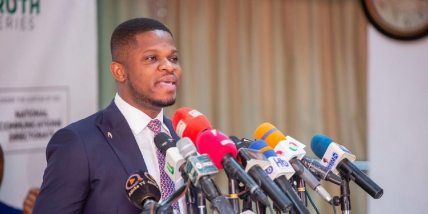
– The Chief Executive Officer of the Ghana Gold Board (GoldBod), Sammy Gyamfi, has detailed a sweeping overhaul of the institution’s financing architecture, revealing that the state gold buyer has ended its reliance on the Bank of Ghana as an intermediary and is now raising funds directly from commercial banks and international off-takers—a move designed to shield the central bank’s reserves and satisfy IMF fiscal discipline requirements.
Speaking during an X Spaces conversation on Sunday, August 9, 2026, Gyamfi clarified the critical distinction between the Bank of Ghana’s former role as a direct financier of gold purchases and its more recent, limited function as a currency intermediary. He stressed that the new model, tested successfully on August 3 with a US$75 million transaction, is intended to make GoldBod operationally self-sufficient within weeks.
From Agent to Independent Operator
GoldBod was established in early 2026 to replace the Precious Minerals Marketing Company (PMMC) as the sole state-designated buyer of Ghana’s small-scale and artisanal gold output. For years, PMMC operated under the Bank of Ghana’s Domestic Gold Purchase Programme, which allowed the central bank to accumulate gold reserves by directly financing purchases.
Under that old arrangement, the Bank of Ghana provided cedi funds to PMMC, which bought gold from licensed small-scale miners and exported it, with the dollar proceeds returned to the central bank. As Gyamfi explained, “That is not pre-financing of Gold Board. That is Bank of Ghana giving money to an agent to buy gold. The central bank was the principal; we were the agent.”
That arrangement continued until February 2026, when GoldBod formally took over the gold trade portfolio. However, the financing relationship remained largely unchanged until July, when the central bank’s Domestic Gold Purchase Programme officially ended.
The Intermediation vs. Intervention Distinction
Gyamfi was careful to dispel what he described as widespread confusion about the Bank of Ghana’s role in GoldBod’s operations. Between February and July 2026, the central bank acted as an intermediary—not a financier—by converting cedi funds from commercial banks into dollars for GoldBod’s gold purchases. This was not, he insisted, a drain on the Bank’s foreign exchange reserves.
“You must understand the difference between intervention and intermediation,” Gyamfi said. “Intervention is where the central bank forces its reserves to give effect to the market. Intermediation is where the central bank goes as an intermediary. Simply put, a middleman.”
He stressed that intermediation does not deplete the central bank’s net reserves because the cedi inflows from commercial banks are simply swapped for dollars, leaving the Bank’s balance sheet neutral. Nevertheless, the arrangement raised eyebrows among international observers, including the IMF, which has been monitoring Ghana’s fiscal and monetary policies closely as part of its extended credit facility programme.
” We don’t want to have any issues with the IMF,” Gyamfi acknowledged, explaining why GoldBod decided to end even the intermediary role in July.
The New Financing Architecture
GoldBod is now pursuing a two-pronged funding strategy that bypasses the central bank entirely:
- Advance dollar payments from international off-takers. GoldBod has entered agreements with foreign refiners and bullion banks that are willing to prepay for future gold deliveries. These advance payments provide immediate dollar liquidity, which GoldBod uses to purchase gold from local miners. This model eliminates the need for any central bank involvement and aligns with best practices in other gold-producing nations.
- Funded forward foreign exchange transactions with commercial banks. Under this arrangement, GoldBod sells expected future dollar inflows from upcoming gold exports to commercial banks in advance. The banks provide cedis upfront, which GoldBod uses to buy gold. When the gold is exported and the dollars are received, GoldBod delivers the contracted dollars to the banks, closing the forward position.
“The forward FX transaction is essentially a pre-sale of future export proceeds,” Gyamfi explained. “We get the cedis now, we buy the gold, we export, and the dollars flow back to the banks. No BoG involvement, no reserve drawdown.”
Successful Pilot and Next Steps
Gyamfi disclosed that GoldBod tested the forward FX model on August 3, 2026, raising US$75 million in cedi equivalent and converting it into dollars for gold purchases within 48 hours—entirely without using the Bank of Ghana as an intermediary. The transaction was executed with a consortium of local commercial banks and was deemed a resounding success.
“We are working with the Bank of Ghana and the Ministry of Finance to refine the framework,” Gyamfi said. “Further adjustments are expected by August 19, and we anticipate that by that date, the Gold Board will stand on its own. That is what we want—we don’t want to depend on the Bank of Ghana again as an intermediary raising money for us.”
Operational Costs and Government Support
Separating gold purchase financing from operational costs, Gyamfi noted that GoldBod’s day-to-day running expenses—salaries, administrative costs, logistics, and security—are expected to be covered through its trading margins. The institution will either incorporate these costs into its pricing structure or offset them with gains from its trading activities.
However, he disclosed that the government has also committed to providing a dedicated funding stream equivalent to five percent of the value of gold purchased under a three-year reserve accumulation programme. This programme aims to build Ghana’s foreign exchange reserves to cover 15 months of imports—a target that would significantly enhance the country’s resilience against external shocks.
Gyamfi was emphatic that this allocation is a “baseline programme implementation cost” rather than a subsidy or a bailout. It is intended to ensure that GoldBod can sustain its operations while serving the broader national interest of reserve accumulation.
Why the Shift Matters
The restructuring of GoldBod’s financing model carries significant implications for Ghana’s macroeconomic stability. The Bank of Ghana’s foreign exchange reserves, which stood at approximately $5.2 billion as of mid-2026, have been under pressure due to debt service obligations and import financing needs. Any perception that the central bank was using its reserves to fund gold purchases could undermine confidence in the cedi and complicate the IMF programme review.
By divorcing GoldBod from the Bank of Ghana, the government is signalling a commitment to orthodox monetary policy. The new model also ensures that gold purchases are market-driven, based on commercial banks’ appetite for forward contracts and off-takers’ willingness to prepay, rather than being reliant on central bank credit creation.
A Boon for Small-Scale Miners
For Ghana’s estimated 1.5 million artisanal and small-scale miners, the new financing structure promises more reliable and timely payments. Previously, delays in PMMC’s funding from the central bank often led to late payments, forcing miners to sell to illicit buyers or smuggle gold across borders. GoldBod’s direct access to commercial and international funding should reduce those payment lags, helping to formalise the sector and curb the flow of gold into unofficial channels.
Industry observers note that the US$75 million pilot is just the beginning. If GoldBod can scale this model, it could significantly increase the volume of gold officially exported, thereby boosting government royalty revenues and foreign exchange earnings. According to the Ghana Chamber of Mines, small-scale mining accounts for over 40 percent of total gold output, yet a substantial portion is estimated to leave the country unrecorded.
Analyst Reaction
Financial analyst Dr. Kwame Baah-Yeboah welcomed the shift, describing it as “textbook best practice for a state gold buyer.”
“By moving to a commercial funding model, GoldBod eliminates the moral hazard of central bank financing and introduces market discipline,” he said. “If commercial banks are willing to fund forward contracts, it validates GoldBod’s creditworthiness and export projections. The IMF will definitely look favourably on this.”
However, he cautioned that the model depends on continued demand from international off-takers and domestic banks’ confidence in GoldBod’s execution capacity. “Any hiccup in meeting forward delivery commitments could dry up funding quickly,” he noted.
Looking Ahead
Gyamfi’s disclosure comes at a crucial time for Ghana’s gold sector. The government has set an ambitious target of increasing official gold exports to 5 million ounces annually by 2028, up from roughly 3 million ounces currently. Achieving that target will require not only a robust financing model but also enhanced anti-smuggling measures, better traceability systems, and improved environmental and safety standards.
GoldBod, with its new financial independence, is positioning itself as the central pillar of that strategy. As Gyamfi concluded, “The ultimate goal is for the Gold Board to operate without any form of central bank support—whether intermediation or otherwise. We are building a sustainable, market-based institution that can serve Ghana’s gold sector for generations to come.”
The next benchmark is August 19, when the refined financing framework is expected to be finalised. If successful, GoldBod’s funding model could serve as a template for other state commodity trading entities across Africa.
GoldBod is expected to release a full policy document detailing its financing framework by the end of August 2026.


