



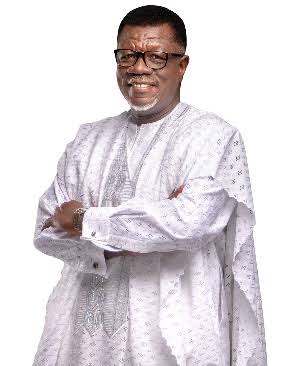
A fierce debate has erupted over the role of prominent Christian leaders in the collapse of Ghana’s National Cathedral project, following recent comments by Pastor Mensa Otabil criticizing Ghanaians for allowing political bias to derail the ambitious initiative.
The $97 million project, initiated under former President Nana Akufo-Addo, has become one of the most controversial public undertakings in Ghana’s history—leaving little more than a massive hole in central Accra after years of construction.
A Board of Clergy, A Promise of Christian Leadership
When President Akufo-Addo and the New Patriotic Party (NPP) government launched the National Cathedral project, they appointed 13 prominent clergy members to the Board of Trustees. The president’s vision was clear: place Ghana’s most influential pastors—founders and general overseers of major churches—at the helm so that Christians would have the majority say in both the building and running of the project.
Among those appointed were Dr. Mensa Otabil, founder of the International Central Gospel Church (ICGC); Archbishop Nicholas Duncan-Williams, founder of Action Chapel International; Bishop Dag Heward-Mills, founder of Lighthouse Chapel International; Reverend Eastwood Anaba; and Reverend Professor Cephas Omenyo, former Moderator of the Presbyterian Church.
A Wave of Resignations at a Critical Moment
However, at a crucial stage when the board’s unity was most needed, key clergy members began resigning. Dr. Mensa Otabil was the first to step away, having reportedly excused himself even before the official induction of the board. Bishop Dag Heward-Mills resigned in August 2022, citing concerns about being omitted from the registration process despite his image being used on the project website.
The most significant exodus came in October 2023, when Archbishop Duncan-Williams and Reverend Eastwood Anaba jointly tendered their resignations. In their resignation letter, they cited the government’s failure to appoint an independent audit firm to examine all public funds contributed to the project.
“We regret that as a matter of conscience and faith, we hereby submit to you our resignation from the Board of Trustees of the National Cathedral,” their joint statement read, though they insisted their action “in no way impugns the vision or intent of The National Cathedral”.
‘They Gave Ablakwa the Momentum’
Critics now argue that these resignations—particularly the lack of clear public explanations—dealt a fatal blow to the project. By walking away without fully accounting for their decisions, the clergymen inadvertently fueled public suspicion and gave opposition figures ammunition to attack the initiative.
Samuel Okudzeto Ablakwa, the Member of Parliament for North Tongu and the project’s most vocal critic, seized on the resignations to intensify his campaign against the cathedral. He launched a series of press conferences, media interviews, and site visits, alleging financial mismanagement, procurement breaches, and lack of transparency.
Ablakwa went on to petition the Commission on Human Rights and Administrative Justice (CHRAJ), which ultimately found significant violations of Ghana’s procurement laws and declared the building contract “void ab initio”. The project has since been stalled, with the government reportedly losing $97 million.
Speaking on Joy News’ PM Express, Ablakwa alleged that President Akufo-Addo misled the clergy, assuring them public funds would not be used—a promise he claims was secretly broken. “I am convinced that a lot of these clergy were misled. They were deceived by the President, to put it bluntly,” Ablakwa stated.
Otabil’s Defense of the Project
In a recent address, Pastor Mensa Otabil—despite having stepped away from the board himself—criticized those who opposed the project on partisan grounds, calling Ghanaians “so small-minded that we allow politics to blind us”.
“The respected pastor acknowledged that opposition to the cathedral has come from within the church itself, noting that some Christians had also spoken against the project. Despite this, he maintained that building massively ‘to the glory of God’ was entirely consistent with Christian values”.
A Question of Accountability
The resignations have left a troubling legacy. By stepping down without providing comprehensive public explanations, critics argue, the clergy gave the impression that the project was tainted by corruption—whether or not that was true. Some have gone further: Prophet Nicholas Osei (Kumchacha) has openly alleged that pastors on the board “squandered” the $58 million allocated for construction.
Archbishop Duncan-Williams later explained his departure more fully, stating: “One of the reasons I left is I believe if I am in a place and I can’t make a difference, then it is better I leave quietly”.
But for many Ghanaians, the damage was already done. The resignations of the very men entrusted to lead the project became the genesis of its destruction—giving political opponents the cover they needed to dismantle what was meant to be a national spiritual landmark.


