



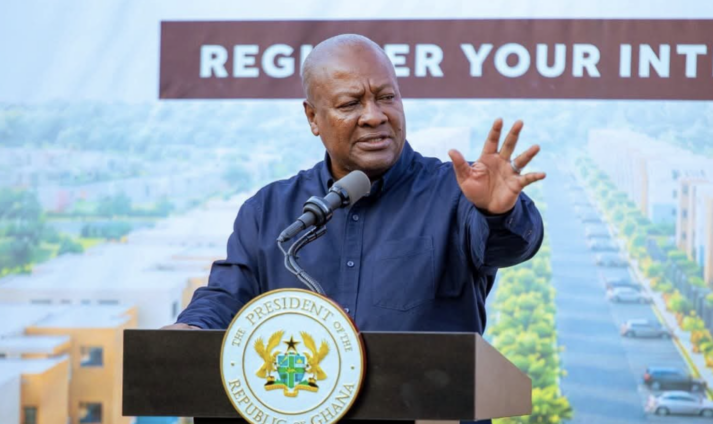
President John Dramani Mahama has cautioned state institutions against the disproportionate arrest of citizens over legitimate criticism, political commentary, satire and dissent, warning that such actions could create “undeserving martyrs” and erode public trust in state institutions.
In a letter dated September 22, 2026, and signed by Secretary to the President Dr Callistus Mahama, the President tasked the Media Foundation for West Africa (MFWA) and the Ghana Journalists Association (GJA) to jointly convene a national stakeholder engagement on hate speech, abusive language and other harmful content on social media and emerging digital platforms.
The President’s intervention comes amid growing national concern over what the MFWA has described as the increasing “weaponisation” of Ghana’s speech-related laws, following a documented rise in arrests linked to online commentary.
A Changing Media Landscape
According to the Presidency, Ghana’s media environment has undergone a significant transformation, with public discourse increasingly shaped by bloggers, content creators, influencers and ordinary users of platforms such as TikTok, Facebook and X. Many of these actors command substantial audiences and real influence but do not operate under recognised editorial standards or clear accountability mechanisms.
The President described the situation as a “difficult but important public-policy challenge,” stressing that efforts to address genuinely harmful content must not come at the expense of constitutionally protected expression.
“While hate speech, threats, incitement and other unlawful conduct must be addressed, legitimate criticism, political commentary, satire and dissent must not be criminalised,” the letter stated.
Concern Over Disproportionate Arrests
President Mahama expressed particular concern that disproportionate arrests over mere criticism or politically charged commentary could be counterproductive, weaken public confidence in state institutions and create what he described as “undeserving martyrs”.
The letter calls for an urgent and coherent national roadmap that protects freedom of expression while providing an appropriate and proportionate response to genuinely harmful digital content.
The President’s caution follows mounting criticism from civil society organisations, legal experts and political opponents over what they describe as a troubling pattern of arrests under Ghana’s existing speech laws. The MFWA has reported 14 arrests linked to the application of Sections 207 and 208 of the Criminal Offences Act, 1960 (Act 29) and Section 76 of the Electronic Communications Act, 2008 (Act 775) within the first 16 months of the current administration — compared to eight arrests recorded over the entire eight-year tenure of the previous government.
Among the cases cited are arrests involving bloggers, TikTok content creators, journalists and political figures, including incidents linked to alleged false publications, threats and comments deemed offensive or capable of inciting public disorder.
Notably, in 2022, then-opposition leader Mahama himself wrote an open letter condemning the “growing criminalisation of speech and journalism in Ghana,” warning that the use of state power to intimidate dissent was “a dangerous blueprint” for democracy.
Broad Stakeholder Engagement Proposed
The proposed national engagement is expected to be broad in scope, bringing together the National Media Commission, the Ghana Police Service, civil society organisations, traditional media organisations, religious bodies, content creators, bloggers and influencers. Legal and human-rights experts, representatives of digital platforms where possible, as well as relevant regulatory and security institutions, are also expected to participate.
The engagement will assess the adequacy of Ghana’s existing legal, regulatory and institutional framework, clarify the distinction between lawful criticism and unlawful speech, and propose practical guidelines for law-enforcement agencies.
Beyond enforcement, the process will examine public education, media and digital literacy, professional and ethical standards for online content creators, and accessible complaints and redress mechanisms. Crucially, it will explore alternatives to arrest and prosecution in cases that do not involve threats, incitement, violence or other clearly criminal conduct.
Legal and Political Context
The debate over Ghana’s speech laws has intensified in recent months. The provisions at the centre of the controversy — Sections 207 and 208 of the Criminal Offences Act and Section 76 of the Electronic Communications Act — predate the Fourth Republic and have been invoked by successive governments against journalists, social commentators, activists and political opponents.
Section 207 criminalises the use of threatening, abusive or insulting words in a public place with the intent to provoke a breach of the peace. Section 208 punishes the publication of false news likely to cause fear, alarm or disturb public peace. Section 76 of Act 775 extends this to false or misleading electronic communications that endanger life-saving services or public safety. Conviction under these sections can attract fines or imprisonment of up to three and five years, respectively.
Critics argue that the vague wording of these provisions creates room for selective interpretation and politically motivated enforcement. The MFWA has called for the repeal of Section 76 of the Electronic Communications Act and Section 208 of the Criminal Offences Act, arguing that both provisions require urgent reform to align with democratic standards.
The Minority Leader in Parliament, Alexander Kwamena Afenyo-Markin, has also urged the President to pursue a legacy of tolerance and free speech, cautioning against excessive use of state power in response to political speech. “We should not continue to say that because it happened yesterday, it should happen today and tomorrow. That cycle must end,” he said.
Next Steps
The MFWA and GJA have been asked to submit a proposed framework and timetable for the stakeholder engagement, together with recommendations arising from the process, for the President’s consideration.
The initiative is widely seen as a critical test of the Mahama administration’s commitment to balancing public order with the constitutional guarantees of free expression enshrined in Article 21 of the 1992 Constitution, which protects freedom of speech and expression, including freedom of the press.
As Ghana’s media landscape continues to evolve, the outcome of this national dialogue will shape the future of free expression in the country’s digital age.


