



The National Information Technology Agency (NITA) has issued a stark warning that persistent power outages and widespread damage to telecommunications infrastructure could drive up the cost of internet and other digital services, potentially reversing gains made in expanding affordable connectivity across Ghana.
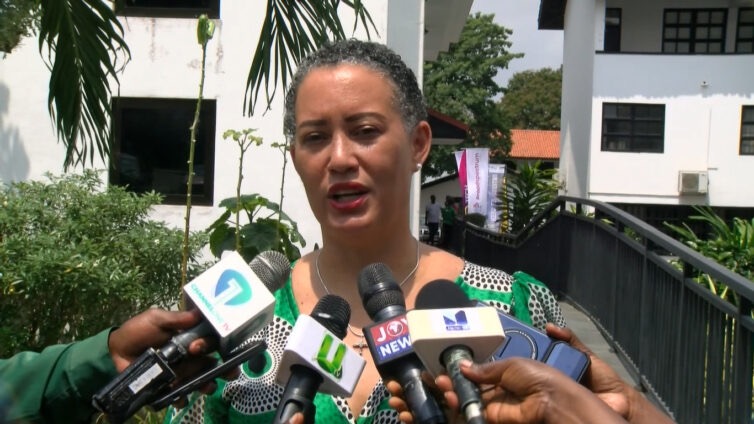
Speaking on the final day of National ICT Week 2026 — held from August 17 to 20 under the theme “Innovation at Scale: Creating Opportunities Across Ghana’s Digital Ecosystem”— NITA Board Chairperson Estelle Akofio-Sowah said the compounding pressures on digital infrastructure are pushing operators to invest heavily in backup systems, costs that are likely to be passed on to consumers.
“Just this morning we had a fairly major power outage across the country, and that again affects critical infrastructure like data centres where we’re hosting our equipment and our information, our data,” Ms Akofio-Sowah said.
She explained that service providers must maintain multiple layers of redundancy to ensure critical systems remain operational whenever the national power supply is disrupted.
“You have to have layers and layers of redundancy. All of that puts pressure on affordability and the access that we’re all aspiring to, that every Ghanaian should have affordable access,” she said.
Over 8,000 fibre cuts recorded in 2026
NITA also disclosed that more than 8,000 fibre cuts have been recorded in Ghana so far this year, further increasing the cost of maintaining and repairing telecommunications infrastructure.
According to industry data, fibre cuts reached 4,289 in the first half of 2026 alone, putting the country on course to exceed 8,000 incidents by year-end if no drastic intervention is made.
The problem has been escalating for years. Between 2021 and 2025, telecommunications operators recorded thousands of fibre cuts annually — from 3,900 cuts in 2021 costing about US17.4 million. Although figures fell to 6,344 in 2023 and 5,600 in 2024, cuts exceeded 8,000 in 2025, with direct repair costs reaching approximately US$20 million. Over the five-year period, operators spent more than $69 million repairing damaged fibre — money that could otherwise have supported network expansion, improved service quality or financed infrastructure for Ghana’s AI ambitions.
The agency identified vandalism as a major contributor to fibre infrastructure damage. Ms Akofio-Sowah also called for stronger enforcement of penalties against road contractors who damage fibre networks during construction.
“I think the enforcement of penalties when they don’t stick to the plan, and don’t communicate as was agreed, is what needs to be a reality and not just a threat,” she stressed.
She further highlighted the need for effective implementation of Ghana’s “dig once” policy, which seeks to prevent multiple infrastructure providers from repeatedly digging up roads to deploy separate fibre networks, arguing that shared infrastructure could reduce duplication and lower deployment costs.
Gaming industry emerges as $121 million opportunity
Despite the infrastructure challenges, stakeholders at National ICT Week highlighted the growing economic potential of Ghana’s gaming and Esports industry.
Vice President of the Esports Association Ghana, Maximus Ametorgoh, disclosed that about US$121 million was spent in Ghana in 2025 on video game downloads and subscriptions.
“Last year, 121 million dollars were spent on video game downloads and subscriptions in Ghana. That’s a growing sector,” he said.
Mr Ametorgoh said the growth presents opportunities for young people to earn income by developing and selling digital products, virtual items and other online content, describing gaming as “the next generation when it comes to entertainment.”
Stakeholders consequently urged Ghanaians to move beyond consuming emerging technologies — including artificial intelligence — and develop the skills to become creators, developers and innovators.
Infrastructure resilience critical to digital future
National ICT Week 2026 ended on August 20 with calls for greater investment in reliable electricity, resilient telecommunications infrastructure and affordable connectivity.
Participants argued that Ghana’s ability to benefit fully from the digital economy will depend not only on access to technology but also on the reliability of the infrastructure that supports it.
As Ghana pursues its National Artificial Intelligence Strategy targeting applications across healthcare, agriculture, education and public services, the resilience of underlying networks becomes increasingly critical.
“AI does not replace infrastructure, it depends on it,” Sylvia Owusu-Ankomah, CEO of the Ghana Chamber of Telecommunications, recently observed.
For NITA, the growing dependence on data centres, cloud services and other digital infrastructure means that reliable electricity is becoming increasingly critical to the country’s digital ambitions.
The agency cautioned that unless the resilience of underlying infrastructure is strengthened, the cost of maintaining digital services could continue to place pressure on affordability and potentially slow efforts to expand access to the digital economy.


