

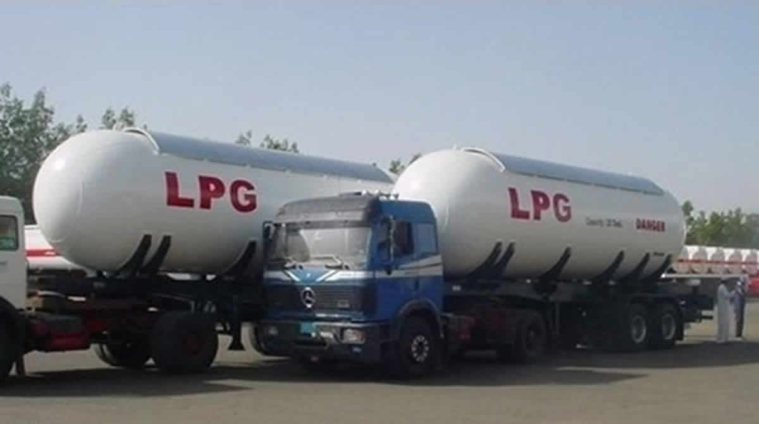
Ghana’s monthly arrangements for importing liquefied petroleum gas (LPG) are shielding consumers from sharp international price increases, the National Petroleum Authority (NPA) has said, explaining that the price at which each cargo is purchased is locked in for a full month.
Abass Tasunti, Director of Economic Regulation and Planning at the NPA, told Joy News’ PM Express Business Edition on Thursday that the country’s tender programme fixes import prices for a one-month period, meaning local LPG prices can fall even when international market prices are rising.
“And so, the price at which the product was imported is locked in for that one-month period,” Mr Tasunti said .
The arrangement, he explained, accounts for the counterintuitive movement in local LPG prices. “If you look at the next window, for example, the price of LPG is going up significantly, but we’ve seen LPG dropping instead of it going up, and that’s because we’ve already locked in the price at which we imported the LPG from the previous window, which was lower than the current prices” .
A Double-Edged Mechanism
The cushion, however, is contingent on the price secured for each individual cargo. Mr Tasunti noted that the same monthly arrangement had previously contributed to a sharp increase in LPG prices when a replacement cargo was purchased at a higher cost than the supply it replaced.
For the current pricing window, Ghana had already secured its imported LPG at a lower price before the latest global increase. “But going to this window, for example, we have been shielded again, shielded again from a sharp increase for the next window because we’ve already locked in the price at which the product was brought in, so that helps” .
The NPA’s explanation comes amid recent adjustments to the authority’s price floors for petroleum products. For the first half of November 2026, the LPG price floor was reduced from GH¢13.89 to GH¢13.73 per kilogram . However, the NPA has emphasised that price floors are not final retail prices, as they exclude premiums charged by international oil trading companies and margins applied by bulk importers and oil marketing companies .
Diesel Under Different Pressure
Mr Tasunti also addressed the divergent pressures facing diesel, which is not subject to the same monthly tender mechanism. He attributed diesel supply constraints to disruptions in major supply sources, specifically pointing to the Russia-Ukraine war and attacks on Russian refineries.
“Sometimes when the major supply sources are shut or are closed, we don’t have enough products on the market, and so it will cause, of course, economics comes in supply and demand factors,” he said . He noted that European countries’ release of strategic reserves was helping to ease the shortage in the short term, though continued attacks on Russian refineries left supply uncertain .
Background: The Tender System and Ghana’s LPG Market
Ghana introduced open competitive tenders for LPG imports in January 2024, a policy designed to reduce costs through economies of scale and increase efficiency in the procurement process . Under the system, the NPA tenders approximately 70 percent of the country’s monthly LPG consumption, with the Ghana National Gas Company supplying the remainder .
The mechanism has gained particular relevance as global LPG prices have climbed. Saudi Aramco raised its LPG contract prices for a third consecutive month in October 2026, with propane up $55 per tonne and butane up $70 per tonne, driven by elevated freight costs and supply disruptions . Ghana produces roughly 50 percent of its LPG requirements locally and relies on imports for the other half .
LPG consumption in Ghana has been rising, growing by 16.93 percent in the first half of 2026 compared to the same period the previous year, according to the Chamber of Oil Marketing Companies . Despite this growth, LPG stock cover remained comparatively low at 3.1 weeks, even as overall petroleum product stock cover improved to 6.0 weeks .
For consumers, the immediate relief stems from the lower import price already secured under the monthly tender. Whether that cushion persists into the next window will depend on the price negotiated for the next cargo—a reminder that the system offers temporary protection rather than permanent insulation from global market forces.