


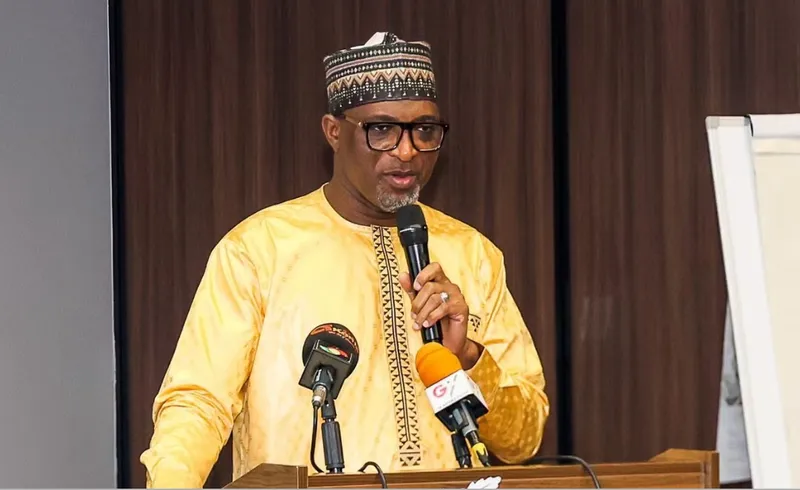
The Minister for the Interior, Alhaji Muntaka Mohammed-Mubarak, has called on members of the Ashanti Regional Security Council (REGSEC) and Metropolitan, Municipal and District Chief Executives (MMDCEs) to shift from reactive security management to intelligence-led prevention, as Ghana begins implementing the Security and Intelligence Agencies Act, 2026 (Act 1168).
Speaking at a capacity-building workshop in Kumasi on Thursday, October 1, 2026, the Minister declared that the era of managing national security solely from Accra is over. “Let us move from reaction to prevention, from fragmented efforts to coordinated action and from information sharing to intelligence-led security management,” he stated. “National security cannot be secured from Accra alone but must be built in regions, districts and communities”.
The workshop formed part of a nationwide engagement by the National Security Council Secretariat (NSCS) to deepen understanding of Act 1168 and strengthen the capacity of local authorities to implement the new legal framework governing security and intelligence operations.
Background: The Security and Intelligence Agencies Act, 2026 (Act 1168)
The Security and Intelligence Agencies Act, 2026 (Act 1168) was signed into law by President John Dramani Mahama on March 31, 2026, alongside four other bills covering education and the economy. The Act makes two significant changes to Ghana’s security governance structure.
First, it removes the Office of the Minister of National Security and gives the President the flexibility to assign oversight of security agencies to any designated minister. Under the new arrangement, the Minister for the Interior, Muntaka Mohammed-Mubarak, oversees National Security, consolidating security coordination under a single ministerial portfolio.
Second, the Act restores the name of the National Intelligence Bureau (NIB) back to the Bureau of National Intelligence (BNI), bringing back the familiar designation and putting to rest the public confusion that had followed the earlier name change.
The Act also expands the composition of Regional Security Councils (REGSECs) to include traditional authorities, reflecting the government’s commitment to community-driven security governance. REGSECs are chaired by Regional Ministers and comprise regional heads of the Ghana Armed Forces, Ghana Police Service, Ghana Prisons Service, Ghana National Fire Service, and other security and intelligence agencies.
The legislation received presidential assent in March 2026 and establishes a new framework for Ghana’s security and intelligence architecture, aimed at enhancing cooperation between security institutions and other relevant state actors in safeguarding Ghana’s peace, security, and stability.
MMDCEs: The Frontline of Local Security
The Minister emphasized that MMDCEs, as the foremost representatives of government at the local level, are strategically positioned to identify early indicators of instability because of their close interaction with communities and local stakeholders. He noted that their regular engagements with traditional leaders, religious authorities, youth groups, traders, farmers, and civil society organisations give them access to valuable information on emerging tensions and developments within their jurisdictions.
“The MMDCEs are well positioned to detect early tensions through their regular interactions with chiefs, religious leaders, youth groups, traders, farmers and civil society,” Muntaka stated, stressing the need for stronger information and intelligence sharing among security agencies, local assemblies, and community leaders.
He challenged the MMDCEs to visit and engage directly with institutions such as the Police Service, Ghana National Fire Service, and intelligence agencies to understand their operations and the security situations within their respective districts. “Critical pillar of the new security architecture is the promotion of enhanced cooperation and information sharing among the institutions,” he said.
The Minister stressed that no single institution possesses all the information needed to effectively manage the country’s increasingly complex security environment, making collaboration among security agencies, local authorities, and communities essential.
REGSEC’s Role: Identifying Patterns, Not Isolated Incidents
The Minister also tasked REGSEC to provide strong leadership in identifying patterns rather than treating incidents in isolation. He explained that where criminal activity spreads from one municipality to another, or a local dispute threatens neighbouring districts, the trend must be identified early and escalated promptly for coordinated intervention.
He said the changing nature of security threats requires a proactive, coordinated approach that places greater emphasis on early detection, intelligence gathering, and preventive action at the regional, district, and community levels.
Ashanti Region’s Strategic Importance
The Minister highlighted the Ashanti Region’s strategic importance as one of Ghana’s major commercial, industrial, and transportation centres, making effective security management particularly important to the national economy. He said economic growth and rapid urbanisation must therefore be accompanied by robust governance, effective security management, and stronger community resilience.
He identified illegal mining (galamsey), organised crime, illicit trafficking, land disputes, chieftaincy conflicts, and other emerging security threats as challenges requiring coordinated responses involving intelligence, law enforcement, community participation, and effective local governance. He expressed particular concern about illegal mining in the Ashanti Region and urged local authorities to understand the actors involved and share information with the relevant security institutions.
National Context: A Broader Shift to Intelligence-Led Security
The Ashanti Region workshop is part of a nationwide effort by the National Security Council Secretariat under the Ghana National Security Reform Programme to deepen understanding of Act 1168 and enhance cooperation between security institutions and other relevant state actors. Similar training programmes have already been held for the Greater Accra REGSEC, where the Minister underscored the importance of understanding the roles and responsibilities of Metropolitan, Municipal and District Assemblies, as well as Regional Security Councils, under the new Act.
The push for intelligence-led security comes amid growing concerns over security threats in the West African sub-region. In April 2026, the Minister warned against complacency in the face of growing terrorist threats, calling for a coordinated, intelligence-driven approach to safeguard Ghana’s peace and stability. He disclosed that the Ministry was developing a comprehensive national strategy to combat organised crime, centring on three key pillars: intelligence-led operations, interagency collaboration, and border security.
The National Security Secretariat has also raised concerns over early recruitment and mobilisation of groups ahead of the 2028 general elections, with security agencies urged to move beyond a reactive approach and begin intelligence-led prevention long before the campaign period.
About the Minister
Alhaji Muntaka Mohammed-Mubarak was appointed Minister for the Interior on January 30, 2025, after successfully undergoing parliamentary vetting and approval. He is a member of the National Democratic Congress (NDC) and has served as the Member of Parliament for the Asawase constituency in the Ashanti Region since 2005.
He holds a Master’s Degree in Development Policy and Planning and a Bachelor’s Degree in Agricultural Economics from the Kwame Nkrumah University of Science and Technology (KNUST). He has also completed executive education programmes at the Harvard Kennedy School and the Royal Institute of Public Administration (RIPA) International.
Throughout his political career, he has held key positions including Minister for Youth and Sports in 2009, Majority Chief Whip from 2013 to 2017, and Minority Chief Whip from 2017 to February 2023. He currently chairs the Committee on Finance and Monetary Affairs of the Pan-African Parliament.
The Path Ahead
The Minister commended the Ashanti Regional Minister and members of REGSEC for their commitment to maintaining peace and security in the region. He, however, cautioned that the evolving nature of modern security threats demands stronger early-warning mechanisms, improved coordination, and timely action to prevent incidents from developing into wider security challenges.
He said the implementation of Act 1168 provided an opportunity to strengthen Ghana’s security architecture by ensuring that intelligence and preventive action became integral to security management at all levels of governance.
As Ghana moves to operationalise the new security framework, the success of Act 1168 will depend largely on how effectively it is translated into practical security measures at the regional and local levels — a point the Minister made clear to the Ashanti Region’s security leadership. The workshop concluded with a renewed commitment from REGSEC and MMDCEs to strengthen local security systems and embrace intelligence-led prevention as the cornerstone of Ghana’s new security architecture.