



President John Dramani Mahama has ordered security agencies operating at Ghana’s ports to make them “ironclad” against drug trafficking, following concerns over consignments escaping local detection and being intercepted abroad.
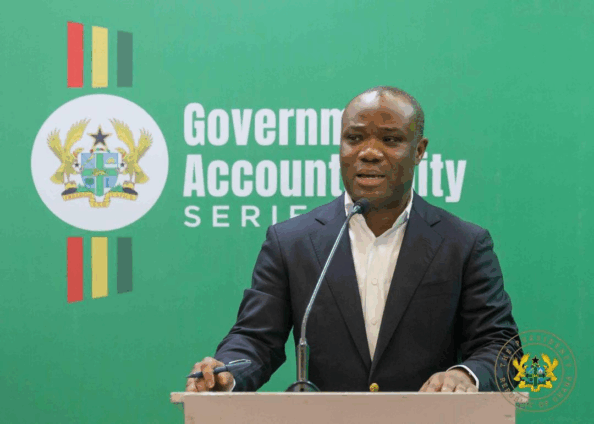
Government spokesperson Felix Kwakye Ofosu, the Member of Parliament for Abura Asebu-Kwamankese, disclosed this on Joy News’ PM Express on Wednesday. He said the directive followed an urgent meeting of security agencies convened by the President two weeks ago, on September 17, 2026, to address weaknesses in the country’s ports.
“It is an expression of the president’s concern that he convened that urgent meeting two weeks ago, involving various security agencies that are supposed to work together to make our ports safe or our ports so ironclad that this sort of activity does not take place,” he said.
The government’s position comes amid a Minority motion seeking to recall Parliament to address concerns over claims that Ghana is becoming a drug transit hub.
A Wave of Seizures
The Minority has cited a series of drug seizures and trafficking cases in pushing for Parliament to examine the issue. Over the past 18 months, Ghana has been featured repeatedly in major transnational trafficking cases, with seizures documented across Europe, Australia, and West Africa.
According to Ranking Member on Parliament’s Defence and Interior Committee, Reverend John Ntim Fordjour, eight major drug busts linked to Ghana were recorded between April 2025 and September 2026. These include 89.74 kilogrammes of cocaine intercepted in the Netherlands on April 23, 2025, linked to the Accra International Airport; 17.72 kilogrammes of cannabis seized in the United Kingdom on May 18, 2025; and 53.6 kilogrammes of cannabis intercepted in Dubai in June 2025.
The list also includes 4.5 tonnes of cocaine intercepted in Amsterdam in June 2025, linked to Tema Port; 2,829 tonnes of cocaine intercepted in Antwerp on December 2, 2025; and 1.158 tonnes of suspected cocaine seized in Antwerp two days later. On June 18, 2026, the Australian Border Force intercepted 320 kilogrammes of methamphetamine valued at 280 million Australian dollars, linked to Ghana.
The most recent case involves the September 10, 2026 seizure of 3.9 tonnes of cocaine by French customs at the Port of Dunkirk, concealed in a consignment of plastic waste that originated from Ghana. The shipment was valued at approximately €225 million (US$261.45 million).
Six suspects were arraigned before the Kwabenya Circuit Court in connection with the case, including Francis Narh Amanor, a freight forwarder and Managing Director of Fresna Commodities Ltd; Frank Adu-Boahen, a 71-year-old self-styled evangelist alleged to be the owner of the containers; and four officials of the Ghana Revenue Authority (GRA) facing allegations concerning the handling of the Customs scanning process at Tema Port. The court denied all six bail, with the case adjourned to October 20, 2026.
The Bureau of National Investigation (BNI) has alleged that the four containers raised concerns during scanning at Tema Port before they were cleared and allowed to leave. Prosecutors allege the scan images showed abnormalities that should have led to further physical examination.
Separately, in August 2026, police intercepted 866 parcels of suspected cocaine at a warehouse within the Tema Harbour enclave, valued at $6.9 million and reportedly concealed in sacks of gari. Three suspects—Gilano Jorgino Holwin, a Dutch security guard; Alhaji Iddrisu Haruna, a transporter; and John Mensah Sarbah, a clearing agent—were remanded by an Accra Circuit Court in connection with the seizure.
In March 2026, police arrested nine public officers, including five Customs officials, for their alleged involvement in an undeclared Tramadol consignment at Tema Port. The remaining four comprised one officer each from the Narcotics Control Commission, Port Security, the Energy Commission, and the Ghana Standards Authority.
Government Rejects ‘Cocaine Coast’ Label
Mr Ofosu rejected the description of Ghana as a “cocaine coast” or a drug transit hub. He argued that drug-related arrests by the police and the Narcotics Control Commission (NACOC) should not automatically be interpreted as evidence that Ghana is becoming a trafficking hub.
“So, if there are 12 cases, and two of them involve transhipment, or if you like exports of drugs outside of Ghana, you don’t put everything together and say Ghana is a volcano,” he said. He said cases intercepted by security agencies demonstrate that institutions established to fight drug trafficking are carrying out their duties.
“What does NACOC exist to do? To apprehend and prevent drug trafficking, not so, or drug use, illegal drug use, for that matter,” he said. However, he acknowledged that consignments that escape Ghanaian security checks and are intercepted overseas remain a concern. “Therefore, those that escaped the scrutiny of law enforcement in Ghana and find their way abroad are those that are worrying,” he said.
Turf Wars at the Ports
Mr Ofosu said a key concern identified at the September 17 meeting was rivalry among agencies operating at the ports. “I sat in the meeting, and it was clear from what transpired that there is some, if you like, tough battle between or among the various agencies. Each of them is trying to assert their supremacy over the ports, and so sometimes they don’t share information,” he said.
According to him, President Mahama wants the agencies to end the rivalry and work together. “So the president says, ‘Okay, I want an end to this turf battle. You must share information. You must collaborate. Bring me a road map that shows you are doing these, among other things necessary to ensure this will happen,’” he said.
He added that the President was clear that Ghana must not become a transit route for drug trafficking. “Indeed, the President was clear that he will not tolerate Ghana’s borders becoming a transit point for drug trafficking,” he said. Mr Ofosu said the deadline given to the agencies for the roadmap was due to expire within days.
Inter-Agency Task Force Formed
The September 17 meeting, chaired by President Mahama at the Presidency in Accra, received a detailed briefing on investigations into the recent trafficking cases. Security chiefs informed the President that 10 individuals, including four officers of the Customs Division of the Ghana Revenue Authority (GRA), were being held while investigations continued.
The President directed the establishment of an inter-agency task force to develop a national roadmap for preventing the trafficking of narcotic drugs through Ghana’s borders. The task force was given two weeks to submit detailed recommendations aimed at strengthening border security and closing operational gaps exploited by drug trafficking networks.
The meeting also reviewed the structure and security systems governing operations at Ghana’s ports and assessed existing enforcement mechanisms aimed at detecting and preventing narcotics trafficking.
NACOC Reinforces Airport Security
In a related development, NACOC is stepping up security at the Accra International Airport by deploying additional officers, trained sniffer dogs, and new narcotics-detection equipment. The move includes plans to acquire new detection scanners from the Netherlands, install closed-circuit television (CCTV) cameras, and establish a dedicated team to monitor the cameras and submit daily reports on airport activities.
The development follows growing concerns about the use of the airport as a conduit for narcotics trafficking and allegations that some personnel operating within the facility have been involved in facilitating the movement of drugs. The airport’s scanner has reportedly been out of service since 2022, forcing NACOC to rely heavily on sniffer dogs and physical searches to detect concealed narcotics.
Minority Presses for Parliamentary Inquiry
The Minority in Parliament filed a Private Members’ Motion on September 28, 2026, seeking to establish an Ad Hoc Committee to investigate the seizures. The motion, submitted by the First Deputy Minority Whip and Member of Parliament for Tolon, Habib Iddrisu, sought a “thorough, transparent and full-scale bipartisan inquiry” into the circumstances surrounding the seizures.
The proposed committee was to examine how each consignment was assembled and inspected, investigate why scanning and risk profiling failed, and determine the role of every agency, freight forwarder, and clearing agent involved. It would also investigate the possible complicity of state agencies and pursue the financial trails and organizers behind the operations, rather than just the couriers.
However, Speaker Alban Sumana Bagbin ruled the motion inadmissible on September 29, 2026, citing Standing Orders 5, 6, 103(f), 192 and 233. The Speaker said he had carefully considered the motion, ongoing investigations, pending judicial proceedings, and Parliament’s constitutional oversight responsibilities, and was of the view that allowing the motion could require Parliament to examine matters that could be determined by a court of competent jurisdiction.
Minority Leader Alexander Afenyo-Markin rejected the ruling, declaring the caucus would explore other constitutional options. “We will not let this matter rest. Never,” he said. He argued that the motion was about institutional oversight, not about determining criminal liability, and that the Speaker’s ruling should not operate as a complete bar to parliamentary oversight over public institutions implicated in the narcotics cases.
Ghana’s Role in Global Drug Networks
The concerns are underscored by the 2025 Global Organised Crime Index, which identified Ghana as a transit point for heroin originating mainly from Afghanistan and cocaine supplied largely by Brazil. The report identified Ghana’s seaports and airports as key routes used by international drug trafficking networks, while also serving an expanding domestic market.
The report raised concerns about alleged corruption within Ghana’s transport infrastructure, claiming that some officials facilitate the movement of heroin through the country’s ports and airports. It also noted that heroin distribution and consumption, historically concentrated in Accra and Tema, are believed to have expanded to other parts of the country, including rural communities in northern Ghana.
The Port of Tema was identified as the principal entry point for cocaine arriving by sea, with the Port of Takoradi also used to a lesser extent. The report cited allegations from law enforcement officials and civil society actors that political protection of illicit markets by some individuals within government could be contributing to declining cocaine seizures and reduced visibility of trafficking activities.
Expert Warns of Reputational Damage
International relations expert Dr Ishmael Hlovor, a lecturer at the University of Education, Winneba, has warned that Ghana risks suffering reputational damage and increased international scrutiny if it fails to intensify efforts to combat drug trafficking.
“No matter the words you put out there, if the international community suspects that more drugs are coming from your end, no communication can wash your image,” he cautioned. He called for increased investment in security agencies, particularly the Marine Police and the Air Force, alongside the provision of modern equipment to port authorities to enhance their capacity to detect and intercept illicit drug shipments.
What Happens Next
The inter-agency task force’s roadmap is expected to be submitted to the President within days, outlining measures to strengthen coordination among security agencies and close the operational gaps exploited by trafficking networks.
The Minority has vowed to pursue other constitutional avenues to ensure parliamentary oversight of the narcotics issue. Meanwhile, the six accused in the 3.9-tonne cocaine case are expected to reappear before the Kwabenya Circuit Court on October 20, 2026, as investigations continue.
With Ghana’s international reputation under scrutiny and the government facing mounting pressure to demonstrate results, the effectiveness of the President’s directive will be tested by whether future consignments are intercepted at Ghana’s ports—rather than in Dunkirk, Antwerp, or Sydney.


