



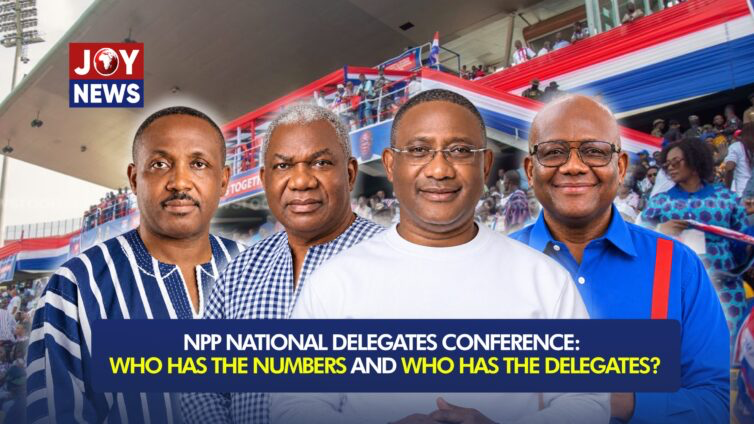
The opposition New Patriotic Party (NPP) will today, Saturday, October 3, 2026, elect its national executives at the Baba Yara Sports Stadium in Kumasi, completing a gruelling internal reorganisation exercise that has spanned polling station, electoral area, constituency, and regional levels across the country.
About 7,100 delegates from all 16 regions of Ghana are expected to participate in the elections, which will produce the party’s national leadership for the critical phase leading to the 2028 general election. The elections are being supervised by the Electoral Commission (EC), with the NPP’s National Officers Elections Committee (NOEC) overseeing internal electoral arrangements.
The EC says all preparations have been completed, with ballot papers printed and electoral materials deployed to the Ashanti Region. Ballot papers were reportedly deposited with the Ghana Police Service for safekeeping after being received by the EC.
A Party at a Crossroads
Today’s elections mark the culmination of the NPP’s nationwide reorganisation, which began after the party’s defeat in the 2024 general election. The new executives will be tasked with rebuilding party structures, mobilising support, and preparing the groundwork for the 2028 presidential election.
Dr Mahamudu Bawumia, a former Vice-President, is the NPP’s flagbearer for 2028 after winning the party’s presidential primary in January 2026. The new national executives will therefore be expected to work closely with Bawumia’s campaign machinery as the party seeks to wrest power from the governing National Democratic Congress (NDC).
The elections come at a pivotal moment for the NPP, which has been out of power since January 2025 following its defeat in the 2024 polls. The party has since been engaged in intense introspection, with various factions jostling for influence and control of the party apparatus.
46 Candidates on the Final Ballot
The NPP initially had 47 aspirants who successfully filed nominations and proceeded to vetting. However, National Youth Organiser Salam Mustapha later withdrew from the National Organiser contest, reducing the number of candidates on the ballot to 46.
The National Communications Director position is uncontested, with Dennis Miracles Aboagye as the sole candidate. Evans Kodom withdrew during the filing process, while Perpetual Ekua Lomokie Akwada did not complete her nomination for National Women’s Organiser.
The Candidates and Their Ballot Positions
National Chairperson
Four candidates are contesting the National Chairperson position, arguably the most consequential race on the ballot:
· John Boadu
· Sammy Crabbe
· Paul Afoko
· Boakye Agyarko
Mr Boadu, a former General Secretary of the party, is first on the ballot. He served as General Secretary from 2018 to 2023 and is widely seen as a grassroots mobiliser with deep connections across the party’s rank and file.
Mr Crabbe, a former National Chairman, is second on the ballot. He led the party from 2010 to 2014 before a controversial suspension.
Mr Afoko, also a former National Chairman, is third on the ballot. His tenure from 2014 to 2015 was marked by internal party tensions that culminated in his suspension.
Mr Agyarko, a former Energy Minister and one-time presidential aspirant, is fourth on the ballot. He is seen as a policy heavyweight with strong appeal among the party’s intellectual base.
Vice-Chairpersons
Thirteen candidates are contesting the Vice-Chairperson positions. The first three successful candidates will be designated First, Second, and Third Vice-Chairpersons under the existing arrangement. This is the largest contest on the ballot:
· Mustapha Abdul-Hamid
· Kojo Fosu Boadu
· George Kwabena Abankwah Yeboah
· Richard Ahiagbah
· Alhaji Masawudu Osman
· Richard Oti Aboagye
· Abena Pokua Boaitey Amoah
· Yaa Amponsah Frimpong
· Henry Nana Boakye
· Horma Akesie Miezah
· Samuel Pyne
· Nana Akomea
· Bright Esselfie Kumi
Notable among the contenders is Richard Ahiagbah, the party’s former Communications Director, and Henry Nana Boakye, a former National Youth Organiser. Nana Akomea, a veteran communicator and former Member of Parliament, is also seeking a Vice-Chairperson slot.
General Secretary
Four candidates are contesting the General Secretary position:
· Sylvester Tetteh
· Eugene Boakye Antwi
· Justin Frimpong Kodua
· Dr Charles Dwamena
Mr Kodua is the incumbent General Secretary seeking another term. He has been a key figure in the party’s reorganisation efforts and is widely credited with streamlining the party’s internal electoral processes.
Mr Tetteh is a former Deputy Communications Director, while Mr Antwi is a former Member of Parliament for Subin. Dr Dwamena is a former Deputy General Secretary.
National Treasurer
The four candidates are:
· Hajia Ruka Ahmed
· Alfred Kojo Thompson
· Tahiru Issahaku Moomin
· Collins Nuntwiri Nuamah
National Organiser
Following Salam Mustapha’s withdrawal, seven candidates remain in the National Organiser race:
· Kwame Prempeh
· Daniel Agyenim Boateng
· Archibald Gamor Korletey
· Nana Kwadjo Agyei Yeboah
· Ali Maiga Halidu
· Emmanuel Korsi Bodja
· Daniel Nii Kwartei Titus Glover
Mr Glover, a former Deputy Minister and Member of Parliament for Tema East, is contesting from the seventh position on the ballot.
National Youth Organiser
Six candidates are contesting the position:
· Alfred Kumi Ababio
· Vera Oye Bram-Larbi
· Michael Osei Boateng
· Abanga Fuseini Yakubu
· Clement Opoku Gyamfi
· Chris Lloyd Nii Kwei Asamoah
National Women’s Organiser
The race is a two-way contest between:
· Hajia Safia Mohammed
· Mavis Hawa Koomson
Ms Koomson is a former Minister for Fisheries and Aquaculture Development and a former Member of Parliament for Awutu Senya East. She is seen as a formidable contender with significant name recognition.
National Nasara Organiser
Five candidates are contesting the position:
· Mohammed Ali Suraj
· Issaka Muazo Kunata
· Awal Mohammed
· Alhaji Salim Bamba
· Razak Tahiru Maiga
National Communications Director
Dennis Miracles Aboagye is the sole candidate for National Communications Director following the withdrawal of Evans Kodom before the close of nominations. Mr Aboagye served as a spokesperson for the Bawumia campaign in 2024 and is expected to lead the party’s communication strategy ahead of 2028.
31 Voting Centres Established
The NPP has established 31 voting centres within the Baba Yara Sports Stadium to speed up the voting process and reduce the possibility of voting continuing into the night. NPP Director of Elections Evans Nimako said 21 centres would handle the elections for National Chairperson, Vice-Chairpersons, General Secretary, National Organiser, and National Treasurer.
The remaining 10 centres will handle the party’s wing elections — five for the Youth Organiser election, three for the Women’s Organiser election, and two for the Nasara Organiser election.
No more than 400 delegates will be assigned to each voting centre. All 31 centres will be located within the stadium and will be manned by EC officials. Accredited agents of the various candidates will also be stationed at the centres to observe the process.
Mr Nimako said the party had already conducted a simulation exercise at the stadium involving the conference committee, the Police Service, the EC, and other stakeholders to test the arrangements and identify potential challenges.
Voting Follows Constitutional Business
The conference will begin with party business before the electoral process. Delegates are expected to consider proposed amendments to portions of the NPP’s constitution before voting begins.
Among the proposed amendments is a review of the provision concerning who should be regarded as the leader of the party — a sensitive matter given the party’s current leadership dynamics. Another proposal concerns the election of Vice-Chairpersons, while the party is also considering the appointment of additional Vice-Chairpersons who would not be elected.
Other proposed changes include the appointment of Deputy Communications Officers and making the IT Officer an executive position.
The National Officers Elections Committee has said voting is expected to begin around midday, although the EC has indicated that voting could continue beyond that time if necessary.
The EC has also cautioned delegates against taking photographs of their marked ballot papers or directing others on how to vote, describing such conduct as an electoral offence. Delegates will be identified using a party membership card, voter identification card, or Ghana Card before being allowed to vote.
Security Arrangements
The NPP says extensive security arrangements have been made for the conference. Organisation Committee Chairperson Anthony Abayifaa Karbo said between 3,000 and 4,000 police personnel had been deployed to Kumasi for the event.
He said the officers would handle traffic management, secure hostels where delegates and guests are staying, and provide security around and inside the stadium.
The Ashanti Regional Police Command has also announced temporary road closures and traffic diversions around the stadium to facilitate the event. The affected roads include the routes from Bridginia Traffic Lights to Carvery Methodist Church, Unity Oil Fuel Station to T.I. Ahmadiyya Senior High School, and Is My Kitchen Restaurant to Bridginia Traffic Lights.
The Police have also announced designated parking arrangements for delegates, party executives, MPs, former MPs, MMDCEs, and other accredited participants. The Command has warned motorists against unauthorised parking and said towing trucks will be deployed to remove wrongly parked or abandoned vehicles.
Electoral Commission Ready
The EC, which will supervise the elections, says it is ready for the exercise. EC Director of Electoral Services Samuel Kwaah said all preparations had been completed and that ballot papers and other electoral materials were ready.
Background: The Road to Kumasi
The NPP’s journey to today’s national delegates conference has been months in the making. Following the party’s defeat in the December 2024 general election, the NPP embarked on a comprehensive reorganisation exercise aimed at rebuilding its structures from the ground up.
The process began with polling station elections, followed by electoral area and constituency elections, and culminating in regional elections. The national executives election is the final step in this reorganisation.
The party’s 2024 defeat was attributed to a combination of factors, including internal divisions, voter apathy in traditional strongholds, and the economic challenges that dominated the political landscape. The new executives will be expected to address these issues and reposition the party as a credible alternative to the governing NDC.
What’s at Stake
Today’s elections are not merely about filling positions; they are about setting the direction for the NPP’s future. The new national executives will be responsible for:
· Rebuilding party unity after a fractious reorganisation process
· Mobilising resources for the 2028 campaign
· Strengthening the party’s communication machinery
· Engaging with grassroots members and addressing their concerns
· Developing policies and messaging that resonate with voters
The elections will also test the influence of various power blocs within the party, including allies of former President Nana Akufo-Addo, supporters of Dr Bawumia, and other influential figures.
A Test for Ghana’s Democracy
Beyond the internal dynamics of the NPP, today’s elections are significant for Ghana’s democratic development. A peaceful, transparent, and credible internal election will reinforce the country’s reputation as a beacon of democracy in West Africa.
The presence of the Electoral Commission to supervise the process is a testament to the NPP’s commitment to transparency and its willingness to subject its internal processes to independent scrutiny.
Conclusion
As delegates gather at the Baba Yara Sports Stadium, all eyes will be on Kumasi. The choices made today will shape the NPP’s trajectory for years to come and, by extension, the political landscape of Ghana ahead of the 2028 general election.
The candidates have traversed the length and breadth of the country, courting delegates and making their case for leadership. Today, the decision rests with the 7,100 delegates who hold the future of the party in their hands.
Voting is expected to begin around midday, with results anticipated later in the day or early Sunday. The Ghanaian public, political analysts, and the governing NDC will all be watching closely.
About the NPP:
The New Patriotic Party is Ghana’s centre-right political party, founded in 1992. It has won power in three elections — 2000, 2004, and 2016 — and ruled from 2001 to 2009 and from 2017 to 2025. The party is currently in opposition following its defeat in the December 2024 general election.


