



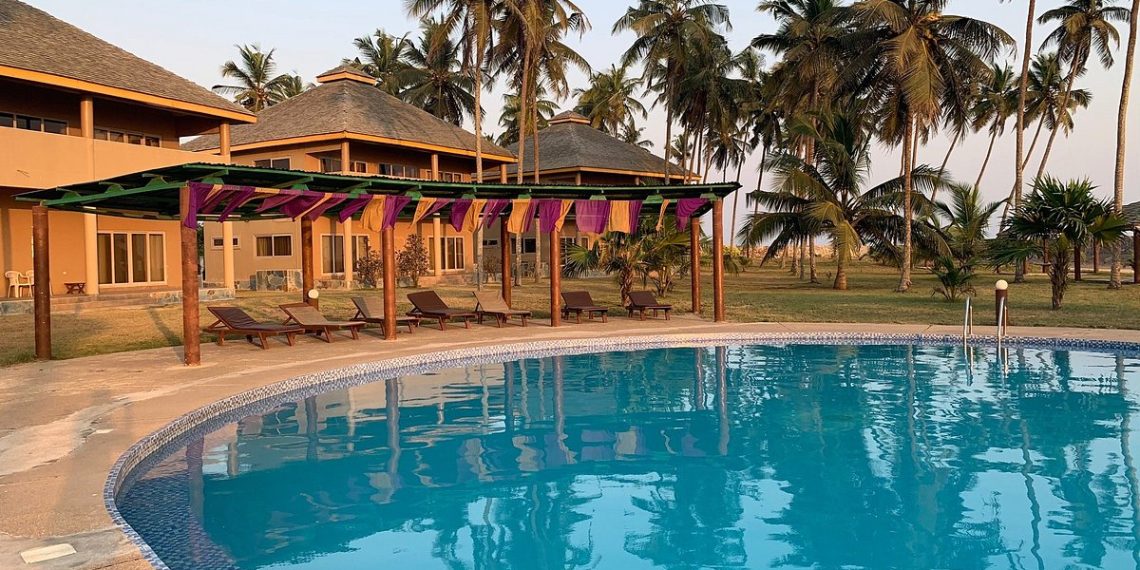
Hotel operators across Ghana are warning that rising operating costs, a heavy tax burden, utility disruptions and ongoing road construction are making it increasingly difficult to keep room rates affordable, with the Central Region emerging as one of the hardest-hit areas ahead of the Christmas and New Year season.
The President of the Ghana Hotels Association, Victor Minta, said hotels in the Central Region are facing particularly difficult conditions, with some facilities in Elmina forced to depend on water tankers after going for nearly three months without a regular water supply.
“Currently, the cost of business is very high, such that in the Central Region, in Elmina specifically, for nearly three months, there’s been no water flowing through the taps. So every hotel facility has to rely on water tankers to supply water for the hotel facilities, for the swimming pools. And you can imagine how expensive that is,” he said.
The reliance on tankers has added significantly to operational expenses, with hotels forced to procure water for guest rooms, kitchens, laundry services and swimming pools — costs that many operators say they can no longer absorb without adjusting their pricing.
Tax Burden Squeezing Revenue
Mr. Minta also expressed concern about the impact of taxes on hotel revenues, particularly as operators struggle to absorb rising operational expenses. He explained that a significant portion of the revenue generated from room sales goes towards taxes, leaving hotels with limited funds to cover their operating costs.
“Every hotel room you sell at approximately 100 cedis, about 20 percent is taxes. So even you have about 80 cedis left to cater for the cost of actually doing business,” he noted.
The tax burden comes on top of other rising costs, including electricity and utility tariffs, food inflation, maintenance, wages and other operational expenses. For many hotels, the combination has narrowed profit margins and made it harder to reinvest in facilities or expand services.
Road Construction Hits Occupancy
Mr. Minta disclosed that hotels in the Central Region are also being affected by ongoing road construction, which he said has contributed to a sharp decline in business. He revealed that occupancy at his facility has fallen from about 40 to 45 percent to between 28 and 29 percent.
“From a hotelier’s point of view, I can tell you categorically that business has dropped considerably here in the Central Region as a result of the road construction. Business has gone from an average of about 40, 45 percent to about barely 28, 29 percent,” he said.
He called for measures to minimise the disruption caused by road projects, arguing that prolonged travel times discourage tourists from visiting the region. The Central Region is home to some of Ghana’s most visited attractions, including Elmina Castle and Cape Coast Castle — both UNESCO World Heritage sites — as well as Kakum National Park. Hotels in the area rely heavily on both domestic and international tourists, making reliable road access critical to their survival.
Yuletide Promotions Despite Challenges
Despite the rising cost of operations, the Ghana Hotels Association says hotels are preparing promotions and festive packages to attract more visitors during the Yuletide.
Mr. Minta said the industry is looking at packages that will encourage tourists to stay longer, including promotions where guests can receive an additional night free.
“We’re looking at how to provide promotions that provide maybe three or four nights and the fifth night free, that kind of thing, to help encourage more people to travel, to escape and to rejuvenate,” he noted.
The Christmas and New Year period traditionally provides a significant share of annual revenue for hotels, particularly in tourism-rich regions such as the Central Region, Greater Accra and the Volta Region. Operators are hoping that domestic travellers will take advantage of the promotions to support the sector during the festive season.
Call for Deeper Tourism Analysis
Mr. Minta also urged authorities to undertake deeper analysis of tourism figures, particularly by comparing domestic tourism growth with trends in international arrivals, to establish whether the sector is recording genuine overall growth.
Data from the Ghana Statistical Service (GSS) Accommodation Unit Survey show that domestic guest numbers ranged between 1.87 million and 2.17 million per month during the four-month period, compared with fewer than 40,000 foreign guests each month.
The report highlights the significant role of the local market in sustaining the accommodation industry, noting that domestic guests represented the “large majority” of recorded guests throughout the period. Hostels recorded the highest number of domestic guests, peaking at 934,157 in January 2025.
While the domestic market has helped keep many hotels afloat, operators say international arrivals remain far below potential, limiting foreign exchange earnings and reducing demand for higher-end services.
A Sector Under Pressure
Ghana’s hospitality sector is a major employer and a key contributor to the country’s tourism economy. However, hotels have faced mounting pressure in recent years from high electricity and water tariffs, currency depreciation, food inflation and multiple statutory deductions.
The situation in Elmina, where hotels have gone nearly three months without regular water supply, underscores the broader infrastructure challenges facing the sector. For many operators, the combination of utility disruptions, road construction and high taxes has created a difficult business environment that threatens jobs and investment.
As the Yuletide season approaches, hoteliers say urgent action is needed to address water supply challenges, minimise the impact of road construction, and review the tax burden on the hospitality industry to protect businesses and sustain Ghana’s tourism recovery.


