



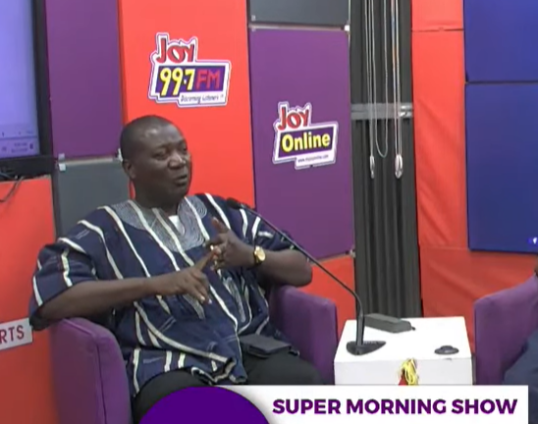
The Ghana Revenue Authority (GRA) has provided a definitive breakdown of the Modified Taxation Scheme, clarifying eligibility criteria and operational modalities for small business owners and informal sector operators. Speaking on Joy FM’s Super Morning Show on Wednesday, Victor Yao Akogo, Chief Revenue Officer of the GRA’s Domestic Tax Revenue Division, detailed the qualifications, exclusions, and the three-tier structure of the regime, as the authority seeks to broaden the tax net.
The Modified Taxation Scheme, embedded within Ghana’s Income Tax Act, 2015 (Act 896), is a simplification mechanism designed to capture revenue from the vast informal sector—which accounts for a significant portion of the nation’s economic activity—without imposing heavy compliance burdens. The clarification comes as Ghana pursues aggressive domestic revenue mobilisation under its ongoing IMF-backed fiscal consolidation programme, with the GRA intensifying efforts to formalise small-scale traders.
Who Qualifies?
Mr. Akogo stressed that the scheme is exclusively designed for resident individuals earning business income sourced from within Ghana. A critical prerequisite is that applicants must not be registered for Value Added Tax (VAT). He explained that this automatically caps participation to businesses with an annual turnover not exceeding GH₵750,000—the current VAT registration threshold. The scheme primarily targets operators in the informal sector who often lack the infrastructure for complex bookkeeping.
Exclusions and Anti-Abuse Measures
The GRA official was emphatic about categories barred from the scheme. Regulated professionals—including engineers, accountants, and lawyers—are ineligible because they are legally mandated to maintain standard accounting records and are expected to have the capacity for proper financial reporting.
Furthermore, individuals operating multiple businesses or maintaining more than one physical outlet are disqualified. This provision is a deliberate anti-avoidance measure, preventing taxpayers from fragmenting their enterprises into smaller units to artificially remain under the simplified tax threshold. Mr. Akogo also confirmed that the law permits taxpayers to voluntarily opt out of the scheme should they choose to transition to the standard assessment regime.
The Three-Tier Structure
The scheme is categorised into three distinct avenues, catering to varying levels of business size and accounting capability:
· Tier 1: Presumptive Tax by Installment – Targeted at micro-businesses with an annual income up to GH₵20,000. This group, comprising street-side vendors and operators of small neighbourhood shops, pays a fixed quarterly tax of GH₵45. This eliminates the need for any record-keeping or profit calculations, offering a hassle-free compliance option for the most vulnerable traders.
· Tier 2: Presumptive Tax by Turnover – Applicable to small enterprises earning between GH₵20,000 and GH₵750,000 annually. Taxpayers in this bracket are required to pay a flat rate of 3% of their total annual turnover. Mr. Akogo explained that this model serves traders who may not maintain detailed ledgers, substituting meticulous expense tracking with a straightforward percentage-based levy on gross receipts.
· Tier 3: Modified Cash Basis – This category offers a middle ground for taxpayers with basic record-keeping knowledge who wish to account for operational costs. Unlike the flat-rate tiers, this system applies standard income tax rules: allowable business expenses are deducted from gross earnings to determine chargeable income. The final tax liability is then calculated using Ghana’s progressive graduated rates, which range from 5% to 35%. As Mr. Akogo noted, “The higher the income you earn, the higher you pay as tax,” ensuring fairness while allowing for deductions.
Broader Implications
The GRA’s detailed exposition is expected to resolve widespread confusion among small business owners regarding their tax obligations. By demystifying the scheme, the authority aims to foster voluntary compliance while widening the tax base. Businesses are encouraged to evaluate their financial profiles to determine the most appropriate tier, ensuring they fulfil their civic duties without punitive overreach.
The authority has also indicated that sensitisation campaigns will continue at the district level to assist taxpayers in selecting the correct bracket and navigating the transition between tiers as their businesses grow.


