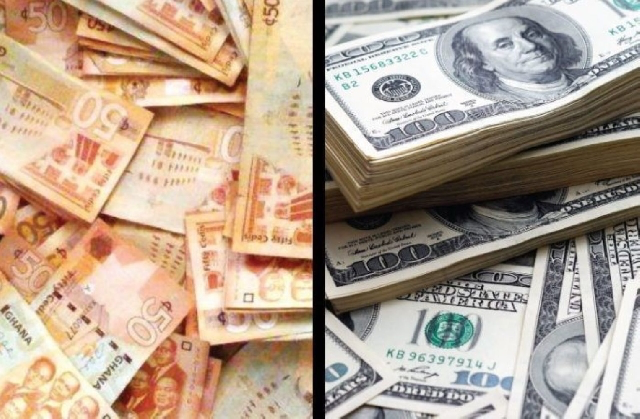
The Ghanaian cedi lost 3.1% of its value against the US dollar in July 2026, reversing nearly all the ground it had gained in June and pushing its year-to-date depreciation to 10.4% on the interbank market, according to data from the Bank of Ghana.
The July decline marks a sharp turnaround from the previous month, when the cedi had staged a brief recovery on the back of a heavy central bank intervention and seasonal dollar inflows. However, that respite proved short-lived as foreign exchange demand rebounded forcefully last month, driven largely by energy-related imports — including refined petroleum products and crude oil for the Tema Oil Refinery — as well as raw materials for manufacturing, which typically surge ahead of the third-quarter industrial cycle.
Reserves Drain and Eurobond Burden
The July slide was compounded by a significant drain on Ghana’s gross foreign reserves. The central bank spent US700 million Eurobond coupon payment due in early July. Together, these outflows reduced gross reserves by US12.9 billion — the lowest level since March 2025.
IC Insights, a Accra-based financial research firm, noted that while the Bank of Ghana is expected to continue its regular market intermediation, its intervention capacity is now “visibly constrained.” “The central bank cannot sustain repeated large-scale injections without jeopardising import cover and external stability,” the firm said in a note. “We anticipate continued but more measured interventions, which will leave the cedi exposed to slight downside pressure through August.”
Retail vs. Interbank Rates
At the retail level, the cedi is currently trading at about GH¢12.42 to the US dollar, with some forex bureaus in Accra and Kumasi quoting as high as GH¢12.50, depending on availability. In the interbank market, where wholesale transactions occur, the rate was quoted at GH¢12.38 per dollar as of Thursday morning — a spread that reflects the growing liquidity squeeze among commercial banks.
The deterioration is even starker when viewed over a longer horizon. According to the central bank’s own data, the cedi had already depreciated by roughly 8.4% against the dollar in the first five months of 2026 alone, before the June rally briefly trimmed that loss.
Underlying Pressures: Import Demand and Sentiment
Analysts attribute the sustained weakness to persistent import demand — particularly for machinery, vehicles, and pharmaceuticals — combined with cautious forex supply conditions. Many commercial banks and forex dealers have become reluctant to hold large dollar positions due to uncertainty over the central bank’s financial health. In recent months, the Bank of Ghana has faced criticism over its balance sheet, with some economists pointing to rising domestic debt and the cost of its monetary policy operations as potential liabilities.
“The market is not just reacting to fundamentals like trade flows; it is also pricing in sentiment about the central bank’s ability to backstop the currency,” said Dr. Kwame Adu, an economist at the University of Ghana. “When investors worry about the central bank’s solvency, they demand a higher risk premium, which accelerates depreciation.”
Outlook: A Narrow Window
Looking ahead, market participants are bracing for a volatile August. Seasonal factors — including the start of the cocoa harvest season, which typically brings in dollar earnings from exporters — could offer some relief. However, that may be offset by renewed demand for dollars to service external debts and import essential goods.
The International Monetary Fund (IMF), which is currently reviewing Ghana’s extended credit facility programme, has urged the government to expedite fiscal consolidation and improve revenue collection to reduce reliance on central bank financing. Any delay in these reforms, analysts warn, could push the cedi past the GH¢12.80 mark by year-end.
For now, the cedi remains one of the worst-performing currencies in sub-Saharan Africa this year, trailing only the Nigerian naira and the Zambian kwacha in depreciation terms. As the August trading window opens, all eyes are on the Bank of Ghana’s next policy move — and whether it has the firepower to prevent another steep slide.