



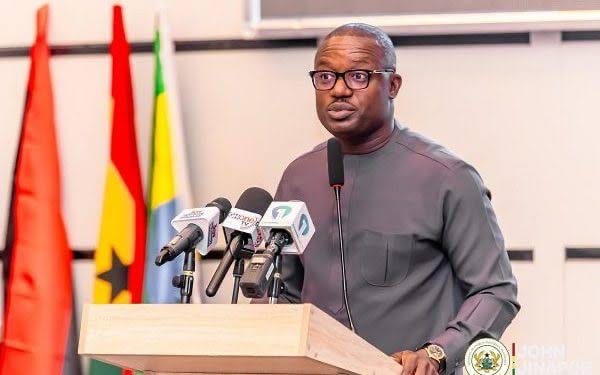
The Government of Ghana has unveiled an ambitious plan to procure 1,200 megawatts (MW) of combined-cycle thermal power capacity by 2029, a move Energy and Green Transition Minister John Abdulai Jinapor has described as a potential “game-changer” for the country’s energy sector.
Announcing the initiative at the 2026 Future of Energy Conference in Accra, Mr Jinapor said the government had taken a strategic decision to develop the thermal capacity using the country’s own resources, rather than relying on external financing arrangements.”We have taken an ambitious policy to procure 1,200 megawatts of thermal capacity with combined cycle on our own as a country so that it can reduce the cost of power,” he stated.
Addressing the Supply Gap
The Minister acknowledged that Ghana would require additional power in the interim period before the project’s completion in 2029.He disclosed that his ministry is working closely with stakeholders, including the Africa Centre for Energy Policy (ACEP), to develop a carefully structured bridging arrangement that would meet immediate electricity needs without creating excess capacity obligations or long-term financial burdens once the new plants become operational.
The 1,200MW project forms part of broader reforms aimed at restoring financial stability to Ghana’s power sector and reducing electricity costs for households and businesses.
Debt Clearance and Cost Savings
Mr Jinapor revealed significant progress in cleaning up the sector’s finances, noting that the government had paid 250 million.
The Minister also highlighted the government’s successful transition from liquid fuel to natural gas for thermal power generation, which generated savings of about $500 million in the previous year through reduced fuel imports.
Supporting Industrialisation
Mr Jinapor stressed that Ghana’s energy sector must provide not only sufficient electricity but also reliable and affordable power capable of supporting businesses and industries.”Regardless of how much generation capacity we install, the cost of that power is important,” he said, noting that additional generation capacity alone would not guarantee competitive electricity supply.
The government has also initiated a comprehensive review of Ghana’s electricity grid and infrastructure following recent system disturbances, with an independent team of experts tasked with assessing the condition and performance of the country’s power infrastructure.
The 1,200MW thermal project is expected to be completed through a competitive procurement process by 2029, with the new capacity carefully coordinated with existing generation commitments to prevent the government from paying for unnecessary or excess capacity.


