



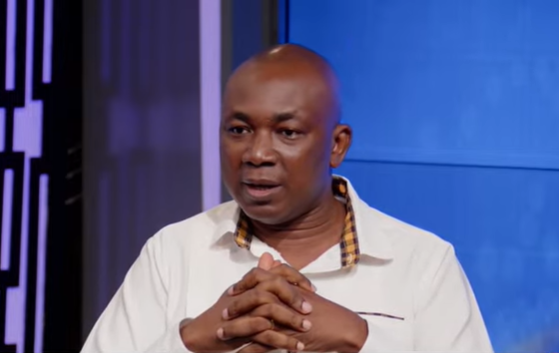
The true cost of Ghana’s flagship gold-buying programme extends well beyond the $1.7 billion in losses recorded in the Bank of Ghana’s books, economist Professor Godfred Alufar Bokpin has said, arguing that a full assessment must capture the broader fiscal and financial burden borne by the state.
Speaking on Joy News’ PM Express as the Ghana Gold Board (GoldBod) marked approximately one year of operations, Prof. Bokpin said the intervention – while successful in curbing smuggling and channelling foreign exchange into the formal economy – suffered from fundamental “design defects” that could have been avoided with better planning.
“I’ve been talking about this way back last year. If you look at the losses we are talking about here, they were design defects of the programme,” he said. “With better planning and expert input, looking at the value chain approach, we could have minimised these losses.”
IMF puts losses at $1.7bn – 8 times earlier estimate
The International Monetary Fund’s Country Report No. 26/213, released this month, revealed that the Bank of Ghana’s Domestic Gold Purchase Programme – implemented through GoldBod – generated losses exceeding US214 million loss the IMF first flagged in December 2025.
The Fund attributed the losses to fees, assay charges, trading margins, off-taking costs and exchange-rate differentials. According to Minority Leader Alexander Afenyo-Markin, the losses mean that “17% of the value of every ounce of gold sold by the Bank of Ghana simply disappeared”.
‘One country, one economy’ – Bokpin rejects siloed accounting
Prof. Bokpin pushed back against attempts to separate GoldBod’s financial performance from the costs absorbed by the central bank. GoldBod’s CEO, Sammy Gyamfi, has repeatedly rejected claims of losses, pointing to the institution’s audited 2025 financial statements which recorded an operational surplus of GH¢909.7 million and an overall surplus of GH¢5.44 billion.
But Prof. Bokpin argued that such accounting distinctions obscure the true national cost. “Macroeconomic stability comes from fiscal and monetary policy – the Bank of Ghana and the Ministry of Finance. We cannot say GoldBod can take that benefit while the costs are treated solely as a BoG problem,” he said. “It’s one country. It’s one economy we are looking at.”
The Institute of Fiscal Policy Governance has rejected the Minority’s loss claims, stating that GoldBod and the Bank of Ghana are separate public institutions with distinct accounting records. It challenged the Minority to produce audited evidence establishing the alleged GH¢22 billion loss.
Abolished 1.5% withholding tax represents hidden fiscal cost
Prof. Bokpin pointed to the abolition of the 1.5% withholding tax on gold from artisanal and small-scale miners as an additional cost that must be factored into any comprehensive assessment. The tax was removed as part of the 2025 Budget to incentivise legal gold trading and reduce smuggling.
With total gold exports from artisanal miners exceeding $10 billion annually, the foregone revenue represents a significant drain on the state’s fiscal envelope. “These are fiscal losses which could have gone to our revenue envelope, probably to fund roads, schools, and infrastructure,” Prof. Bokpin said. “We have to give up that also, all in the name of trying to crowd in the FX.”
Success in curbing smuggling, but at what cost?
Despite his criticism, Prof. Bokpin acknowledged that GoldBod has significantly reduced gold smuggling. The narrowing gap between Ghana’s gold export figures and those recorded by importing countries suggests that more gold is now entering the formal economy.
“There is no doubt that Gold Board has helped significantly in crowding in gold-related FX,” he said.
Between January 2025 and May 2026, the government purchased a total of 135.843 metric tonnes of gold through GoldBod, valued at approximately US10 billion in revenue. The inflows contributed to a 41% appreciation of the cedi in 2025 and helped increase foreign exchange reserves from US13.8 billion.
Costs ‘unsustainable’ as government moves to reform
Prof. Bokpin noted that the government itself recognises the existing cost structure cannot continue. “The government, together with the Gold Board and the Bank of Ghana, recognise that these losses are not sustainable going forward,” he said.
The government has moved to restructure the programme. Under an exit plan, the Bank of Ghana has ceased financing GoldBod’s gold purchases, with GoldBod instead mobilising financing directly from commercial banks and off-takers. GoldBod announced on August 11 that it had ended its role as a buying agent for the Bank of Ghana and had stopped receiving BoG funds since March 2026.
The operating cost margin has been reduced from approximately 17% to a target of 5% of the value of gold purchased. The IMF has recommended that the Bank of Ghana refrain from quasi-fiscal activities and that the Domestic Gold Purchase Programme be transferred fully to GoldBod.
Political storm over GoldBod losses
The controversy has ignited a fierce political debate. The Minority in Parliament has filed a motion seeking comprehensive parliamentary scrutiny of GoldBod’s financial losses. Afenyo-Markin has warned that “GoldBod is a very big scandal awaiting us” and that those responsible may face “scary” bail conditions in the future.
GoldBod CEO Sammy Gyamfi has dismissed the allegations as “a blatant lie” based on what he termed the “hallucinatory imagination” of the Minority Leader.
Meanwhile, the government is pressing ahead with an expansion of GoldBod’s mandate. From July 1, 2026, large-scale mining companies – including Newmont, Gold Fields and Zijin – are required to sell 30% of their gold output to GoldBod. The policy is part of the Ghana Accelerated National Reserve Accumulation Programme (GANRAP), which aims to build the central bank’s gold reserves to 157 tonnes by 2028 – equivalent to 15 months of import cover.
“GoldBod has helped significantly in crowding in gold-related FX,” Prof. Bokpin said. “I celebrate the progress they have made.” But he cautioned: “We must also recognise the cost, the huge cost associated with implementing this intervention.”


