



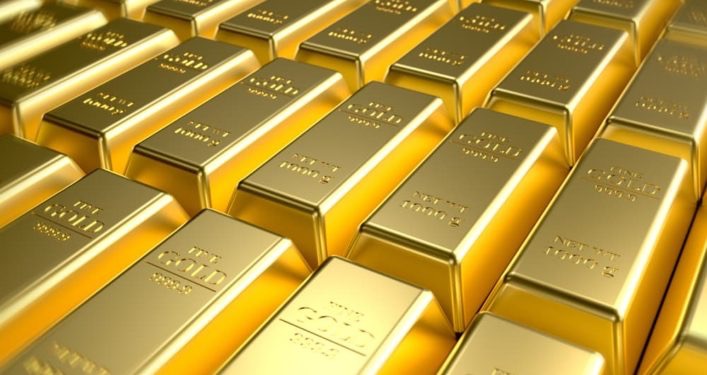
Gold has cemented its role as the undisputed engine of Ghana’s export economy, accounting for nearly two-thirds of all merchandise exports in 2025. While this surge has bolstered the nation’s foreign exchange reserves and delivered a record trade surplus, economists are warning that the country’s growing dependence on the yellow metal exposes the economy to significant global market volatility.
According to the newly released Ghana Merchandise Trade Statistics: 2004–2025 report, presented by Government Statistician Alhassan Iddrisu on Tuesday, gold contributed a staggering 63.1% of Ghana’s total export earnings in 2025. This marks a dramatic leap from 2004, when the precious metal accounted for just 38.5% of exports, surpassing the combined earnings of cocoa and crude oil.
A Surge Fueled by Price, Not Volume
The data reveals a nuanced story behind the revenue spike. In cedi terms, gold exports remained below GH¢20 billion for over a decade until 2018. By 2025, that figure had skyrocketed to roughly GH¢250 billion. In U.S. dollar terms, earnings climbed from approximately $7 billion in 2012 to an estimated $20 billion in 2025.
However, the volume of gold physically exported has not kept pace with this financial windfall. Between 2004 and 2018, Ghana exported between 5 and 8 million ounces annually. That figure dipped to roughly 3 million ounces in 2021 before recovering to about 7 million ounces in 2025.
This disparity indicates that the soaring export values are largely driven by record-high global gold prices, rather than a proportional increase in production. While this has been a boon for government coffers, it also creates a perilous dependency.
The Diversification Dilemma
“The observation captures the dilemma facing Ghana,” the report states. “Gold provides a critical source of foreign exchange… but the more concentrated the export earnings are in one commodity, the more exposed the economy becomes to movements in that commodity’s price.”
When gold prices are favorable, Ghana’s external position strengthens significantly. However, a downturn in the global gold market—whether triggered by shifts in U.S. Federal Reserve policy, global recession, or changing investor sentiment—could amplify economic shocks far more severely than in a diversified economy.
Trade Surplus Masks Structural Concerns
Despite these vulnerabilities, gold’s performance was the primary driver behind Ghana’s substantial merchandise trade surplus of GH¢148.3 billion in 2025. The surplus indicates that the nation earned significantly more from exports than it spent on imports, a positive headline figure that underscores the immediate financial benefits of the gold boom.
However, the report notes that the broader economic benefits for the average Ghanaian depend on how much of that wealth is retained locally. “The challenge is not simply to export more gold,” the report emphasized. “It is to use the revenues generated by gold to build a more diversified and resilient export economy.”
Shifting Trade Winds: Asia Replaces Europe
The transformation of Ghana’s trade profile extends beyond gold. The report highlights a gradual geographic realignment, with export markets shifting from Europe toward Asia. This reflects changing global demand patterns and new trading relationships, positioning Ghana within the orbit of fast-growing Asian economies.
Additionally, non-traditional exports and processed cocoa products are gaining traction. Cocoa products, for instance, increased their share of exports from 9.8% in 2004 to 27% in 2025, showing that pockets of diversification are emerging even as gold dominates the headline numbers.
The Road Ahead
Total merchandise trade reached US$52.5 billion in 2025, a testament to the scale of Ghana’s economic activity. Yet, the central question posed by the Government Statistician’s office remains unanswered: Can Ghana convert the strength of its gold exports into broader economic diversification, or is the country becoming increasingly tethered to the fortunes of a single, volatile commodity?
For policymakers, the answer lies in channeling the windfall from gold into infrastructure, value-added processing, and other productive sectors that can sustain the economy when the gold price eventually cools. As the data shows, while gold is currently Ghana’s golden ticket, it is also a gilded cage that demands urgent strategic action.


