



The government has reaffirmed its commitment to achieving a minimum of 10 percent renewable energy penetration in Ghana’s national electricity generation mix by 2030, with the Bui Power Authority (BPA) designated as the lead agency to drive the ambitious target.
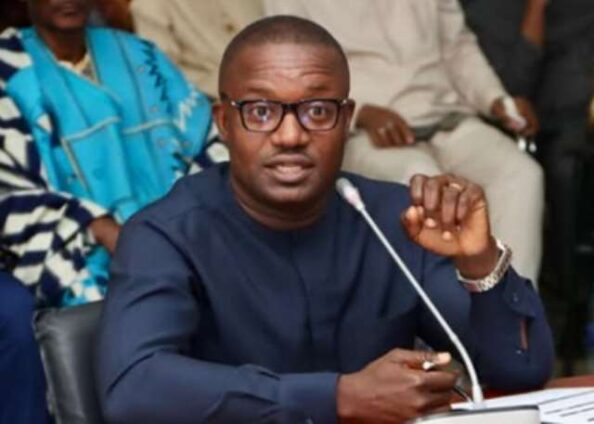
Speaking at the Bui Power Authority’s Annual Stakeholders Meeting in Accra on Thursday, Energy and Green Transition Minister Dr. John Abdulai Jinapor charged all sector institutions to align their programmes and investments with the national clean energy agenda, emphasising that the target is not optional but a core pillar of the country’s long-term energy strategy.
“Government remains firmly committed to achieving at least ten percent renewable energy penetration in the national electricity generation mix by 2030, and every institution within the sector must align its programmes and investments with this national objective,” Dr. Jinapor stated.
Policy Framework and Legal Mandate
The Minister outlined a suite of policy instruments that underpin the renewable energy push, including the Renewable Energy Master Plan, the amended Renewable Energy Act (Act 1046), and the National Energy Transition Framework. These documents, he said, provide the regulatory certainty needed to attract private investment, strengthen grid resilience, and expand electricity access to underserved communities.
Crucially, Act 1046 expanded the mandate of the Bui Power Authority beyond the operation of the Bui Hydroelectric Dam to include the development of solar, wind, and other renewable energy projects, effectively positioning the Authority as the government’s primary vehicle for non-hydro renewables.
Dr. Jinapor charged BPA to continue leading the development of clean energy projects, with a particular focus on solar power generation and energy storage systems.
Priority Projects Underway
The Minister highlighted several flagship initiatives that are expected to contribute significantly to the 2030 target:
· Completion of additional phases of the solar programme at the Bui Generating Station, which already hosts a 50 MW solar plant.
· The 50 MW peak Yendi Solar Project, currently under development in the Northern Region.
· Development of new solar facilities with battery storage systems in parts of the northern regions, designed to address the intermittency of solar power.
· The ongoing 145 MW peak solar projects, which are expected to become operational by the end of this year.
Dr. Jinapor also underscored the critical role of the Battery Energy Storage System (BESS) , noting that it would improve grid stability, support the integration of intermittent renewable sources, and enhance the overall reliability of electricity supply. Battery storage, he explained, allows excess solar energy generated during peak sunlight hours to be stored and dispatched during evening hours or cloudy periods, reducing the strain on thermal plants.
Current State of Renewable Energy in Ghana
Ghana’s current renewable energy contribution—excluding large hydro—stands at an estimated 1–2 percent of the national generation mix. This places the country significantly behind the 2030 target, underscoring the scale of investment and policy acceleration required.
While the country has abundant solar resources, particularly in the northern savannah belt, progress has been hampered by several challenges:
· High upfront capital costs for solar installations, despite falling global panel prices.
· Grid integration challenges, as the existing transmission network was designed for dispatchable thermal and hydro plants.
· Financing constraints, with many developers struggling to secure affordable long-term capital.
· Land acquisition and permitting bottlenecks, which have delayed several planned projects.
The government’s renewed push, however, signals a determination to overcome these hurdles through targeted policy support and institutional coordination.
BPA’s Expanding Role
The Bui Power Authority, which operates Ghana’s second-largest hydro plant (400 MW), has already made strides in diversifying its portfolio. The 50 MW solar farm at Bui is one of the largest utility-scale solar installations in West Africa, and the Authority has plans to add an additional 250 MW of solar capacity over the next few years.
Beyond generation, BPA is also involved in community engagement and skills development, including training local technicians in solar installation and maintenance, ensuring that the renewable energy transition creates local jobs and economic opportunities.
At the stakeholders’ meeting, BPA management reiterated its commitment to meeting the government’s timeline, with the Chief Executive assuring partners that the Authority was actively mobilising resources and technical expertise to deliver on the projects outlined by the Minister.
Broader Energy Transition Context
Ghana’s 10 percent target is part of a wider regional and global push toward clean energy. The country is a signatory to the Paris Agreement and has submitted Nationally Determined Contributions (NDCs) that include renewable energy expansion as a key mitigation measure.
However, the target remains modest compared to some peers—Kenya, for instance, already generates over 80 percent of its electricity from renewables, primarily geothermal and hydro. For Ghana, the 10 percent non-hydro target would complement the existing hydro base (which accounts for about 35–40 percent of generation), bringing the overall renewable share to around 45–50 percent by 2030, depending on hydro availability.
The Minister also noted that the energy transition must be just and inclusive, ensuring that vulnerable communities are not left behind. He called for enhanced collaboration between the public sector, private investors, development partners, and civil society to accelerate the deployment of clean energy technologies.
Stakeholder Reactions
Industry players welcomed the government’s renewed commitment but urged greater urgency. The Renewable Energy Association of Ghana (REAG) noted that while policy frameworks are in place, implementation has often lagged due to bureaucratic delays and inconsistent enforcement of renewable purchase obligations.
Some stakeholders also called for the removal of import duties on solar panels and inverters to reduce costs for both utility-scale developers and rooftop solar adopters.
For its part, the Bui Power Authority pledged transparency and regular updates on project milestones, promising to engage communities and investors alike as it moves toward the 2030 deadline.
A Critical Decade Ahead
With less than four years to go, achieving the 10 percent target will require not only the completion of announced projects but also a sharp acceleration of new developments. The government has indicated that additional tenders for solar and wind projects will be launched in the coming months, and the Ministry is exploring partnerships with international financiers, including the World Bank and the African Development Bank, to de-risk investments.
Dr. Jinapor concluded by reminding all stakeholders that renewable energy is not merely an environmental imperative but an economic one—reducing the country’s exposure to volatile fossil fuel prices, enhancing energy security, and creating a sustainable foundation for industrialisation.
“Ghana’s future energy landscape must be green, resilient, and inclusive,” he said. “The Bui Power Authority, with its expanded mandate and proven track record, is the institution to lead us there.”


