



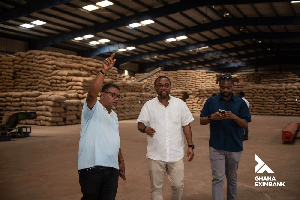
A state-of-the-art cashew processing factory funded by the Ghana Export-Import Bank (GEXIM) is set to commence commercial operations by mid-November 2026, with projections to create approximately 1,500 direct and indirect jobs across the value chain.
The facility, owned by Nadkansco Processing Limited and located in Techiman in the Bono East Region, was inspected on Tuesday, September 8, 2026, by Moses Klu Mensah, Deputy Chief Executive (Banking) of GEXIM, who expressed satisfaction with the progress of work at the site .
Strategic Location in Ghana’s Cashew Belt
The factory’s location in Techiman places it at the heart of Ghana’s cashew-producing zone. The Bono, Bono East, Ahafo, and parts of the Savannah regions account for over 70 percent of the country’s total cashew production . This strategic positioning is expected to significantly reduce transportation costs, minimize post-harvest losses, and guarantee a reliable supply of raw materials from thousands of out-grower farmers in the catchment area.
“The location of the factory in Ghana’s cashew hub gives it a strategic advantage, particularly because of its proximity to the raw material base,” Mr Klu Mensah stated during the inspection .
Processing Capacity and Job Creation
The facility has an installed daily processing capacity of 100 metric tonnes, making it one of the largest cashew processing plants in the country . Once fully operational, the factory will directly employ approximately 450 workers across three shifts running around the clock to ensure continuous production .
Beyond direct employment, indirect job opportunities through sourcing, aggregation, transportation, processing, packaging, and export logistics are expected to bring the total number of jobs associated with the factory to approximately 1,500 .
Out-Grower Scheme to Support 2,000 Farmers
Management of Nadkansco Processing Limited outlined plans for an out-grower scheme that will support over 2,000 smallholder cashew farmers with inputs, extension services, and guaranteed off-taker arrangements . This initiative is expected to provide a ready and remunerative market for cashew farmers who have for years been at the mercy of fluctuating prices and foreign buyers purchasing raw cashew for processing abroad.
The company also indicated that recruitment and training of core staff had already begun, with emphasis on hiring local youth and women .
GEXIM’s Industrialisation Agenda
Mr Klu Mensah noted that GEXIM’s funding support for Nadkansco is part of a deliberate strategy to support Ghanaian-owned industries with high export potential. Under the Bank’s Industrialisation drive, priority is given to factories that have the capacity to substitute imports, add value to local raw materials, and generate foreign exchange .
“This milestone reflects GEXIM’s commitment to supporting industrial growth and empowering Ghanaian enterprises to compete effectively in global markets,” he said .
The Deputy Chief Executive assured management of Nadkansco of GEXIM’s continued support beyond financing, including technical advisory and facilitation of market access to ensure the company competes favourably on the global market .
Addressing Ghana’s Value Addition Gap
The establishment of the Nadkansco factory aligns with government’s industrialisation agenda and the policy to add value to primary commodities before export. Industry data shows that Ghana produces over 200,000 metric tonnes of raw cashew nuts annually, yet less than 10 percent is processed locally, with the bulk exported in its raw state .
According to the Tree Crops Development Authority (TCDA), Ghana’s raw cashew nut production reached approximately 260,000 metric tonnes by the end of 2025 and is projected to rise to about 280,000 tonnes by the end of 2026 . The industry engages over 200,000 farmers directly, with an additional 200,000 people involved in trading and transport .
The Association of Cashew Processors Ghana (ACPG) has estimated that the cashew sector could generate more than US$660 million annually through stronger regulation, increased processing, and expanded value addition .
Socio-Economic Impact for Bono East
For the Bono East Region, the socio-economic impact of the factory is expected to be transformational. Beyond the direct jobs, the facility will provide a stable market for local cashew farmers, potentially stabilising farm-gate prices and deepening rural industrialisation.
Residents and traditional authorities who interacted with the GEXIM team expressed optimism that the factory would help curb youth unemployment in the area .
The commencement of operations at Nadkansco is expected to increase local cashew processing, create employment opportunities, and contribute to Ghana’s export earnings by adding value to the commodity before it reaches international markets.


