



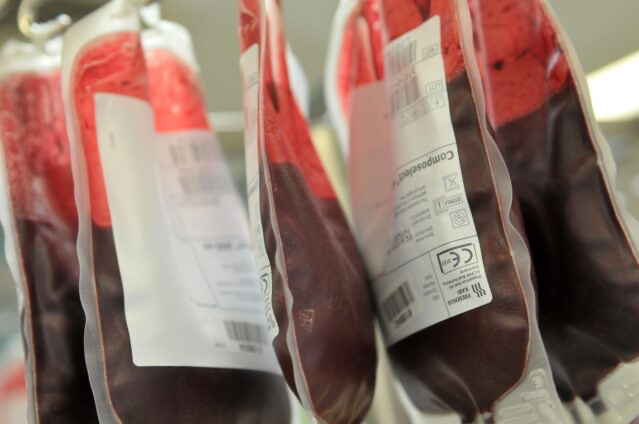
The Governing Body of Jehovah’s Witnesses announced on Friday, September 18, 2026, a landmark adjustment to its long-standing blood policy, declaring that the decision to accept red cells, white cells, plasma, or platelets from another person’s blood is now a matter of personal conscience. Likewise, each Witness must decide whether or not to donate blood for the clearly expressed purpose of providing components or fractions for use by another person.
The long-standing refusal of whole-blood transfusions on religious grounds — a core teaching based on the command to “abstain from blood” (Acts 15:20) — is unchanged.
“Blood remains sacred to Jehovah’s Witnesses, who continue to regard life and blood as precious gifts from God,” said Paul Gillies, international spokesman for Jehovah’s Witnesses at their World Headquarters. “We recognise that medical decisions involving blood components are a matter of conscience between each Witness and their God, Jehovah”.
What Has Changed
For decades, Jehovah’s Witnesses were taught to reject transfusions of whole blood and its four principal components: red cells, white cells, plasma, and platelets. The organisation previously distinguished these components from smaller substances derived from blood, known as blood fractions. Fractions such as albumin, immunoglobulins, and certain clotting factors had already been treated as matters for individual conscience, meaning Witnesses could decide for themselves whether to accept them.
The adjustment follows earlier updates regarding blood fractions and the use of one’s own blood during medical procedures. In March 2026, the Governing Body clarified that individual members could decide whether their own blood could be removed, stored, and returned to them during medical treatment. Since the Bible does not comment on such decisions, they are a matter of individual conscience. That same reasoning has now been extended to the four main components of blood.
Geoffrey W. Jackson, a member of the Governing Body, said: “Each Christian must make his own personal decision about the use of these four primary components in all medical and surgical care”.
The new guidance also says members should not judge one another over those decisions, while congregations are not to become involved in an individual’s personal choice.
A Historic Shift After Eight Decades
The announcement marks the second revision to the organisation’s blood policy in six months and represents the most significant easing of restrictions since the doctrine was formalised in 1945.
The blood doctrine has undergone major changes over time. Originally, Bible Students — as Jehovah’s Witnesses were then known — followed the generally accepted Christian understanding that to eat or transfuse blood was acceptable. The statement at Acts 15:29 to abstain from blood was taken to apply only to congregations that had a mix of Jews and Gentiles. Blood was not forbidden to be eaten until 1927, and blood transfusions were not explicitly forbidden until 1945. In 1961, accepting a blood transfusion became grounds for disfellowshipping.
Since the 1980s, there has been a gradual easing of the blood policy. The Awake magazine of June 22, 1982, contained a list of minor blood components that were now allowable to be transfused by a Jehovah’s Witness. In 1995, Acute Normovolemic Hemodilution (ANH) and autologous blood salvage procedures were stated as acceptable despite being briefly stored outside the blood. Major changes occurred in 2000 when blood fractions of the primary components became a conscience matter, and in 2004 when transfusing haemoglobin became permitted.
Whole Blood Remains Prohibited
Despite the change, the organisation has retained its prohibition on whole-blood transfusion. Jehovah’s Witnesses base their teaching primarily on biblical passages, including Genesis 9:4, Leviticus 17:10–14, and Acts 15:20, which they interpret as requiring Christians to “abstain from blood”. The organisation teaches that blood represents life and is therefore sacred.
The new position separates the question of whole blood from the four components. “The long-standing refusal of whole-blood transfusions on religious grounds, a core teaching based on the command to ‘abstain from blood’ (Acts 15:20), is unchanged,” the organisation said.
Mr. Gillies, in an interview with the Associated Press, emphasised that members should not make the decision on using blood products lightly. “What we’re saying is you have to pray about it, you have to study it, you have to see what the Bible has to say about it, because blood in the Bible represents life,” he said. Members need to consider all these factors before reaching “a decision that you feel happy about with your God”.
Medical and Ethical Context
Jehovah’s Witnesses love life and want the best available medical care. They do not practise faith healing, and they seek out doctors who can provide effective treatment in accord with their wishes, values, and beliefs.
“Congregations do not involve themselves in personal decisions that rest with the individual conscience. We will continue to respect and support the personal decisions of our fellow believers,” Mr. Gillies said. “We are grateful, too, for the many skilled and compassionate physicians who provide quality medical care that respects our personal wishes regarding blood”.
The organisation’s longstanding opposition to blood transfusions has been one of the most controversial and distinctive teachings of the religious organisation. Critics, including former church members, say that the teaching has led to deaths that could have been prevented.
Blood components are often used for specific treatments. Plasma, the liquid component of blood, is often used for those suffering from trauma or certain diseases, according to the American Red Cross. Red cells can be used to treat conditions such as anemia, and white cells to treat certain infections. Platelets are used in some cancer and other treatments.
Bloodless Medicine and Surgery
The Witnesses’ position has contributed significantly to the development of bloodless medicine and surgery programmes worldwide. Dr. Denton Cooley of Texas, known for performing the first implantation of an artificial heart into a person, performed the first bloodless open heart surgery on a Jehovah’s Witness patient in 1962. Since then, Jehovah’s Witnesses have established bloodless medicine and surgery programmes and protocols, and representatives have visited medical schools and hospitals to educate future and practising physicians about non-blood medicine.
Today, more than 90,000 doctors worldwide provide bloodless medical care, and more than 190 hospitals offer bloodless medicine and surgery programmes. Jehovah’s Witness Hospital Liaison Committees bridge the gap between patients and clinicians, reducing patient anxiety and ensuring effective communication of patient wishes, particularly for those refusing transfusion.
Reactions and Criticism
The Humanist Enabling Life Project (HELP) has accused Jehovah’s Witnesses of maintaining a contradictory and dangerous blood transfusion policy. In a statement signed by Leo Igwe, director of HELP, the group said it welcomed the September 18 announcement but warned that the move did not go far enough. “Jehovah’s Witnesses should stop approbating and reprobating on blood transfusion. Its ban on blood transfusion is a harmful health policy that has had an adverse health effect on people,” Igwe said. “Stating that the organization still maintains its ban on blood transfusion while allowing it on personal grounds is confusing”.
HELP also cited a case in Calabar, Nigeria, where it said the Basic Rights Counsel obtained a court order to treat a baby who needed a blood transfusion, but Jehovah’s Witnesses officers at the clinic allegedly pressured the parent to get the baby discharged against medical advice. HELP said it does not want a mere easing of the prohibition; it wants Jehovah’s Witnesses to rescind the ban entirely and issue an express apology for the damage caused.
Global Membership
Jehovah’s Witnesses number over nine million worldwide, in congregations across more than 200 lands. The organisation reported a U.S. membership of 1.3 million in 2025, with a worldwide membership of 9.2 million in more than 200 countries and territories. Jehovah’s Witnesses emerged in 19th-century America and share many Christian beliefs with other churches but diverge on key theological issues, such as the nature of Jesus and biblical prophecy. They are almost alone in their beliefs about blood transfusions.
Looking Ahead
The release of a new Governing Body update and explanatory material on blood components accompanied the announcement. The organisation said its leaders do not regard treatments involving blood components as insignificant. Instead, it said the absence of specific biblical instructions on the medical use of individual blood products means members should make their own decisions after prayerful consideration.
For Jehovah’s Witnesses around the world, the adjustment represents a significant shift in how individual medical decisions involving blood will be approached — placing greater emphasis on personal conscience while maintaining the organisation’s foundational teaching on the sanctity of blood.


