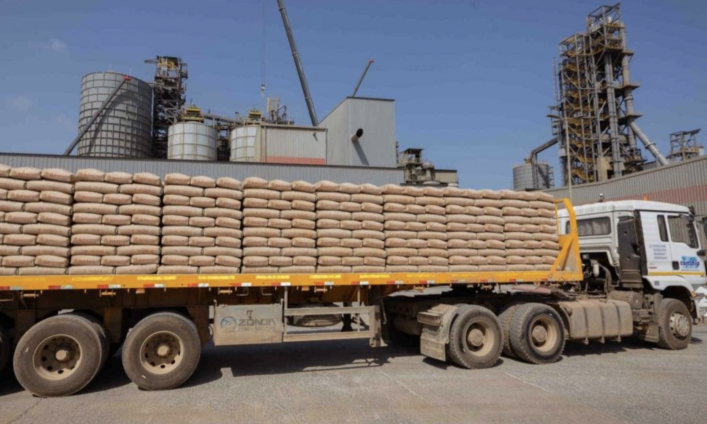
The Chamber of Cement Manufacturers, Ghana (COCMAG) has announced the introduction of a temporary surcharge of GH¢12.00 per bag of cement, a move aimed at cushioning manufacturers against the crippling financial impact of the severe congestion currently plaguing the Tema Port.
The decision, reached at an emergency meeting of the Chamber held on Friday, August 28, 2026, comes as cement producers grapple with unprecedented delays in the discharge of clinker vessels—the primary raw material for cement production—and escalating demurrage charges that have placed a significant strain on the industry.
The Million-Dollar Bottleneck
In a statement signed by Dr. George Dawson-Ahmoah, Chief Executive Officer of COCMAG, the Chamber outlined the staggering operational challenges confronting its members. Average vessel waiting times at the Tema Port, which stood at approximately seven days in January 2026, have skyrocketed to between 30 and more than 40 days as of August 2026.
This dramatic slowdown in operations has generated estimated industry-wide demurrage costs of between US50 million during the first eight months of the year alone. Individual vessels are reportedly incurring charges ranging from US1 million, a sum accrued before a single ton of clinker is offloaded.
“The current situation is untenable,” Dr. Dawson-Ahmoah said, describing the surcharge as “a temporary intervention designed specifically to offset the extraordinary costs generated by the port congestion.” He stressed that the measure should not be interpreted as a general increase in cement prices, but rather as a necessary pass-through cost to ensure the financial viability of the manufacturing sector.
The surcharge comprises GH¢10.00 before tax, plus GH¢2.00 in applicable taxes and levies.
A Structural Bottleneck
The congestion at Tema Port has been exacerbated by severe limitations in berth availability. COCMAG revealed that only three main berths are currently accessible for clinker discharge, while Berths 10 and 11 remain completely inaccessible to cement importers and manufacturers.
The Chamber leadership, led by Chairman Frederic Albrecht and CEO Dr. Dawson-Ahmoah, warned that if these underlying constraints are not addressed, shipment cycles could stretch to nearly three months—a scenario that threatens to disrupt the regular supply of cement and hamper construction activities across the country.
Cause for Concern
Industry analysts note that cement prices remain a sensitive issue in Ghana, where cement is a fundamental component of the construction sector and housing market. Under normal circumstances, all local manufacturers depend heavily on imported clinker, with Ghana ranking as the largest importer of clinker in Africa .
Recent months had seen cautious optimism about price stability, with manufacturers in July 2025 acknowledging the positive impact of the cedi’s appreciation and pledging to work towards gradual price reductions . However, this latest logistical crisis threatens to reverse those gains.
Seeking Government Intervention
COCMAG says it is actively engaging the Government of Ghana and the Ghana Ports and Harbours Authority (GPHA) on urgent measures to address the congestion. The proposed interventions include:
· Reducing vessel waiting times
· Improving berth capacity
· Restoring access to Berths 10 and 11 for clinker vessels
The Chamber stressed that addressing these underlying port constraints remains critical to preventing the continued accumulation of demurrage costs and protecting the stability of clinker supplies.
A Reversible Measure
The surcharge will remain in effect until December 31, 2026, subject to monthly monitoring of the situation at the port. A formal review of the measure is scheduled for January 2027, when COCMAG will assess developments at the port and determine whether the surcharge should be adjusted or removed.
Reiterating that the surcharge was strictly temporary, the Chamber said its preferred outcome was to see congestion reduced to normal levels, “allowing the industry to eliminate the additional demurrage costs and, consequently, remove the surcharge.”
The Chamber reaffirmed its commitment to working with relevant government and port authorities to ensure stability in the cement industry and minimise the impact of the port challenges on manufacturers, consumers, and Ghana’s wider construction sector.