



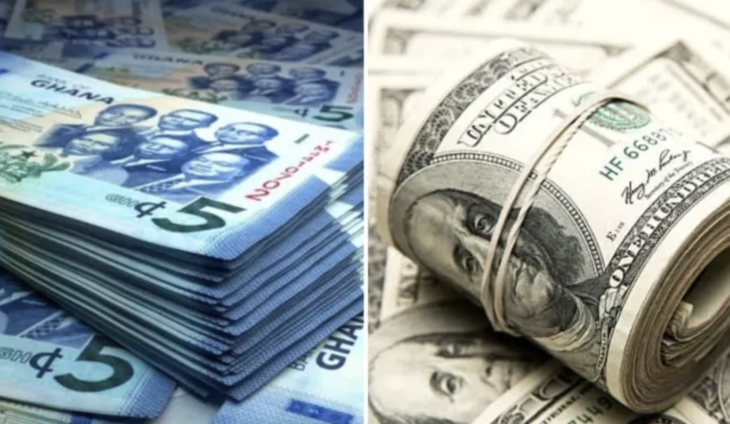
The Ghana cedi remained under sustained pressure over the past fortnight, extending its year-to-date depreciation against the US dollar to 10.04% as businesses ramp up dollar purchases to finance imports ahead of the December Christmas shopping season, according to Joy Business.
At the forex bureaus, the cedi began the week trading at approximately GH¢11.90 to the US dollar, with rates at some bureaus quoted as high as GH¢11.95.
Mixed Performance Across Markets
In the interbank market, the cedi weakened by 1.39% to GH¢11.62 to the dollar, but gained 0.70% and 0.47% against the pound and euro to close at GH¢15.40 and GH¢13.24, respectively.
Retail forex market performance was similarly mixed. The cedi appreciated 0.21% against the US dollar and 0.91% against the euro to GH¢11.93 and GH¢13.73, respectively, but weakened 0.31% against the pound to GH¢15.88.
Drivers of the Pressure
Databank Research attributed the cedi’s weakness against the US dollar to sustained forex demand from the energy and manufacturing sectors. This came against relatively tight interbank supply, despite approximately US500 million target.
Market watchers have also linked the latest pressure to increased demand for dollars from importers building stock ahead of the festive season. The Bank of Ghana acknowledged in its July 2026 Monetary Policy Report that renewed foreign exchange demand ahead of the Christmas season could create temporary pressure on the currency.
External Headwinds: Fed Rate Hike and Dollar Strength
Externally, the Federal Reserve’s September 2026 rate hike and the subsequent strengthening of the dollar added further pressure on the cedi. The Fed raised its benchmark funds rate by 25 basis points to 3.75%–4.00% on September 16, its first hike since 2023, citing elevated inflation and the need to move back toward its 2% target. Most officials signalled at least one more hike this year, with market projections suggesting at least three more by mid-2027.
The US Dollar Index rose 0.7% to 100.32 following the unanimous 12-0 vote. The hawkish decision supported the dollar broadly, particularly against the euro and sterling, though weakness in those currencies provided some cross-rate support for the cedi.
Year-to-Date Context
The cedi has now lost over 10% of its value against the dollar in 2026, a sharp reversal from its performance in 2025, when it appreciated by about 29% between January and December. The World Bank noted that the cedi had depreciated by 8.1% in the year to June 2026. By early May, the cedi had recorded a year-to-date decline of 10.28%, making it the worst-performing currency in West Africa at that time. The currency depreciated by 3.1% in July alone, reversing most of its June gain.
Bank of Ghana’s Response and GoldBod Support
Despite the mounting pressure, the Bank of Ghana maintains that the cedi is expected to remain relatively stable over the medium term. In its latest Monetary Report, the central bank said foreign exchange interventions and remittance inflows would help ease pressure on the currency.
The central bank is expected to supply about US1.4 billion in foreign exchange receipts in September. Of this, US700 million will go to the Bank of Ghana for reserve accumulation under the Ghana Accelerated National Reserve Accumulation Policy (GANRAP).
Databank Research expects the Bank of Ghana to maintain active market support through the September-to-November peak demand period, with interventions likely in the range of US1.5 billion.
Oil and Gold to Provide Buffer
Databank also projects that Ghana’s Balance of Payments position will remain favourable, supported by sustained current account surpluses and resilient gold export earnings. The research firm identified the 30% Gold Off-Take Mandate under GoldBod — supported by an increase in its budget allocation from GH¢4.5 billion to GH¢5.0 billion — as an important driver of foreign exchange supply.
A recovery in crude oil production could provide an additional boost. At a conservative baseline of US340 million to US$410 million in cumulative gross export proceeds over the final six months of 2026, helping to keep reserves above five months of import cover.
Outlook
Databank Research has revised its year-end forecast for the cedi to GH¢12.20 to the US dollar, a 65 basis point adjustment from its earlier projection, citing expectations of stronger foreign exchange inflows and an improved external position.
“Looking ahead, we expect the cedi to maintain a mild depreciation bias as seasonal FX demand builds into the festive period,” Databank Research said.
The research firm cautioned that the cedi’s stability will hinge on the balance between reserve accumulation and timely foreign exchange intervention by the central bank.
“With most major external obligations for 2026 already settled, we expect the BoG to maintain active market support through the September 2026 to November 2026 peak demand period,” Databank said. “This should help smooth seasonal FX pressures while preserving a broadly stable exchange rate path that balances export and import competitiveness.”


