



Ghana’s small and medium-sized enterprises (SMEs)—which employ over 70% of the country’s workforce and contribute nearly half of its GDP—are starved of an estimated US$4.8 billion in working capital each year, according to the Bank of Ghana (BoG). The central bank is now calling for a fundamental rethink of how credit is assessed, urging lenders to harness the vast troves of digital transaction data already flowing through the nation’s payment systems.
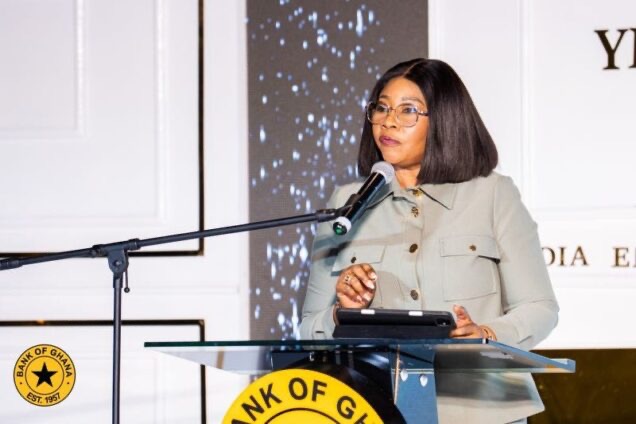
The revelation came from Second Deputy Governor Matilda Asante-Asiedu during the third Distinguished Digital Finance Lecture at the University of Ghana’s National ICT Week celebration. Her message was stark: Ghana has built one of Africa’s most advanced digital payment infrastructures, but it has failed to translate that into accessible credit for the businesses that drive economic growth.
“We have built extraordinary payment rails, but we have not yet built equally extraordinary credit rails,” Asante-Asiedu declared, echoing a theme that has become increasingly urgent as the country grapples with post-pandemic recovery and fiscal consolidation.
A Critical Gap in a Resource-Rich Economy
The US$4.8 billion financing gap is particularly galling, the Deputy Governor noted, because Ghana already possesses substantial domestic liquidity. Banks, pension funds, and investment houses hold significant assets, yet SMEs—often seen as too risky or lacking traditional collateral—remain locked out of formal credit markets. For many small business owners, the only recourse is expensive informal lending, which can carry annual interest rates exceeding 40%, choking growth and perpetuating a cycle of undercapitalisation.
“An SME owner can receive payment for goods within seconds through our instant payment systems, but may still wait several months to secure working capital,” Asante-Asiedu observed. “The disconnect between transaction data and credit access, in my view, is the single largest unrealised opportunity in this room.”
Transaction Histories as the New Collateral
The central banker challenged the banking sector’s over-reliance on traditional collateral—land title deeds, building valuations, and chattel mortgages—arguing that these are increasingly irrelevant to the modern, service-based and digitally enabled economy.
She pointed to the wealth of information already captured by mobile money and bank transaction records: regular cash flows, merchant activity, seasonal income patterns, and even growth trajectories. “This is not just background information. It is a credit record,” she said. “We have simply not built the habit of reading it as such.”
Moreover, she argued that confirmed purchase orders, export contracts, and multi-year service agreements—which are verifiable through digital footprints—should be treated as evidence of future income, enabling banks to lend against receivables rather than physical assets. This shift, she said, would require targeted legal and regulatory reforms to standardise data-sharing and protect borrower privacy.
Ghana’s Digital Payments Ecosystem: Numbers That Speak
To underscore the feasibility of data-driven lending, Asante-Asiedu presented eye-opening statistics that illustrate the sheer scale of Ghana’s digital financial system. In June 2026 alone, mobile money platforms processed 954 million transactions valued at approximately GH¢493 billion (roughly US$30 billion).
The country now has 84.6 million registered mobile money accounts, though 26.4 million are actively used, supported by over one million registered agents spanning every district. For context, Ghana’s adult population is roughly 18 million, meaning multiple accounts per person are common—but also indicating deep penetration of digital financial services even in remote areas.
Yet, despite this massive data generation, only a fraction of SMEs have ever accessed formal credit. The BoG’s own surveys suggest that fewer than 10% of SMEs have bank loans, and even those are mostly short-term and heavily collateralised.
Open Banking: The Policy Lever
Asante-Asiedu confirmed that the Bank of Ghana is actively advancing open banking and open finance frameworks, which would allow third-party financial service providers to securely access customer transaction data (with consent) to build credit-scoring algorithms and offer personalised loan products.
She cautioned, however, that the success of open banking should not be measured by the number of APIs developed or the volume of data exchanged. “The measure of success…should be how much credit” ultimately reaches businesses through the use of that transaction data.
The Deputy Governor also outlined several hurdles that must be overcome: regulatory fragmentation across different financial regulators, cybersecurity vulnerabilities, data governance concerns (including the right to erasure and data portability), and inadequate digital infrastructure in rural areas. She pledged that the BoG would work closely with the Securities and Exchange Commission, the National Insurance Commission, and the Ministry of Communications to harmonise rules and create a safe environment for innovation.
A Call for Cultural and Technological Shift
Industry analysts have welcomed the BoG’s focus, but note that the transition will require more than policy. Banks must invest in AI-driven credit modelling tools, while SMEs must be educated on how to maintain clean, consistent digital records. The Ghana Association of Bankers has already signaled interest in piloting transaction-based lending schemes with select fintech partners.
For now, the $4.8 billion gap remains a stark reminder of what is at stake. With the SME sector being the primary engine of employment and innovation, closing that gap could boost Ghana’s GDP growth by several percentage points, reduce informal borrowing, and enhance financial inclusion—especially for women-owned and rural enterprises that have historically been marginalised.
As Asante-Asiedu put it, “We have the data. We have the technology. What we lack is the will to reimagine credit. That will must come from regulators, bankers, and business owners alike.” The Bank of Ghana says it expects to release a comprehensive open-banking implementation roadmap by the end of 2026, with pilot lending products expected to roll out in 2027.


