



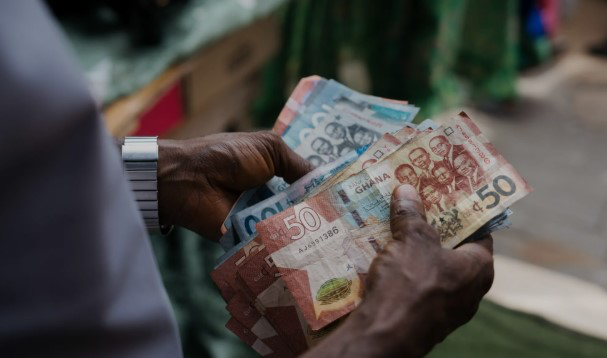
Ghana’s banking industry closed 2025 with a stellar deposit performance, as total customer funds jumped by 25% to reach GH¢334.3 billion, according to the newly released PwC Ghana Banking Survey 2026. The growth, up from GH¢266.5 billion in 2024, signals a robust recovery in public confidence and a deepening of formal financial intermediation after years of macroeconomic turbulence.
The survey attributes the double-digit expansion to a confluence of factors: sustained macroeconomic stabilisation—including easing inflation and a more stable exchange rate—coupled with aggressive branch and agency network expansions, and the accelerated adoption of digital and mobile banking platforms that have lowered barriers to account opening and transactions.
Time Deposits Lead the Charge
The composition of deposits reveals shifting customer behaviour. Current account deposits—the largest category—rose by 15.8% to GH¢184.9 billion, reflecting heightened transactional activity as businesses and individuals returned to regular banking channels. More notably, time deposits posted the sharpest growth, soaring by 56.8% to GH¢49.2 billion, while call deposits increased by 37.5% to GH¢16.7 billion.
Analysts interpret the surge in time and call deposits as a clear signal that depositors are increasingly opting for fixed-term and interest-bearing products, attracted by more competitive rates offered by banks as the central bank maintains a relatively tight monetary policy stance. This shift also suggests that households and corporates are moving away from holding idle cash, channelling savings into formal instruments to hedge against lingering inflationary pressures.
Concentration Persists Among Top Lenders
Despite the broad-based expansion, the survey underscores that market power remains heavily concentrated. The top three banks—GCB Bank, Ecobank Ghana (EBG), and Stanbic Bank Ghana (SBG)—together accounted for 30.7% of total industry deposits in 2025.
GCB Bank retained its leadership position with a 12.37% share, followed closely by Ecobank with 10.52% and Stanbic with 7.80%. Their combined dominance highlights the enduring advantage of large, well-capitalised institutions with extensive physical footprints, established corporate relationships, and sophisticated digital ecosystems that attract both retail and institutional clients.
OmniBSIC’s Meteoric Rise
A standout performer in the rankings was OmniBSIC Bank (OBL), which jumped from 13th place in 2024 to 5th in 2025, capturing a 6.0% deposit market share. The survey credits OBL’s impressive climb to targeted customer acquisition strategies, particularly in the retail and SME segments, where the bank has intensified its relationship management and product innovation.
Zenith Bank Ghana (ZBL) also strengthened its foothold, increasing its share from 5.9% to 6.3%, buoyed by digital-led mobilisation campaigns. First Atlantic Bank (FABL) saw its share rise to 4.9%, with the survey pointing to sustained client retention and enhanced business banking offerings as key drivers.
Macroeconomic Tailwinds and the Digital Dividend
The 2025 deposit boom is set against a backdrop of Ghana’s ongoing economic recovery. After a series of debt restructuring exercises and an IMF-supported programme, inflation has trended downward, while the cedi has shown greater stability compared to previous years. This improved environment has restored depositor trust in the banking system, reversing the flight to cash or foreign currency that characterised earlier periods of distress.
Moreover, the expansion of agency banking—now exceeding 40,000 agents across the country—combined with mobile money interoperability and real-time payment systems, has brought formal banking services to previously underbanked communities, feeding the deposit pool with new, small-balance accounts. The PwC report notes that digital adoption has not only lowered cost-to-serve but also improved customer convenience, encouraging recurring deposits.
Challenges for Smaller Players
While the overall picture is positive, the survey warns that competition remains fierce, and smaller banks face an uphill battle to gain meaningful market share. The dominance of the top three, alongside the rapid ascent of mid-tier banks like OBL, suggests a market where scale, technology, and brand trust are decisive. For banks outside the top tier, sustaining growth will require deeper investment in digital platforms, niche product offerings, and more aggressive SME and retail targeting—without compromising asset quality.
Outlook: Lending Capacity Strengthened
The substantial deposit base provides Ghanaian banks with a much larger pool of deployable funds, which is expected to spur credit growth to the private sector in 2026. With the Bank of Ghana maintaining a cautious stance on reserve requirements, the additional liquidity could translate into more affordable loans for businesses and households—provided banks manage credit risk prudently.
PwC’s survey concludes that the 25% deposit growth is not merely a statistical milestone but a barometer of the sector’s resilience and a testament to the gradual restoration of public faith in Ghana’s financial system. As digitalisation continues to reshape banking habits and economic fundamentals improve, all eyes will be on whether the industry can sustain this momentum through 2026 and beyond.


