



The Africa Centre for Energy Policy (ACEP) has called for a comprehensive review of Ghana’s agreements with Turkish energy company AKSA Enerji, following the conviction of former Tema Oil Refinery (TOR) Managing Director Asante Kwaku Berko in the United States over a $1 million bribery scheme linked to the power project.
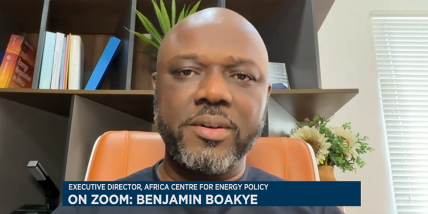
Speaking on Channel One TV’s Point of View on Monday, ACEP Executive Director Benjamin Boakye said the scale of the allegations warranted scrutiny from the Ministry of Energy, the Office of the Special Prosecutor and the Attorney-General to determine whether the agreements were properly negotiated and structured.
“I think it is so evident that you have such a scale of bribery and corruption in our power system. Any sensible approach requires that you pause and investigate and look into it,” he said.
The conviction
A federal jury in Brooklyn convicted Berko on August 6, 2026, on all counts following a nine-day trial before US District Judge Diane Gujarati. Berko, a dual US-Ghanaian citizen and former Executive Director in the Investment Banking Division of Goldman Sachs, was found guilty of conspiracy to violate the Foreign Corrupt Practices Act (FCPA), violating the FCPA, and conspiracy to commit money laundering. He faces a maximum sentence of 30 years in prison and has been remanded in custody pending sentencing on November 10, 2026.
According to the US Department of Justice, Berko conspired to pay more than 1 million to the Minister of Power responsible for securing key approvals. Bribes were also paid to five Ghanaian officials during an all-expenses-paid trip to Turkey, where each received $5,000.
To conceal the scheme, Berko lied to Goldman Sachs’s compliance team and used personal, non-official email accounts when discussing bribes. Payments were laundered through shell companies, sham invoices, nominee account holders and cash withdrawals through US and foreign bank accounts. Goldman ultimately withdrew from the deal due to corruption concerns.
The Office of the Special Prosecutor disclosed that it provided investigative and evidentiary assistance to the FBI through Ghana’s mutual legal assistance framework, with the US Department of Justice acknowledging its “significant assistance to this prosecution”.
ACEP’s long-standing concerns
Boakye stressed that ACEP’s concerns over the AKSA agreements predate the bribery case, saying the organisation had consistently questioned how certain Independent Power Producer (IPP) contracts were negotiated.
“We have had no doubt in our minds since 2015, and when you track all the writings, all the publications we’ve done on some of these IPPs, we have always been worried about how these contracts were signed, and we knew something was wrong,” he said.
Take-or-pay and value-for-money concerns
Boakye raised specific concerns about Ghana’s obligation to pay for electricity from AKSA Enerji even when the country cannot fully utilise the contracted power under the take-or-pay agreement.
“Take-or-pay for me has never been a problem. It’s how we plan our systems to be able to use it,” he said. He explained that where Ghana has excess power or faces challenges in the value chain, “you still have to pay, that becomes a problem”.
He also questioned the valuation and procurement processes surrounding power plants brought into Ghana under emergency power arrangements. A thorough examination should establish where the plants were sourced, how much they cost and how the eventual agreements were structured. ACEP has previously estimated that the plants had generated hundreds of millions of dollars in capital-recovery payments within a relatively short period, despite relatively low utilisation.
A growing footprint
AKSA entered Ghana during the height of the “dumsor” crisis and has since expanded from its original project to a significant position in the country’s power sector. On August 3, 2026, AKSA announced a new 20-year dollar-based power sales agreement for an 825 MW plant in Ghana, which would bring its total installed capacity in the country to 1,545 MW.
An opportunity for reform
Boakye said the Berko case presents a major opportunity for the government to revisit contracts, particularly as Ghana continues to engage IPPs on measures to reduce the financial burden on the power sector.
“We have recently been struggling to even engage these IPPs to give us significant haircut that keeps the sector afloat. So, this is, for me, a major opportunity to go back and look at how these contracts could have been optimised,” he said.
He urged authorities to examine Ghana’s power procurement arrangements and identify areas that may have exposed the country to excessive costs. Meanwhile, the Economic and Organised Crime Office (EOCO) has intensified investigations into Ghanaian officials linked to the bribery case, tracking funds and assets connected to the scandal.


