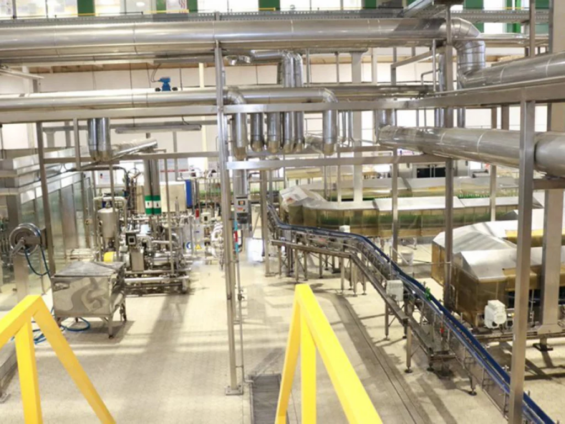
Accra Brewery Limited (ABL), one of Ghana’s oldest beverage manufacturers, is threatening to permanently cease production in the country should President John Mahama sign the revised Excise Duty Amendment Bill into law, Joy Business has learned.
The legislation, passed by Parliament earlier this month, imposes a staggered excise tax of between 7% and 15% on beer produced by local manufacturers. While intended to broaden the government’s domestic revenue base amid ongoing fiscal consolidation under the IMF programme, industry sources warn the levy could prove fatal for local production.
According to internal assessments obtained by Joy Business, the new tax regime would compel Accra Brewery—a subsidiary of global brewing giant AB InBev—to take an immediate impairment hit of approximately US$7 million. This reflects the anticipated write-down of fixed assets and production lines should output fall below viable thresholds. Senior executives are currently conducting a sustainability audit, with a final decision on the company’s future expected to hinge on whether the President grants his assent or orders further stakeholder consultations.
Uneven Playing Field and Import Competition
The brewing giant, which produces flagship brands such as Club Lager, Eagle, and Stone, has long faced mounting headwinds from imported premium beers and regional competitors. Industry players contend that while local manufacturers bear the full brunt of the excise duty, imported products often evade comparable taxation, creating a distorted market that has already squeezed domestic margins and eroded market share.
“We are competing with one hand tied behind our back,” a source close to the matter told Joy Business. “Input costs—from imported malt to fuel for logistics—are already unsustainable due to the depreciating Cedi. This additional tax pushes the entire manufacturing business model to a breaking point.”
Job Security and Economic Impact
The potential closure or drastic scaling down of operations poses a direct threat to hundreds of direct employees, with ripple effects across the wider beverage supply chain, including distributors, retailers, and raw material suppliers. Industry observers warn that if the tax is implemented without relief, widespread layoffs are inevitable, not just at Accra Brewery but across the sector, as other local manufacturers are also reportedly considering cutting production capacity.
A Reprieve on the Table
In a bid to avert an immediate crisis, industry associations have reportedly petitioned the government to delay the implementation of the revised excise duties until January 2027. Proponents argue that the grace period would allow breweries to restructure their supply chains and absorb the cost burden more gradually. However, it remains unclear whether the Ministry of Finance, led by Dr. Cassiel Ato Forson, has formally received or considered this request.
Joy Business understands that while the Finance Ministry is under intense pressure to meet revenue targets, officials are privately weighing the political and economic fallout of a sudden manufacturing collapse against the need for fiscal discipline.
The Government’s Dilemma
President Mahama now faces a critical policy crossroads. The Excise Bill was passed as part of broader efforts to strengthen domestic resource mobilisation and reduce reliance on external borrowing. However, the prospect of a major multinational brewer exiting the Ghanaian market—and the consequent loss of tax revenue, jobs, and investment confidence—could undermine those very objectives.
As the presidential decision looms, the fate of Accra Brewery—and by extension, the resilience of Ghana’s industrial base—remains precariously balanced. The brewing sector now waits with bated breath, hoping for a compromise that secures jobs without derailing the nation’s fiscal trajectory.