



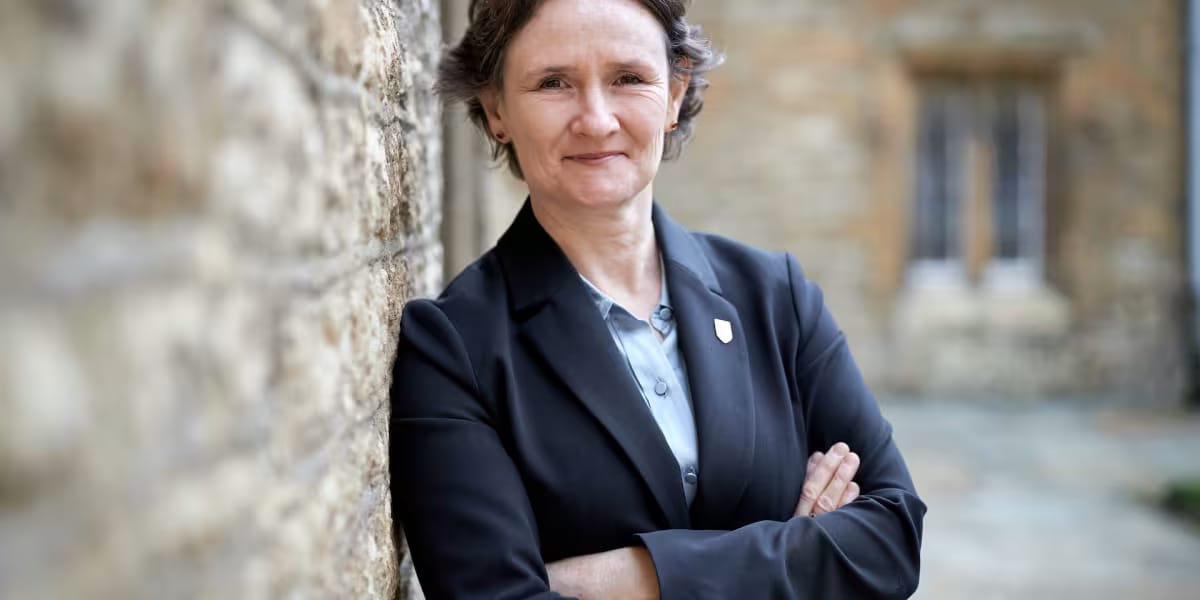
The Vice-Chancellor of the University of Oxford, Professor Irene Tracey, has urged African universities to break free from Western templates and build higher education systems rooted in the continent’s own realities—while calling for the removal of costly English proficiency tests that shut out qualified students.
Speaking to journalists on the sidelines of the First Higher Education Transformation Convening in Accra, Prof. Tracey said Africa had a unique chance to innovate rather than imitate. “Don’t just follow the model of Britain-Europe-US; you have got to find the right model for your particular context and your country,” she said. “There is a real opportunity to leapfrog and think a little bit disruptively about what higher education would look like.”
Prof. Tracey, a neuroscientist who became Oxford’s Vice-Chancellor in January 2023, argued that the cost of tests such as IELTS should not be a barrier to university access. While universities need assurance that students can thrive in English-language classrooms, she said, “the financial barrier or hurdle that precludes them is not what we want.” She suggested institutions could develop their own in-house English proficiency assessments to maintain academic standards without imposing prohibitive costs.
Her intervention comes amid mounting frustration among students from Anglophone African countries—Ghana, Nigeria, Kenya, Zimbabwe and others—where English is the official language and the medium of instruction from primary school onward. Many argue that requiring them to sit IELTS is redundant, expensive and a lingering form of linguistic gatekeeping. The exam typically costs more than $200, a sum beyond reach for many families. Student groups, including the National Union of Ghana Students in the United Kingdom, have repeatedly called for exemptions or recognized alternatives for students educated entirely in English.
The Accra convening, organized by the Mastercard Foundation, brought together higher education leaders, government officials, industry representatives, development partners and young people to explore how African universities can better develop talent and drive innovation. It also marked the inaugural awards of the Foundation’s Africa Higher Education Transformation Prize, a $500 million initiative aimed at recognizing at least 150 African institutions over the next decade.
At the event, speakers warned of a deepening access crisis. Only about 9% of young Africans of university age are enrolled in higher education, leaving the vast majority without tertiary opportunities. Employers also report a persistent skills mismatch, with many graduates unprepared for the jobs they enter.
Prof. Tracey urged African universities to diversify their institutional models and strengthen collaboration with the private and public sectors. She described the continent’s position as an opportunity to rethink the traditional university template and become more nimble and agile. On research, she stressed that universities remain vital engines of new ideas and economic growth, but questioned whether all research must be housed within traditional universities. Countries could consider centralized research institutes capable of assembling the critical mass needed for major projects, she suggested.
Her remarks align with a broader continental push. The African Union has been advancing the Pan-African Quality Assurance Alliance to strengthen quality assurance, promote academic mobility and harmonize higher education across Africa—part of the African Union Decade of Education and Skills Development (2025–2034) and the Continental Education Strategy for Africa (CESA 2026–2035).
As African higher education confronts a booming youth population and rapidly changing labor markets, the message from Accra was clear: the era of imitation is over. The continent’s universities must chart their own course—and Oxford’s vice-chancellor is signaling that even the world’s oldest English-speaking university sees value in that independence.


