



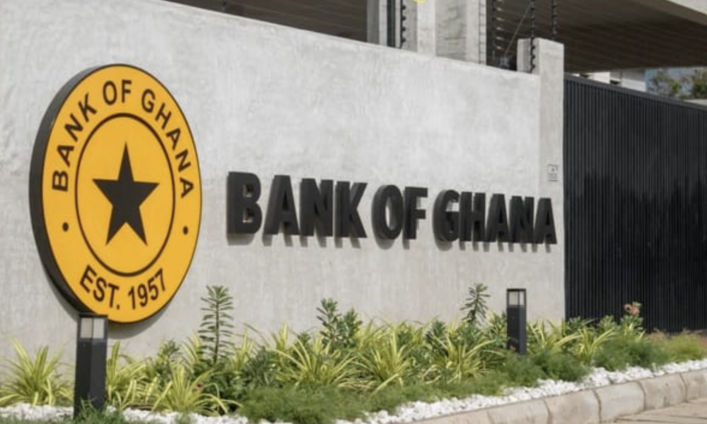
Rising inflation, renewed pressure on the Ghana cedi and concerns over economic growth are expected to dominate discussions as the Bank of Ghana’s Monetary Policy Committee begins a three-day meeting to review developments in the economy.
The MPC began its meeting on Wednesday, September 23, 2026, and is expected to conclude its deliberations on Thursday, September 24, with the Bank of Ghana announcing its decision on the policy rate. The meeting comes at a critical juncture, with the central bank facing competing pressures that could make this one of its most difficult decisions in recent months.
The inflation picture
Ghana’s year-on-year inflation rate rose to 5.0% in August 2026, up from 4.6% in July, according to data from the Ghana Statistical Service. The increase was driven primarily by non-food inflation, which picked up to 6.8% from 6.1% in July, reflecting higher oil prices stemming from the Middle East conflict that pushed up transport and utility costs.
Food inflation eased marginally to 3.0% from 3.1%, though the heavily weighted vegetable inflation surged, with fresh tomatoes recording a 158.3% year-on-year increase. On a monthly basis, the Consumer Price Index fell by 1.0% in August, marking the first decline since late 2025.
The inflation rate remains below the lower end of the Bank of Ghana’s medium-term target range of 6% to 10%, preserving policy headroom. The central bank has reiterated its expectation that inflation will rise into its target band of 8% ± 2% in the medium term, barring any significant shocks.
The cedi under pressure
The Ghana cedi has come under renewed pressure in recent weeks, depreciating by 1.86% against the US dollar in July and by 8.06% on a year-to-date basis. The local currency has been trading at around GH¢11.45 to GH¢11.59 to the dollar at the Bank of Ghana’s interbank reference rate, while some forex bureaus quote rates as high as GH¢12.
Bank of Ghana Governor Dr Johnson Asiama has sought to reassure markets, stating that the recent movements are under control and that allowing the cedi to weaken slightly at certain periods can form part of the central bank’s broader economic management strategy.
“Sometimes it’s okay to allow the system to adjust. Sometimes it’s a deliberate policy to allow the cedi to depreciate a little bit. It’s all within the strategy,” Dr Asiama said at the launch of the Central Securities Depository’s InvestorConnect mobile application in Accra. “Managing an economy, some days things might look challenging. It doesn’t mean we have lost control”.
The cedi’s recent weakness has been attributed to persistent corporate foreign-currency demand, particularly from businesses stocking up for the December Christmas shopping season, alongside changes in international refined petroleum product prices.
GoldBod’s role in reserve accumulation
A key factor in the MPC’s deliberations will be the performance of the Ghana Gold Board (GoldBod), which has emerged as a significant source of foreign exchange inflows. Under the Ghana Accelerated National Reserve Accumulation Policy (GANRAP), GoldBod is expected to generate US700 million made available to commercial banks and up to US$700 million provided to the Bank of Ghana for reserve accumulation.
This follows GoldBod’s strong performance in August, when it generated US668.21 million was sold directly to commercial banks, while US$646.59 million went to the Bank of Ghana for reserves.
Ghana’s gross international reserves stood at $13.8 billion at the end of 2025, providing import cover equivalent to 5.7 months. However, reserves declined to $12.9 billion by end-June 2026, equivalent to about 5.0 months of import cover, partly reflecting the central bank’s intervention efforts to stabilise the cedi.
Market analysts are expected to consider how developments in the Middle East and recent changes in US interest rates could affect Ghana’s economy. Potential effects include lower gold prices, reduced foreign exchange inflows through GoldBod, slower reserve accumulation, reduced capacity for foreign exchange intervention and additional pressure on the exchange rate.
A year of cautious easing
The Bank of Ghana has been on a cautious easing path throughout 2026. In January, the MPC reduced the policy rate by 250 basis points to 15.5%, taking borrowing costs to their lowest level since February 2022. In March, the Committee cut the rate again by 150 basis points to 14.0% — the fifth consecutive cut and the smallest since easing began in July 2025.
The MPC then held the rate at 14.0% in May, pausing after five consecutive cuts, with Governor Asiama noting that the Middle East conflict had “stoked inflationary concerns and underlined policy uncertainty”. The Committee maintained the rate again in July amid concerns about rising global prices, transport costs and renewed conflict in the Middle East.
The case for a rate cut
Several analysts believe the gap between inflation and the policy rate remains sufficiently wide to warrant further easing. Databank Research has projected that the MPC could reduce the policy rate by 150 basis points to 12.5% at its September meeting, citing the continued moderation in inflation towards the central bank’s medium-term target range.
“Despite external shocks, monetary policy in 1H’26 remained on a cautious easing path, with our expectation of two rate cuts for the year still intact following the first reduction in March 2026, which lowered the policy rate to 14.0%,” Databank said.
The research firm pointed to stronger monetary policy transmission through the banking sector, with private-sector credit growth rising by 41.2% year-on-year in nominal terms and 34.1% in real terms. The banking sector maintained a strong capital position, with the industry-wide Capital Adequacy Ratio standing at 20.4%, while the gross non-performing loan ratio declined to 16.1%.
With inflation at 5.0% and the policy rate at 14.0%, the real policy rate stands at 9.0%, still 100 basis points below the Bank of Ghana’s inflation target floor of 6.0%. This, analysts argue, preserves policy headroom and supports the case for further easing to reduce borrowing costs for businesses and households.
Reasons for caution
The case for easing is not without risks. The July MPC decision made clear that policymakers were concerned about the possibility of inflation rising further before stabilising, highlighting the potential impact of higher petroleum prices, geopolitical tensions in the Middle East, utility tariff adjustments, supply-chain disruptions and food-supply conditions.
IC Group has expressed a more cautious view, stating: “We therefore perceive little case for a change in the nominal policy rate at the upcoming MPC meeting”. The firm forecasts September 2026 headline inflation at 5.1% ± 0.5 percentage points, with the month-on-month rate rising to 1.0%.
The Bank of Ghana has also previously indicated that global developments alone would not necessarily mean that the appropriate response is to increase the policy rate.
Economic growth provides some room
Ghana’s economy recorded 6.0% year-on-year growth in the second quarter of 2026, according to Ghana Statistical Service data, giving the Bank of Ghana some room to focus on maintaining price stability while supporting economic activity. Non-oil GDP growth was even stronger at 7.6%.
The stronger growth performance contrasts with the challenging external environment, including the Middle East conflict and its spillover effects on energy prices and imported goods.
What to expect
The MPC’s decision on Thursday will indicate how the central bank assesses the balance among inflation, exchange rate pressures, external developments and economic growth. Persons close to the MPC have told JOYBUSINESS that the Committee’s decision will be guided by economic data as it assesses the policy rate and the way forward.
Market players are divided, with some projecting a reduction to between 12% and 13% and others expecting the rate to be maintained at 14% or even increased to contain inflationary pressures. The competing pressures could make the latest MPC meeting a difficult one, as the Committee weighs inflation and exchange rate risks against the potential impact of tighter monetary policy on economic activity and access to credit.


