



The Paediatric Oncology Unit at the Greater Accra Regional Hospital (Ridge) is struggling with severe space and funding constraints as the number of children it treats has more than quadrupled over the past six years, its head has warned.
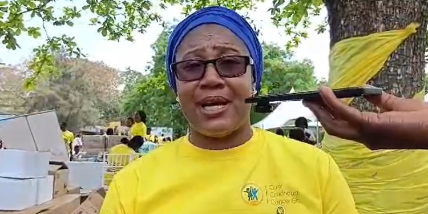
Speaking at the annual awareness event organised by Cure Childhood Cancer Ghana, Dr Nihad Salifu, Head of Paediatric Oncology at the hospital and Director of the organisation, said the unit still operates with only the four beds it started with, despite a sharp rise in cases.
“Here at Ridge Hospital, we started the unit with just four beds. In six years down the line, we still have only four beds. When our patient numbers have increased from an initial 10 a year, we are now seeing over 40 children a year,” she said.
The pressure has forced staff to administer treatment in a playroom intended for other children — a practice Dr Salifu described as unsafe. The unit is now seeking funds to refurbish a space allocated by the hospital so that children can receive care in a more suitable environment that also offers greater comfort to their families.
“Unfortunately, currently, we have to give them the treatment in the playroom, a playroom that is meant for other children. That is definitely not a safe area to give treatment to the children,” she said. “Part of this campaign to raise funds is also to refurbish a space the hospital allocated to us, so that we can refurbish it and then provide a very decent environment for the children to receive their care and also grant some comfort to their families as they are receiving the care.”
Dr Salifu noted that while the Ghana Medical Trust Fund (also known as Mahama Cares) now covers five childhood cancers — acute lymphoblastic leukaemia, Burkitt lymphoma, Wilms tumour (nephroblastoma), retinoblastoma and soft tissue sarcoma — many other cancers and advanced cases still fall outside the package, leaving families to shoulder significant costs.
“We are very fortunate that the Ghana Medical Trust Fund is now funding five childhood cancers, but we have children with other cancers who need care. We have others who have advanced disease who still need care,” she said.
The Go Yellow campaign, run by Cure Childhood Cancer Ghana, is raising funds to support diagnosis, treatment, psychosocial care and, crucially, transport for families who often travel long distances. Treatment for childhood cancer can last from several months to three years, making transport costs a major barrier that has historically led some families to abandon care.
“Transport support is very important to make sure that the children leave home and come to the hospital, because this journey is a long one. It takes several months to three years to cure a child with cancer, and so transport costs are also high,” Dr Salifu said.
The Medical Director of the Greater Accra Regional Hospital, Dr Leslie Issa Adam-Zakariah, called for broader coverage of childhood cancers under the Ghana Medical Trust Fund to ease the financial burden on families and improve access. Programmes Manager for Cure Childhood Cancer Ghana, Salma Suhuyini Fuseini, said the organisation’s goal remains giving every child battling cancer a fighting chance.
Background and national context
The Paediatric Oncology Unit at Ridge Hospital was established around 2020–2021 as part of efforts to expand access beyond the country’s two main centres at Korle Bu Teaching Hospital and Komfo Anokye Teaching Hospital. Dr Salifu, a paediatric oncologist who trained at the University for Development Studies, the West African College of Physicians, Tata Memorial Hospital in Mumbai and the Ghana College of Physicians and Surgeons, helped set up the unit. She has long advocated for improved early detection, noting that childhood cancer is highly curable when diagnosed promptly.
Ghana is estimated to see between 1,200 and 1,500 new childhood cancer cases each year among children under 15, according to experts and WHO-linked data. However, only a fraction — often cited as around one-third or fewer — are formally diagnosed and reach specialised care. Common cancers include leukaemia (especially acute lymphoblastic leukaemia), lymphomas (notably Burkitt lymphoma), retinoblastoma, Wilms tumour and soft tissue sarcomas. Survival rates in high-income countries exceed 80 per cent; in Ghana they have historically been far lower, though improvements have been recorded in recent years through better awareness, training of more paediatric oncologists and nurses, and expanded treatment centres.
Challenges remain widespread: late presentation (with many children arriving with advanced disease), high out-of-pocket costs for diagnostics and supportive care, limited specialised facilities, and transport and accommodation barriers for families from outside Accra. The National Health Insurance Scheme has covered selected childhood cancers since late 2021, and the Ghana Medical Trust Fund, launched as the Mahama Cares initiative, has added further support for specific cancers in a phased rollout that began in 2026. Ghana has also joined international platforms aimed at improving access to essential childhood cancer medicines.
Cure Childhood Cancer Ghana, which Dr Salifu directs, provides financial assistance for diagnosis, treatment, nutrition, transport and psychosocial support, and runs awareness campaigns such as Go Yellow. Similar organisations and partners, including World Child Cancer, have supported capacity-building, equipment donations and family assistance at Ridge and other centres.
Despite progress — including more trained paediatric oncologists and nurses, new national treatment guidelines and growing public awareness during Childhood Cancer Awareness Month each September — the Ridge unit’s experience illustrates the strain on facilities as more children are diagnosed and referred. Stakeholders continue to press for expanded infrastructure, fuller funding coverage and stronger early-detection systems so that curable childhood cancers no longer claim lives unnecessarily.


