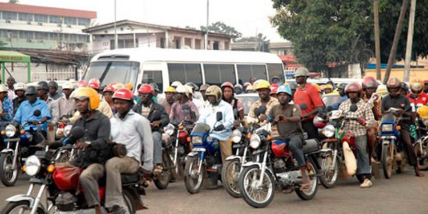
Commercial motorcycle operators, popularly known as Okada riders, in Accra have raised concerns over alleged extortion by officers of the Motor Traffic and Transport Directorate (MTTD) during traffic enforcement operations.
The riders claim they are sometimes made to pay money without being given a clear explanation for the alleged offences, particularly during police operations.
One rider who spoke to Citi News said officers sometimes demand varying amounts of money from riders under the guise of enforcement operations. “All they say is they are doing an operation. They can take like GHC100, and sometimes GHC200,” the rider said.
Some riders also allege that when their motorcycles are seized, they are asked to make payments at police stations before the vehicles are released. For the riders, such payments have a direct impact on their livelihoods, as their motorcycles are their main source of income.
They argue that enforcement should be carried out fairly and transparently without pushing them out of business or forcing them into illegal activities.
The concerns come amid growing scrutiny of police interactions involving alleged bribery. In August 2026, data released by the Ghana Statistical Service showed that the MTTD recorded the highest bribery interaction rate among police units, at 54.6 per cent.
The issue has also surfaced in recent police disciplinary actions. The Ghana Police Service recently interdicted seven officers in Accra after a patrol team allegedly stopped a citizen, demanded an illicit payment and forced the victim to withdraw cash from an ATM.
Traffic offences in Ghana are governed by the Road Traffic Regulations, 2026, L.I. 2519, which outline offences and penalties for motorists, vehicle owners, commercial transport operators, motorcycle and tricycle riders, passengers and pedestrians. The offences include drink driving, speeding, jumping red lights, using a mobile phone while driving, and failure by motorcycle or tricycle operators and their passengers to wear the required safety gear.
However, some Okada riders in Accra say the enforcement of these laws has, in some instances, become a source of abuse and alleged extortion. They claim little or no explanation is sometimes provided when they are stopped or arrested for traffic offences.
While such cases have prompted calls for stronger accountability within the service, anti-corruption campaigner Bright Ofori believes additional measures are needed, particularly in traffic enforcement. He is calling for stronger disciplinary systems within the police service, alongside greater use of technology to improve accountability.
“The police should strengthen its disciplinary systems and make use of bodycams too, as other countries have adopted,” Bright Ofori said.
The Ghana Police Service has also introduced TraffiTech-GH, an automated traffic law enforcement system designed to digitally monitor roads and support the enforcement of traffic regulations. The system is expected to reduce reliance on manual enforcement and create greater transparency in the handling of traffic offences.
For the Okada riders, however, the effectiveness of any enforcement system will ultimately depend on ensuring that officers are held accountable and that motorists and riders are treated fairly during traffic operations.