



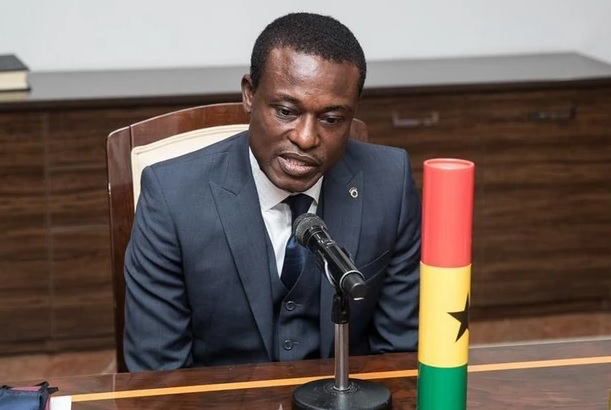
In a landmark judgment that has brought clarity to Ghana’s anti-corruption framework, the Supreme Court has unanimously ruled that the Office of the Special Prosecutor (OSP) Act is constitutional. The apex court affirmed the OSP’s right to initiate prosecutions independently, while simultaneously reinforcing the Attorney-General’s (A-G) constitutional prerogative to discontinue any such proceedings at will.
Delivering the highly anticipated decision on Wednesday, July 29, 2026, the Supreme Court settled a prolonged legal debate regarding the constitutionality of Sections 3 and 4 of Act 959, which established the OSP. The court ruled that the powers granted to the Special Prosecutor do not violate Article 88 of the 1992 Constitution, which vests exclusive prosecutorial authority in the Attorney-General.
The Legal Bridge: L.I. 2374
The court reasoned that the OSP derives its authority to act in the name of the Republic from the Office of the Special Prosecutor (Operations) Regulations, 2018 (L.I. 2374). According to the justices, this Legislative Instrument acts as the constitutional bridge, signifying a valid delegation of authority from the Attorney-General to the OSP. The court further clarified that this authorization is not temporary by nature and will remain in force unless Parliament decides to amend or revoke the L.I.
The A-G’s Ultimate Oversight
While validating the OSP’s mandate, the Supreme Court provided a sharp, constitutional caveat. The court held that the Attorney-General retains the ultimate authority to enter a nolle prosequi—meaning the power to discontinue prosecutions initiated by the OSP. This confirms the A-G’s supervisory role within the criminal justice system.
Past Actions Secured
Seeking to protect the integrity of ongoing and past anti-corruption efforts, the court notably ruled that all prosecutions, convictions, and freezing orders secured by the OSP under Section 71 of Act 959 remain legally valid and binding.
Background to the Ruling
The Supreme Court’s decision overturns a confusing legal standoff that began in April 2026. On Wednesday, April 15, 2026, the Accra High Court, presided over by Justice John Eugene Nyadu Nyante, delivered a ruling that cast a shadow of uncertainty over the OSP. The High Court had held that while the OSP is empowered to investigate corruption, it lacked the independent constitutional mandate to initiate prosecutions, directing that all matters be forwarded to the Attorney-General’s Department.
That earlier ruling placed dozens of ongoing, high-profile corruption trials in legal abeyance, prompting the OSP and legal stakeholders to seek a final determination from the highest court. The constitutional challenge was formally moved by Legal Officer, Mr. Noah E. Adamtey, who argued that the OSP’s independent prosecution powers contravened the exclusive mandate of the A-G.
Implications for Ghana’s Anti-Graft Fight
The Supreme Court’s unanimous decision serves as a massive victory for the current Special Prosecutor, Mr. Kissi Agyebeng, reaffirming the independence and operational capacity of the OSP without the bureaucratic hurdle of constant referral to the A-G’s office for every case. However, legal analysts have noted that the ruling also successfully maintains the constitutional hierarchy, preserving the A-G’s role as the ultimate guardian of prosecutorial discretion.
As Ghana continues its fight against financial malfeasance and corruption, the Supreme Court’s decision brings much-needed finality, ensuring that the OSP can proceed with its docket of corruption cases while operating squarely within the margins of the 1992 Constitution.


