



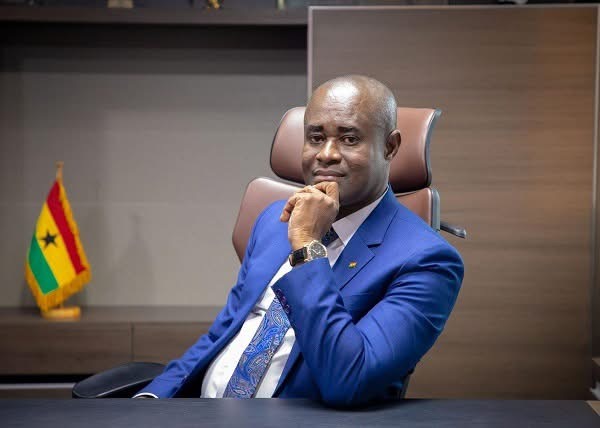
Under the leadership of Managing Director James Agyenim-Boateng, the nation’s oldest indigenous insurer has delivered a stunning financial turnaround—and in doing so, has sparked a fierce industry debate over fairness, competition, and the role of the state.
The Controversy
In April 2026, policy think tank IMANI Africa petitioned President John Dramani Mahama over what it described as growing legal and procurement risks in how state institutions select insurance providers. At the centre of the concerns was a December 2025 communication from the State Interests and Governance Authority (SIGA), which IMANI characterised as a “directive” asking SOEs to prioritise SIC Insurance PLC and SIC Life Company Limited for their insurance needs.
IMANI warned that the instruction had already influenced procurement patterns across several major institutions, reducing private insurer participation and creating a perception that outcomes were predetermined. The think tank cited the Ghana National Gas Company as a key example of what it called a “drift from competitive placement to directed allocation”.
SIGA has rejected claims that it directed SOEs to channel business exclusively to SIC, maintaining that its oversight aims to safeguard state interests, promote fair competition, and retain value within SOEs.
A Misunderstanding?
Critics of the uproar have offered a different interpretation. In a strongly worded defence, analyst Raymond Ablorh argued that the state cannot be a spectator in its own economy. “To suggest that SIGA errs by urging SOEs to patronise SIC Insurance PLC is to mistake the rules of the game for the purpose of the match,” Ablorh wrote, adding that “a process without purpose is merely a treadmill; it moves, but it goes nowhere”.
According to Ablorh, prioritising SIC ensures that the public purse is not a sieve. “When a state entity sends its premiums to a foreign-owned insurer, it is facilitating capital flight under the guise of ‘fairness’.”
For his part, Mr. Agyenim-Boateng has insisted that SIGA’s communication was an “encouragement,” not a directive. However, a JoyNews fact-check found that the December 11, 2025 SIGA letter carried the subject heading “Directive to State-Owned Enterprises to Prioritise the Use of State-Owned Insurance Companies”—and the word “encouragement” does not appear in the document.
Sleeping Giant Awakens
The controversy, however, may be a testament to one thing: SIC is finally competing.
Mr. Agyenim-Boateng, a soft-spoken and politically unassuming leader, took the helm in February 2025. His aggression as an insurer, however, is unmistakable. Under his leadership, SIC has mounted a regional tour to visit customers, gather feedback, and strengthen relationships. Beyond the public eye, he personally joins his marketing team to pitch businesses to private companies and state institutions—even doing presentations when required.
Unlike other insurers that have kept business to themselves in the past, SIC regularly co-insures with or shares business with other insurance companies. And far from shying away from the spotlight, Mr. Agyenim-Boateng has turned his active social media pages into a SIC marketing platform, boosting the company’s visibility on new media.
The Numbers
The results speak for themselves.
In a challenging economic environment, SIC recorded a profit after tax of GH¢37.45 million for the nine months ended September 30, 2025—up from GH¢26.58 million in the same period of 2024. Insurance revenue rose to GH¢413.31 million from GH¢315.59 million in 2024. Total net assets grew to GH¢1.16 billion, up from GH¢954.95 million a year earlier, with shareholders’ equity rising to GH¢724.27 million.
When Mr. Agyenim-Boateng took over in February 2025, SIC’s shares traded at 0.27 pesewas per share. By the end of the year, the share price jumped to GH¢1.20. Today, SIC’s shares on the Ghana Stock Exchange go for GH¢4.40 per share—an increase of over 1,500%.
Based on SIC’s strong financial performance, the board of directors has recommended a 100% increase in dividend to shareholders, from GH¢10 million in 2024 to GH¢20 million in 2025, subject to National Insurance Commission approval.
Paying Claims
SIC has also demonstrated strong liquidity. The company paid out GH¢107.6 million in claims across various insurance policies in 2025. As of August 2025, the company had paid a total of GH¢78 million in claims, with GH¢173.45 million paid in claims the previous year.
Mr. Agyenim-Boateng noted that “the significant claims payout reflects our robust reinsurance arrangements and financial capacity to promptly settle claims, assuring customers of reliable support during unforeseen events”.
Digital Transformation
Looking ahead to 2026, the SIC boss said the company will focus on digital transformation, improved customer service, stronger financial performance, and enhanced risk management. Planned initiatives include the expansion of digital platforms for policy purchase and renewal, automation of claims processes, and growth in high-value segments such as energy, marine, and corporate insurance.
“We are automating our claims notification and tracking systems to give customers a seamless and transparent experience,” Mr. Agyenim-Boateng disclosed. “Our objective is to deliver speed, convenience, and transparency—the hallmarks of a modern insurer”.
A Collaborative Approach
Contrary to the outcry over market capture, SIC actually carries other insurance companies along, co‑insuring or sharing business with them. The Managing Director says the credit doesn’t belong to him alone; he describes himself as blessed with a supportive board and amazing, committed employees.
“Employees of SIC have also been amazing to work with and very committed to our strategic objective of working hard to reposition SIC,” Mr. Agyenim-Boateng said.
The company’s new board, chaired by Bernard Ahiafor—First Deputy Speaker of Parliament—was inaugurated in July 2025. The board confirmed Mr. Agyenim-Boateng as substantive Managing Director after he had served in an acting capacity.
“I have always dreamt of a day where we patted each other on the shoulders for a marvellous job done,” said Mr. Kakra Wilson, President of the Association of SIC Agents (ASICA). “With the intervention of our able-bodied M.D., Mr. James Agyenim-Boateng, and his team, we can pat shoulders for a great work done”.
What’s Next?
The insurance industry now watches closely. SIGA’s portfolio covers over 140 active entities, including 53 State-Owned Enterprises, 31 Joint Venture Companies, and multiple state-linked institutions across energy, finance, transport, and infrastructure. These include Ghana National Gas Company, Volta River Authority, Ghana Revenue Authority, and Cocoa Marketing Company.
Whether the current controversy leads to regulatory intervention or simply confirms SIC’s resurgence as a genuine competitor remains to be seen. For now, one thing is clear: Ghana’s insurance market has a new player to contend with—and it’s a state-owned enterprise that no longer sleeps.


