



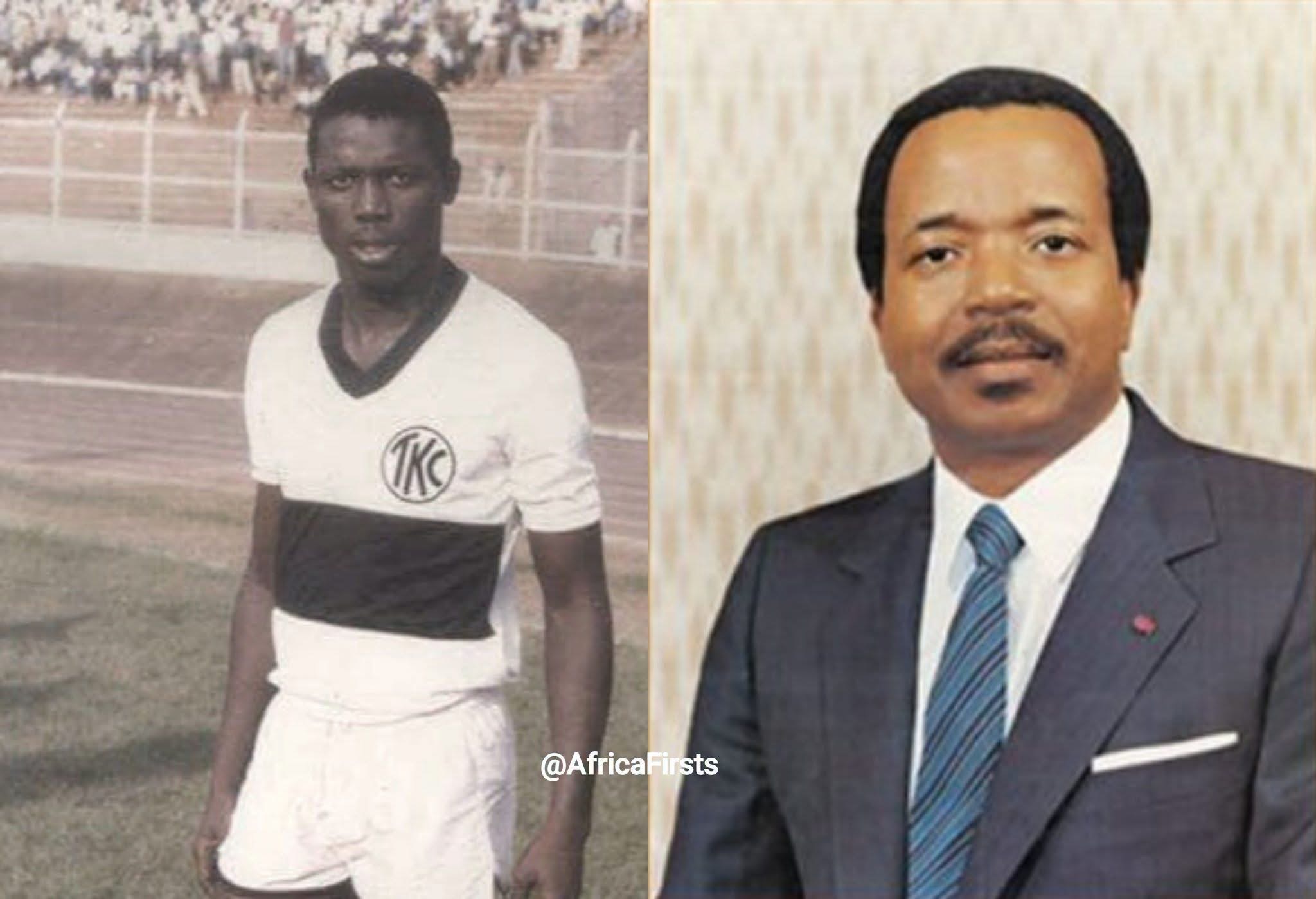
In 1988, Arsène Wenger paid £12,000 to sign an unknown Liberian striker from a Cameroonian club. Thirty-eight years later, that player has become president of Liberia, left office, and moved on — while the man who watched him from the stands that season remains in power.
It is one of football’s great origin stories. In 1987, a 20-year-old George Weah arrived in Cameroon to play for Tonnerre Yaoundé, having been spotted by the club’s president after a standout performance for Liberian side Invincible Eleven. In his sole season in the Cameroonian top flight, he scored 14 goals in 18 games and helped Tonnerre win the league and cup double.
The cup final was watched from the stands by Cameroon’s President Paul Biya, who looked on with amazement as Weah “pulled all the strings in attack”.
It was also in Cameroon that Weah caught the eye of Arsène Wenger, then manager of AS Monaco. A friend coaching in Cameroon tipped Wenger off; Wenger sent a scout, and the verdict came back: “Bring him with you”. In 1988, Weah moved to Monaco for £12,000. The rest is history.
From the pitch to the presidency
Weah went on to play for Paris Saint-Germain and AC Milan, winning the Ballon d’Or and FIFA World Player of the Year in 1995 — the first and only African player to claim either award. His footballing fame launched a political career. He ran for president in 2005, losing the runoff to Ellen Johnson Sirleaf, and was elected to the Senate in 2014 with 78 per cent of the vote. In 2017, he won the presidency.
In January 2024, after six years in office, Weah stepped down following a narrow election defeat, overseeing a peaceful transition of power. He has since moved on to other pursuits, including delivering a keynote address at the 2026 Nigerian Bar Association conference.
The man in the stands
Paul Biya, meanwhile, is still president of Cameroon. He first took office in November 1982 — six years before Wenger signed Weah and 16 years before Weah was elected president of Liberia. At 93, Biya is the world’s oldest serving head of state and Africa’s second-longest-serving president. He secured an eighth term in October 2025 and is set to govern until 2032, when he will be 99.
When Biya took power, Michael Jackson’s Thriller was topping global charts. The median age in Cameroon today is 18 — meaning more than half the population was not even born when he became president. Over 60 per cent of Cameroonians have only ever known one head of state.
A decade apart, worlds apart
The contrast is striking. In 1988, Weah was a young footballer playing in Cameroon’s top division; Biya was already six years into his presidency. In 2018, Weah was sworn in as Liberia’s 25th president — a head of state in his own right, now a colleague and “brother” to Biya. By 2024, Weah had left office. Today, in 2026, Biya remains.
As one observer noted on social media, sparking widespread discussion: “What kind of government prioritises the longevity of an individual over the future of its youth?”
Weah’s journey from the dusty pitches of Monrovia to the Ballon d’Or and the presidency is one of Africa’s most remarkable stories. But it is Biya’s extraordinary endurance — watching that cup final in 1988 and still holding power nearly four decades later — that perhaps tells the deeper story of African governance.
In 1988, a young striker from Liberia made his mark on Cameroon’s football. The president in the stands that day is still there. The man on the pitch has come and gone — and become president of his own country in between.


