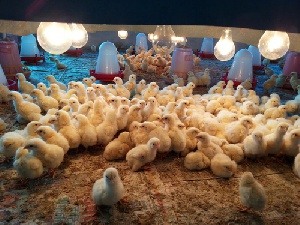
The Shama District Assembly has launched a major intervention in the agricultural sector, distributing hundreds of improved poultry birds to local farmers and residents in a bid to enhance food security, create sustainable livelihoods, and reduce reliance on imported chicken.
The exercise, which took place at the assembly’s premises, saw beneficiaries receiving day-old chicks, feed supplements, and basic veterinary supplies. The initiative is part of the assembly’s annual development plan, aimed at revitalising the poultry sub-sector within the district, which has historically lagged behind due to high input costs and limited access to quality stock.
Speaking at the distribution ceremony, the District Chief Executive, Mr. Kofi Adu Asare, said the move is designed to empower smallholder farmers and households to engage in backyard poultry farming as a reliable source of protein and income. He noted that the assembly had procured the birds from a certified hatchery in the Central Region, ensuring that the stock is disease-resistant and adapted to local climatic conditions.
“This is not just about giving out birds; it is about building capacity. We want our farmers to rear these birds commercially, and we have partnered with the Ministry of Food and Agriculture’s extension services to provide technical training on feeding, housing, and disease control,” Mr. Asare stated.
He further revealed that each beneficiary received between 10 and 20 birds, depending on their available space and commitment to farming. The assembly also distributed two months’ worth of starter feed and vaccines to protect the birds against Newcastle disease and other common poultry ailments.
A Response to Rising Chicken Imports
The distribution comes at a time when Ghana’s poultry industry is grappling with fierce competition from cheap imported frozen chicken, which has undercut local producers. According to industry data, local poultry production meets less than 30 per cent of domestic demand, with the shortfall filled by imports that drain foreign exchange.
Mr. Asare emphasised that the assembly’s intervention is a small but significant step towards reversing this trend. “If every district in the Western Region and beyond replicates this initiative, we can collectively reduce the import bill and create jobs for our youth. Poultry farming has a short turnaround time, and it can provide quick returns for families,” he added.
The assembly allocated an amount of GH₵150,000 from its District Assemblies Common Fund (DACF) for this phase of the project. Plans are already in place for a second phase, which will target youth groups and women’s cooperatives.
Beneficiaries Express Gratitude
Mrs. Akua Mansa, a mother of three from Aboadze, was among the first to receive her allotment. She expressed excitement, noting that she had long wanted to rear chickens but could not afford the initial capital.
“This is a blessing. With these birds, I can sell eggs and mature birds to support my children’s school fees. The extension officer has also taught me how to mix local ingredients to reduce feed costs,” she said.
Another beneficiary, Mr. Ebo Kyere, a retired teacher, said he plans to expand his flock over time and encourage his neighbours to join the programme.
The assembly also announced that it would monitor the progress of all beneficiaries over the next six months, with the best-performing farmers receiving additional birds and subsidised feed to scale up their operations.
Background: Poultry Sector Challenges
The poultry industry in Ghana faces multiple hurdles, including high cost of imported feed ingredients, inadequate access to affordable veterinary services, and competition from subsidised imports from Europe and the Americas. In recent years, the government has introduced various interventions, such as the Rearing for Food and Jobs programme, but many districts have struggled to implement these at the grassroots level.
The Shama District Assembly’s initiative is therefore being hailed by local agricultural experts as a model of decentralised support that directly benefits the community. The assembly has also pledged to establish a poultry marketing hub in the district to help farmers sell their produce at fair prices, thereby eliminating the middlemen who often exploit small-scale producers.
As the birds take root in backyards across Shama, the assembly hopes that within a year, the district will become a net exporter of poultry products to neighbouring municipalities, contributing to the national goal of self-sufficiency in poultry meat and egg production.