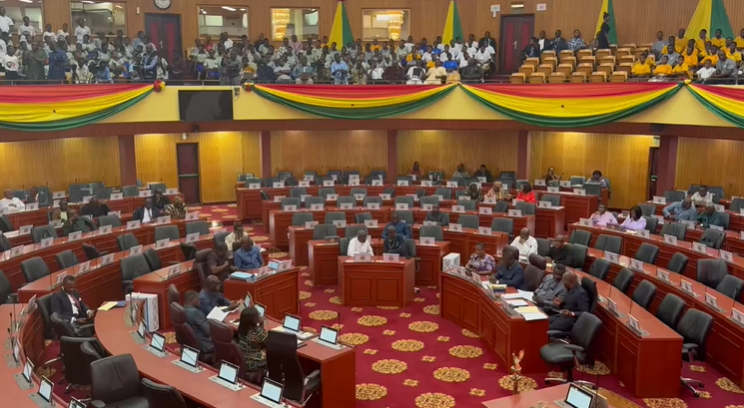
Parliament has officially passed the Energy Sector Levies (Amendment) Bill, 2026, approving a substantial hike in the levy on fuel oil from GH¢0.24 to GH¢1.93 per litre, as the government intensifies efforts to shore up domestic revenue and plug widespread abuses within the nation’s fuel subsidy framework.
The amended legislation, which received parliamentary assent on Friday, July 31, 2026, aligns the fuel oil levy with the rates currently imposed on diesel and marine gas oil. Additionally, the bill extends the Road Fund Levy to cover fuel oil—a category previously exempted—broadening the tax net for road infrastructure maintenance.
Rationale: Curbing Subsidy Exploitation
Presenting the amendment to the House, Finance Minister Dr. Cassiel Ato Forson justified the steep adjustment as a necessary fiscal correction. He disclosed that the previous disparity in levy rates had created a lucrative arbitrage loophole, leading to significant revenue leakages.
“Some beneficiaries of the industrial fuel subsidy regime have been exploiting the system for private gain, undermining its integrity and defeating the purpose of supporting legitimate industrial users,” Dr. Forson stated. “The government is committed to ensuring that every cedi meant for development reaches its intended destination.”
New Payment Protocol: Upfront Payments with Refund Mechanism
To further tighten accountability, the amendment introduces a mandatory upfront payment regime. Companies importing fuel oil will now be required to pay the full applicable levies at the point of entry. However, the Minister clarified that qualifying industrial businesses under the approved subsidy scheme will be entitled to a refund after successfully demonstrating compliance with the necessary regulatory requirements.
This new “pay-first, claim-later” model is designed to eliminate the under-reporting of volumes and prevent the diversion of subsidized fuel oil to the open retail market, where it commands higher prices.
Background and Economic Impact
The Energy Sector Levies Act, 2025, was initially established to consolidate multiple sector charges to support the state’s energy debts and infrastructure projects. The decision to equalize the levy rates across fuel types signals a strategic shift by the government to ensure that all petroleum products contribute proportionately to the state’s fiscal burden.
While the government projects the move will generate substantial additional revenue to service energy sector shortfalls, industry stakeholders have expressed concerns over the potential knock-on effect on production costs. Fuel oil is a critical input for manufacturing, mining, and power generation. With the levy increasing over 700%, industrial players may face higher operational expenses, which could ultimately be passed on to consumers.
The government, however, maintains that the refund mechanism for genuine industrial users will mitigate these pressures, ensuring that productive sectors are not unduly penalized while the state secures the fiscal space needed to stabilize the economy. The new rates are expected to take effect immediately upon the bill’s gazetting.