



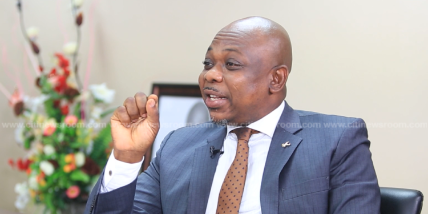
More than 300 individuals were arrested between 2023 and 2025 in connection with alleged attempts to recruit Ghanaians into extremist groups operating along the country’s northern border, Majority Leader in Parliament James Agalga has disclosed.
The arrests formed part of sustained efforts by the Ghana Armed Forces and other security agencies to prevent militant organisations active in the Sahel sub-region from establishing a foothold in Ghana, Mr Agalga revealed at the 9th REPAM-CDS Security Governance Conference.
47 Cross-Border Incursions Recorded
In addition to the arrests, security agencies recorded 47 cross-border incursions during the same period—a figure that underscores the growing security challenges confronting the country’s northern frontier, which shares borders with Burkina Faso, a nation struggling with persistent jihadist insurgency.
Mr Agalga, who also chairs Parliament’s Defence and Interior Committee, cautioned that Ghana’s relative stability compared with some neighbours should not breed complacency. He noted that the country’s geographical location and proximity to states affected by violent extremism made it imperative to strengthen border security and intelligence-gathering mechanisms.
“In Ghana, we have remained relatively stable, but we are not insulated. The Ghana Armed Forces and security agencies recorded 47 cross-border incursions and over 300 arrests linked to extremist recruitment attempts along our northern border between 2023 and 2025,” he said.
Regional Threat Landscape
The disclosures come against the backdrop of a deteriorating security situation in the Sahel, where groups such as Jama’at Nusrat al-Islam wal-Muslimin (JNIM) and Islamic State Sahel Province (ISGS) have expanded their operations in Burkina Faso, directly adjacent to Ghana’s northern regions .
Security researchers have warned that Ghana’s porous northern border presents significant vulnerabilities. Poverty, unemployment and feelings of marginalisation in border communities have been identified as key factors making young Ghanaians susceptible to recruitment by militant groups . In 2024, almost a million people in Ghana’s Northern Region were multi-dimensionally poor, creating fertile ground for exploitation .
A 2024 report by the Dutch think tank Clingendael noted that jihadis are using Ghana to restock supplies and seek respite, with the absence of attacks on Ghanaian soil appearing to reflect a calculated decision not to provoke a relatively strong army .
Non-Traditional Threats on the Rise
Mr Agalga also highlighted the changing nature of security threats facing the country, pointing to a 12.3 percent increase in cybercrime and fraud cases recorded in 2024.
“At the same time, our 2024 crime statistics show a 12.3 percent increase in cybercrime and fraud cases, highlighting the shift to non-traditional threats. These data points tell us one thing: threats are transnational, asymmetric and they test the very governance structures we are mandated to oversee,” he said.
The cybercrime figures align with broader national data indicating substantial financial losses from digital fraud . Ghana recorded cybercrime-related losses of GH¢23.3 million in 2024, with a further GH¢14.9 million lost in the first half of 2025 alone, according to the Cyber Security Authority .
Call for Stronger Governance
Mr Agalga stressed the need for Ghana to strengthen its security institutions and governance systems to effectively respond to both traditional and emerging threats. He urged enhanced vigilance, better intelligence coordination among security agencies, and improved border protection measures to counter the multifaceted challenges.
The conference, organised by REPAM-CDS—the Network of African Parliamentarians Members of Defence and Security Commissions—focuses on parliamentary oversight of security governance across the continent . The forum provides a platform for African legislators to share experiences on legislative frameworks and security policy evaluation.
Background on Speaker
Mr Agalga is a lawyer and four-term Member of Parliament for Builsa North, having served in the 6th, 7th, 8th and current 9th Parliaments . He previously served as Deputy Minister for the Interior under President John Mahama and holds an MA in Conflict, Peace and Security from the Kofi Annan International Peacekeeping Training Centre (KAIPTC) . He was appointed Majority Leader in August 2026 following the nomination of Mahama Ayariga as Minister for Local Government, Chieftaincy and Religious Affairs .


