



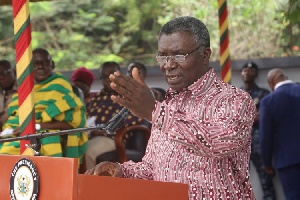
Minister for Energy and Green Transition, Dr John Abdulai Jinapor, has led agencies under his ministry in a high-level engagement with the Minister for Finance, Dr Cassiel Ato Forson, to address the structural and financial challenges confronting Ghana’s energy sector.
The meeting, held on Thursday, September 3, 2026, provided a platform for an open and constructive discussion on the critical relationship between energy management and public finances. It brought together key agencies under the Energy Ministry as part of the government’s broader efforts to implement reforms and place the sector on a more sustainable financial footing.
Reforms Showing Progress
Dr Jinapor described the discussions as frank and constructive, noting that the government’s ongoing reforms are already yielding meaningful progress in addressing some of the sector’s longstanding challenges.
“We are making meaningful progress in addressing the structural challenges in the energy sector,” he stated. He reaffirmed the government’s commitment to sustaining these reforms, improving the sector’s financial sustainability, and ensuring a reliable and resilient energy system capable of supporting Ghana’s economic growth.
Background: A Sector in Recovery
The engagement comes against the backdrop of significant efforts to stabilise Ghana’s energy sector, which has historically been a major source of fiscal risk. When the current administration assumed office, the sector was burdened by approximately GH¢80 billion in outstanding debt, with Independent Power Producers (IPPs) receiving as little as 42% of their monthly invoices.
Key reforms implemented include:
· Legacy debt clearance: The government has paid approximately $1.47 billion in legacy energy obligations, clearing outstanding invoices to gas suppliers and power producers. This helped restore confidence among IPPs and gas suppliers and reduced the immediate risk of fuel delivery interruptions.
· Improved Cash Waterfall Mechanism: Monthly payments declared into the Cash Waterfall have increased from about GH¢6 billion to nearly GH¢15 billion, allowing most IPPs to receive close to 100% of their invoices and preventing the accumulation of fresh arrears.
· Fuel cost savings: The government has saved approximately 250 million.
· IPPs debt restructuring: Renegotiations with IPPs have re-profiled $1.1 billion in legacy debt over a four-year period. President Mahama recently disclosed that IPPs agreed to absorb about 20% of the $1.7 billion owed as part of broader debt restructuring measures.
Structural Vulnerabilities Remain
Despite the progress, Ghana’s energy sector remains exposed to several structural vulnerabilities. The country’s power security depends on the integration of domestic gas supply, electricity infrastructure, and regional power trade—components that have often been managed separately.
The Electricity Company of Ghana continues to face efficiency challenges, with aggregate technical and commercial losses standing at about 27%, driven by energy theft, billing errors, and aging infrastructure. Additionally, Ghana’s approach to power infrastructure has often been reactive rather than preventive, with systemic audits not conducted regularly.
A recent fire at the Akosombo Substation in April 2026—one of the country’s most critical transmission hubs—caused a loss of between 720 MW and 1,000 MW of transmission capacity and led to widespread outages across multiple regions. The incident highlighted the vulnerability of Ghana’s aging power infrastructure.
Commitment to Sustained Reforms
Dr Jinapor emphasised that addressing the sector’s challenges is crucial to ensuring a reliable and resilient energy system that can support Ghana’s economic growth. The government has reaffirmed its commitment to sustaining the reforms, strengthening coordination between energy and finance sectors, and improving the financial management of the energy sector.
The engagement forms part of broader efforts to strengthen collaboration between key institutions responsible for energy and public finances, with the government determined to prevent a recurrence of the financial challenges that have historically affected the sector.


