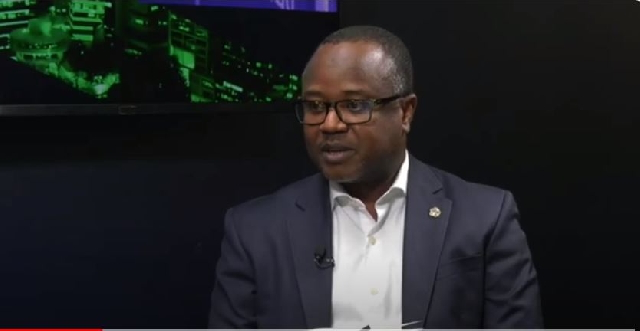
Ghana’s recurring engagement with the International Monetary Fund (IMF) highlights fundamental limitations in programme design, particularly the failure to address institutional manifestations of deeper political-economy drivers of debt accumulation, according to Dr. Maxwell Opoku-Afari, former First Deputy Governor of the Bank of Ghana.
In a policy paper titled “How Not to Miss a Crisis: Lessons from Ghana,” published by the Finance for Development Lab where he serves as Non-Resident Fellow, Dr. Opoku-Afari argued that despite Ghana’s long history of IMF-supported arrangements—the 2023 programme being the country’s 17th in roughly six decades—observed surveillance shortfalls reflect deeper structural issues .
Recurring Gaps in Surveillance
According to Dr. Opoku-Afari, several gaps have appeared recurrently over the past two decades, including:
· Electoral and patronage pressures: Political-economy drivers such as electoral competition and patronage-related spending pressures were not consistently addressed.
· Underweighted rollover and liquidity risks: The analysis did not fully internalise domestic-debt dynamics and fiscal–financial feedback effects.
· Limited stress-testing: Stress tests of domestic debt and its interaction with the banking system were insufficient.
· Incomplete coverage of public-sector balance sheet: The scope of analysis for State-Owned Enterprises (SOEs), guarantees, and other contingent liabilities remained incomplete.
· Sovereign–bank “doom loop”: The interconnected risk between government debt and the domestic financial sector was not always assessed comprehensively .
Methodological Question: LIC-DSF Application
Dr. Opoku-Afari raised a broader methodological question about whether Ghana was appropriately treated as a Lower Income Country-Debt Sustainability Framework (LIC-DSF) case throughout the period, given its level of market access and evolving debt structure. The framework’s limited ability to quantify rollover, liquidity, and currency-related risks may have contributed to underestimation of the probability of rapid market closure—risks that became acute following Moody’s downgrade in February 2022 .
Evidence of Growing Vulnerabilities
The paper notes that warning signs were visible well before the crisis. The present value of public debt-to-GDP increased sharply after 2014 and reached nearly 93 percent by 2022, while the external debt service-to-revenue ratio breached its benchmark as early as 2013 and exceeded 40 percent of government revenue by 2022 . Interest payments remained consistently above 20 percent of government revenue, and international reserves hovered close to the conventional minimum of three months of import cover.
Domestic Debt: Not as Safe as It Appeared
A central criticism concerns the shift toward domestic borrowing, often framed as “de-dollarisation” and market deepening. Dr. Opoku-Afari argues that this strategy ultimately amplified risk rather than reducing it. Domestic debt rose from about 31 percent of GDP in 2019 to more than 40 percent in 2020 and 2021, with banks, pension funds, and insurance companies becoming major holders of government securities .
The weighted-average interest rate on Ghana’s public debt was estimated at 10.7 percent, while 17.5 percent of the debt stock was due to mature within one year. Foreign-currency-denominated debt also averaged 54.5 percent of total public debt, leaving the country heavily exposed to exchange-rate movements .
Three Surveillance Limitations
Dr. Opoku-Afari identified three key limitations in the surveillance architecture:
- Optimistic baselines: Debt Sustainability Analysis (DSA) baseline paths were often optimistic, assuming sustained fiscal consolidation driven by domestic revenue mobilisation—which was mostly missed—and robust growth, while giving insufficient weight to plausible downside scenarios .
- Incomplete internalisation of domestic-debt dynamics: The analysis did not fully capture rollover, liquidity, and banking-sector channels, leading to an under-appreciation of the sovereign–bank nexus.
- Structural reform neglect: IMF-supported programme design often prioritised near-term consolidation over reforms addressing structural drivers of recurrent debt accumulation—particularly in energy pricing, SOE governance, and tax policy and administration .
Fiscal Costs of Financial Sector Interventions
The paper highlighted the significant fiscal costs stemming from financial sector clean-up and recapitalisation. The resolution and clean-up costs of the domestic banking system reached approximately 7.1 percent of GDP over 2017–2021, largely absorbed by the state in the absence of an effective deposit insurance framework. Additionally, recapitalisation bonds equivalent to about 2.6 percent of GDP were issued to support undercapitalised banks following the Domestic Debt Exchange Programme .
Political Economy and Programme Design
Dr. Opoku-Afari argued that while macroeconomic surveillance did not completely ignore Ghana’s rising vulnerabilities, the limitations were structural. Fiscal rules existed but were weakly enforced; debt reporting improved but did not consistently capture arrears, guarantees, SOE risks, and other balance-sheet exposures; and oversight mechanisms lacked the authority, information, or incentives to impose timely discipline .
Broader Lessons for Frontier Economies
The paper draws implications beyond Ghana, particularly for developing and frontier economies that are increasingly developing domestic capital markets and gaining access to commercial financing. Dr. Opoku-Afari cautioned that “debt crises often begin when years of accumulated vulnerabilities finally become impossible to refinance.”
“Strong growth, manageable headline debt ratios and continued market access can coexist with deteriorating debt quality, hidden fiscal exposures and mounting liquidity risks,” he stated. “Preventing the next crisis therefore requires looking beyond the debt stock to the balance sheet, beyond solvency to liquidity, beyond external debt to domestic financial linkages, and beyond fiscal rules to their enforcement” .
Reform Recommendations
The paper recommends stronger limits on banks’ holdings of government securities, alongside regular stress tests to assess how rising domestic interest rates and losses on government bonds could affect both banks and public finances. Debt sustainability assessments must go beyond the size of government debt to consider who holds the debt, its cost, refinancing requirements, and the extent to which financial-sector risks can feed back into government finances .