



President John Dramani Mahama has announced a bold rehabilitation of the long-dormant Pwalugu tomato factory, positioning it as the epicentre of a massive agricultural transformation under his administration’s flagship “New Economy” programme. Speaking during a citizens’ engagement in Navrongo on Friday, August 14, 2026, the President revealed that agriculture and agro-processing would receive a staggering $5 billion injection over the next four years—half of a total $10 billion investment earmarked for seven strategic sectors.
A New Economic Blueprint
President Mahama outlined that the New Economy initiative targets seven pillars of the Ghanaian economy, with agriculture and agro-processing taking the lion’s share of the funding. “Every year for the next four years, we will invest $2.5 billion in those seven pillars,” he said. “But the biggest is agriculture and agro-processing. That’s where the Upper East comes in. Fifty percent of that 5 billion—is going into agriculture and agro-processing.”
The President assured the people of the Upper East Region that they would receive their “fair share” of this historic investment, which would focus heavily on expanding irrigation infrastructure to enable year-round cultivation—a critical intervention in a region that suffers from a single, short rainy season.
Reviving the Pwalugu Tomato Factory
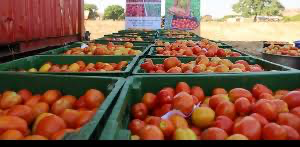
At the heart of the plan is the Pwalugu tomato factory, a state-owned processing facility that has stood largely idle for years due to a combination of equipment breakdowns, erratic raw material supply, and poor management. President Mahama declared that the factory would be fully rehabilitated to serve as the processing hub for a newly launched tomato revitalisation project.
“We can bring 2,500 acres of land under tomato production, and the Pwalugu tomato factory is going to be the epicentre of it,” he stated. “We’re going to rehabilitate it so that we can process the tomatoes that Upper East is producing to feed the rest of the country.”
The move aims to break the cycle of post-harvest losses that have historically plagued tomato farmers in the region, who often see their produce rot due to lack of market access and storage facilities. By anchoring production to a functional processing plant, the government hopes to stabilise prices, guarantee off-take, and create thousands of jobs in both farming and factory operations.
Tamne Dam Completion to Boost Onion Production
In addition to tomatoes, President Mahama announced the completion of the Tamne irrigation dam, a long-stalled project in the Bawku area. The dam, once finished, will provide water to four districts, enabling dry-season farming and significantly boosting onion production—a crop in which the Bawku enclave holds a natural comparative advantage.
“We want to cut down the amount of onions we import from Niger,” the President said. “If we put enough land under irrigation, we should be able to import-substitute and produce our own onions.” Currently, Ghana imports a substantial portion of its onion consumption from Niger, a reliance that leaves the country vulnerable to cross-border supply shocks and foreign exchange outflows. The Tamne dam, combined with improved seed varieties and extension services, is expected to reduce this dependency dramatically.
Immediate Action Underway
President Mahama emphasised that the government is not waiting for the New Economy programme to be fully launched before taking action. He noted that the tomato revitalisation project is already underway, with the Ministry of Agriculture actively coordinating with local farmers to prepare land and secure inputs. The 2,500-acre target, he said, is achievable within the next planting season.
The announcement was met with enthusiasm from local farmers and traditional leaders in attendance, who have long bemoaned the neglect of the region’s agricultural potential. The Upper East, despite being one of the nation’s breadbaskets, has suffered from high youth unemployment and out-migration due to limited economic opportunities. The $5 billion injection, coupled with the rehabilitation of key infrastructure, is expected to reverse that tide.
A Strategic Shift Towards Agro-Industrialisation
Analysts view President Mahama’s announcement as a deliberate shift from raw commodity exports to value-added agro-processing—a key pillar of the government’s industrialisation agenda. By linking primary production to processing facilities, the policy aims to capture more value within Ghana, create higher-paying industrial jobs, and reduce the country’s food import bill, which currently exceeds $2 billion annually.
The Pwalugu factory rehabilitation, if executed as planned, could serve as a model for reviving other moribund state-owned agro-processing plants across the country. Meanwhile, the Tamne dam’s completion—long stalled by funding constraints and contractual disputes—signals a renewed commitment to infrastructural development in the northern savannah belt.
As the President concluded his address, he reiterated that the Upper East’s prosperity is central to Ghana’s overall food security and economic resilience. “You can produce all the vegetables and everything we eat in this country,” he told the crowd. “With this investment, we will not only feed ourselves—we will export.” The challenge now lies in the timely mobilisation of funds, efficient project execution, and the sustained engagement of the private sector to complement public investment.


